The Science Behind Nuclear Weapons Testing: How It Works and Why It Matters
Nuclear weapons testing has been one of the most consequential and controversial scientific endeavors in modern history. Between 1945 and 1996, over 2,000 nuclear […]
Contributor
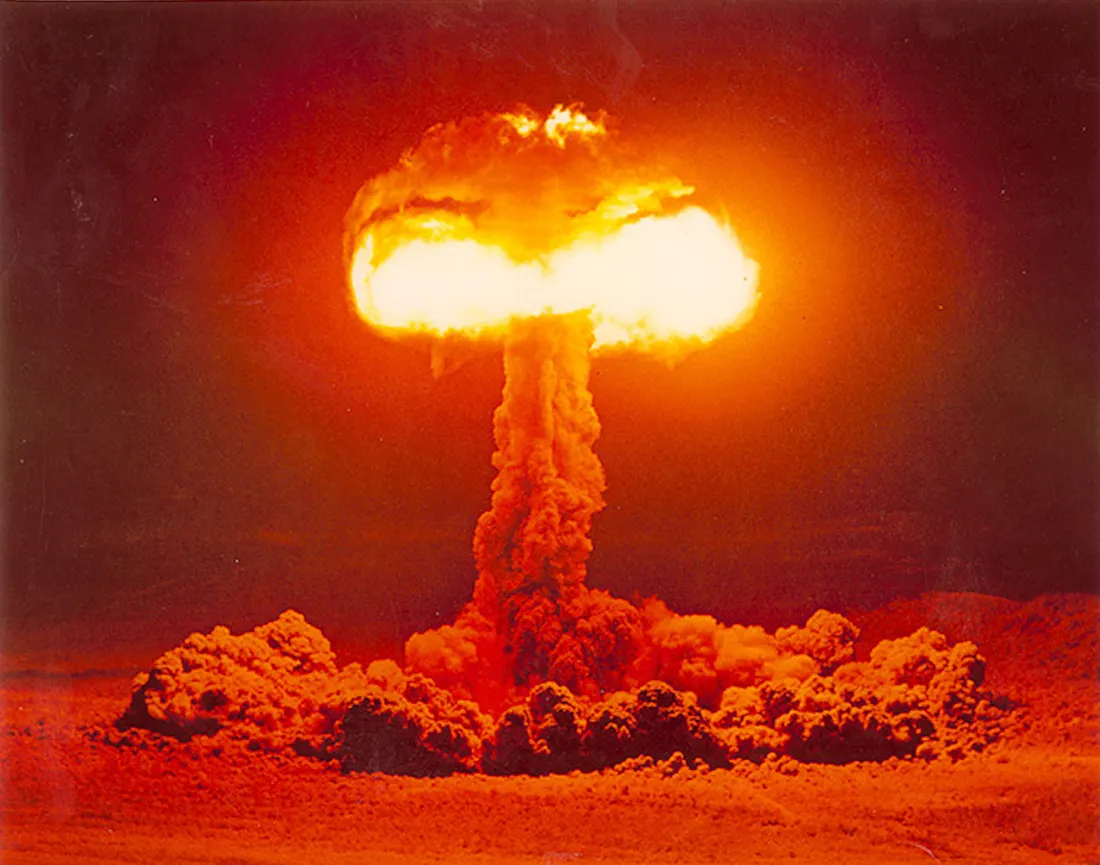
Nuclear weapons testing has been one of the most consequential and controversial scientific endeavors in modern history. Between 1945 and 1996, over 2,000 nuclear tests were conducted by eight nations across remote deserts, Pacific atolls, and deep underground chambers. These tests were not simply demonstrations of military might — they served as critical scientific experiments to validate weapon designs, measure explosive yields, and study the effects of nuclear detonations on structures, ecosystems, and human health.
The history of nuclear testing is deeply entwined with Cold War geopolitics. As the United States and Soviet Union raced to build ever-more-powerful arsenals, testing became a proxy for technological supremacy. Early tests were conducted in the open atmosphere, releasing radioactive fallout that circled the globe and triggered international alarm. By the 1960s, growing public pressure and diplomatic negotiations forced a shift to underground testing, where explosions could be contained and monitored with greater precision.
Today, no nation publicly conducts nuclear test explosions. Instead, countries rely on sophisticated computer simulations, subcritical laboratory experiments, and global monitoring networks to maintain their arsenals. Yet the legacy of decades of testing — in contaminated landscapes, displaced communities, and enduring health consequences — continues to shape scientific research and global policy. This guide examines the physics, methods, motivations, impacts, and future of nuclear weapons testing in comprehensive detail.
What Is Nuclear Weapons Testing?
Nuclear weapons testing refers to the experimental detonation of nuclear devices under controlled or semi-controlled conditions to evaluate their performance, safety, and destructive potential. At its most fundamental level, a nuclear test is a scientific measurement exercise: engineers and physicists use it to verify that a weapon design will function as intended, that it will produce the expected explosive yield, and that its various mechanical and electronic components will operate reliably under the extreme stresses of detonation.
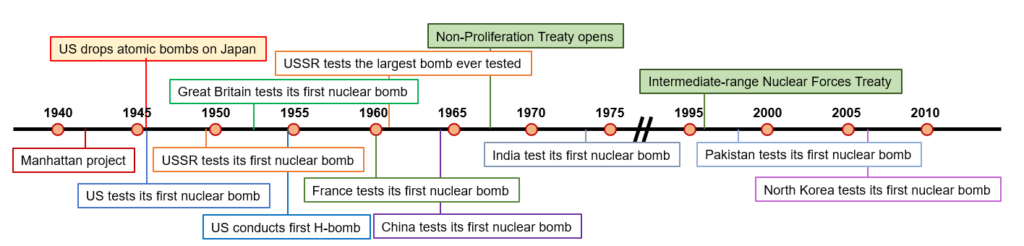
The term ‘yield’ is central to nuclear testing science. Yield refers to the total amount of energy released by a nuclear detonation, typically measured in kilotons (kt) or megatons (Mt) of TNT equivalent. One kiloton equals the energy released by exploding 1,000 metric tons of TNT. The bomb dropped on Hiroshima in 1945 had a yield of approximately 15 kilotons. The largest nuclear test ever conducted — the Soviet Tsar Bomba in 1961 — had an estimated yield of 50 megatons, or 50,000 kilotons.
Nuclear tests fall into several functional categories. Development tests validate new weapon designs before deployment. Safety tests examine what happens if a weapon is accidentally dropped or caught in a fire. Reliability tests ensure existing stockpile weapons will detonate correctly after years of storage. Effects tests measure how structures, vehicles, and living organisms respond to nuclear blast, heat, and radiation. Finally, deterrence tests are conducted primarily to signal military capability to adversaries — a political act with a scientific component.
The Physics Behind a Nuclear Explosion
The energy released in a nuclear explosion comes not from chemical reactions — as in conventional explosives — but from changes in the nucleus of atoms themselves. Nuclear weapons exploit two fundamental nuclear processes: fission and fusion. Both release energy according to Einstein’s famous equation, E = mc², in which a small amount of mass is converted into an enormous quantity of energy. Understanding these processes is essential to understanding why nuclear weapons are so extraordinarily destructive.
Nuclear Fission: The Science of Atomic Bombs
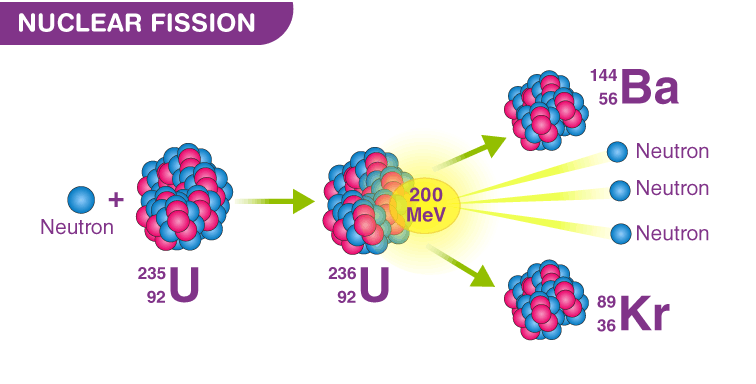
Nuclear fission is the process of splitting a heavy atomic nucleus — typically Uranium-235 (U-235) or Plutonium-239 (Pu-239) — into two or more smaller nuclei. When a free neutron strikes one of these heavy nuclei, the nucleus becomes unstable and breaks apart, releasing a large amount of energy, gamma radiation, and two or three additional neutrons. These released neutrons then strike neighboring nuclei, causing them to split and release more neutrons in turn — a self-sustaining chain reaction.
For a chain reaction to become explosive, the fissile material must reach what physicists call ‘critical mass’ — the minimum amount of material in a given configuration required for the chain reaction to sustain and amplify itself. Below critical mass, too many neutrons escape the material without striking nuclei, and the reaction fizzles. In a bomb, this critical mass is assembled almost instantaneously, triggering an explosive chain reaction that releases the energy equivalent of thousands of tons of conventional explosives in millionths of a second.
Nuclear Fusion: How Hydrogen Bombs Work
Nuclear fusion is the opposite of fission: instead of splitting heavy atoms apart, fusion combines light atomic nuclei — specifically isotopes of hydrogen called deuterium and tritium — under conditions of extreme temperature and pressure. When these nuclei fuse, they form a heavier nucleus (helium) and release an even greater amount of energy per unit mass than fission. The sun generates its energy through nuclear fusion.
The challenge with fusion weapons is that the temperatures required to initiate fusion — over 100 million degrees Celsius — are so extreme that only a nuclear fission explosion can generate them. Therefore, thermonuclear weapons (hydrogen bombs or H-bombs) use a fission ‘primary’ stage to compress and heat a fusion ‘secondary’ stage. This two-stage Teller-Ulam design allows hydrogen bombs to reach yields hundreds of times greater than pure fission weapons, making them the most destructive devices ever built by human civilization.
Blast Waves, Thermal Radiation, and EMP
A nuclear explosion releases its energy through three primary physical mechanisms, each of which is measured and studied during testing. The first is the blast wave — a powerful shockwave of compressed air that travels outward from the explosion point at supersonic speeds, generating overpressure that can collapse reinforced structures within several kilometers. The peak overpressure and the rate at which it drops with distance (the ‘blast scaling’) are key parameters recorded in every nuclear test.
The second mechanism is thermal radiation — an intense burst of heat and light energy from the fireball. This thermal pulse lasts a few seconds but can ignite fires, cause severe burns to exposed skin, and vaporize structures at close range. The fireball itself can reach temperatures of tens of millions of degrees at its core. Third is the electromagnetic pulse (EMP) — a burst of electromagnetic energy produced by nuclear detonations, particularly those at high altitude, capable of disabling unshielded electronics over vast areas. Measuring EMP characteristics was a primary objective of several Cold War-era high-altitude tests.
Types of Nuclear Weapons Tests
As the science and politics of nuclear testing evolved over five decades, the methods used to conduct tests changed dramatically. Early pioneers detonated weapons in open air with little containment; later generations moved underground and eventually into computer laboratories. Each testing environment offered different scientific advantages and posed different risks to the environment and human populations.

Atmospheric Testing
Atmospheric nuclear tests were the earliest and most visible form of nuclear weapons testing, conducted from 1945 through the early 1960s. These tests detonated nuclear devices either directly on the ground (surface bursts), from towers, dropped from aircraft, or suspended from balloons at altitude. The resulting explosions produced the iconic mushroom clouds — towering columns of superheated debris, dust, and condensed water vapor — that became synonymous with the nuclear age.
While atmospheric tests provided direct visual confirmation of weapon performance and allowed scientists to observe blast effects on structures and equipment at measured distances, they came with a devastating environmental cost: radioactive fallout. Particles of radioactive material — including isotopes of cesium, strontium, and iodine — were lofted into the upper atmosphere and carried by winds around the globe, eventually settling back to Earth in rain and dust, contaminating food supplies and exposing millions of people to low-level radiation worldwide.
Underground Testing
Growing international concern over radioactive fallout from atmospheric tests led to a political and scientific shift toward underground testing in the late 1950s and early 1960s. Underground tests detonated nuclear devices at the bottom of deep boreholes or tunnels drilled into rock formations at secure test sites. The surrounding rock acted as a natural containment vessel, absorbing the blast and preventing the release of radioactive material into the atmosphere — provided the test was conducted at sufficient depth.
The minimum depth required to prevent ‘venting’ — the escape of radioactive gases — depends on the weapon’s yield. As a rule of thumb, the depth in meters must exceed roughly 100 times the cube root of the yield in kilotons. Underground testing also generated detectable seismic signals, providing a scientific basis for monitoring compliance with test ban treaties using global seismograph networks. The United States conducted the majority of its Cold War tests at the Nevada Test Site, while the Soviet Union used Semipalatinsk in Kazakhstan and Novaya Zemlya in the Arctic.
Underwater and High-Altitude Tests
Specialized nuclear tests were also conducted underwater and at high altitude to study specific military and scientific phenomena. Underwater tests, most famously the 1946 Operation Crossroads tests at Bikini Atoll, were designed to study the effects of nuclear explosions on naval vessels — a critical concern for military planners who wanted to understand how a nuclear strike could destroy an enemy fleet. These tests revealed that underwater nuclear explosions generated massive ‘base surge’ waves of radioactive water droplets, heavily contaminating warships at considerable distances.
High-altitude nuclear tests were conducted to study the behavior of nuclear explosions above the atmosphere, particularly the generation and extent of the electromagnetic pulse. The 1962 Starfish Prime test, detonated at an altitude of 400 kilometers over the Pacific, produced an EMP that damaged satellites in orbit and disrupted electrical systems in Hawaii, nearly 1,500 kilometers away. These tests demonstrated that a single high-altitude nuclear burst could potentially disable the electronic infrastructure of an entire continent — a finding with profound implications for both military strategy and civilian vulnerability.
Why Countries Conducted Nuclear Tests
The decision to conduct nuclear weapons tests was driven by a complex interplay of scientific necessity, military strategy, and geopolitical signaling. Understanding these motivations requires separating the technical rationale from the political context in which tests were conducted.
From a purely technical standpoint, nuclear weapons are extraordinarily complex devices in which the timing and geometry of conventional explosive charges must be precise to millionths of a second in order to assemble the fissile core into a supercritical configuration. Early weapon designs had never been tested in combat conditions. The first nuclear test — the Trinity test in New Mexico on July 16, 1945 — was conducted precisely because the implosion design used in the plutonium bomb was so novel that scientists could not be confident it would work without an experimental proof. Even subsequent weapons required periodic testing to ensure that aging components had not degraded weapon reliability.
Yield validation was another critical technical driver. Military planners needed to know precisely how destructive a weapon would be in order to develop effective targeting strategies and to compare their capabilities with those of adversaries. Small uncertainties in yield could mean the difference between destroying a target and missing it entirely. Tests allowed physicists to calibrate their theoretical models against real-world measurements, improving the accuracy of future weapon designs.
Beyond the purely technical, nuclear testing served powerful strategic and political functions during the Cold War. A nation that had recently conducted a successful test of a powerful thermonuclear weapon could credibly claim a deterrence capability that a nation with an untested arsenal could not. Tests were often timed to coincide with diplomatic negotiations or geopolitical crises, serving as demonstrations of resolve. The Soviet Union’s first hydrogen bomb test in 1953, for example, sent a clear message to Washington that the American nuclear monopoly had ended permanently.
Environmental and Human Impact of Nuclear Testing
The scientific benefits of nuclear testing came at an enormous and often irreversible cost to the natural environment and to the human communities who lived near test sites. Decades of research have documented the scale of radioactive contamination, ecological disruption, and public health damage caused by nuclear tests — damage that in many cases persists to this day.
Radiation Exposure and Health Risks
Ionizing radiation from nuclear tests poses a range of health risks depending on the dose, duration, and type of exposure. Acute radiation syndrome — a severe, life-threatening condition caused by very high doses received in a short period — can occur in individuals directly exposed to a nuclear detonation or its immediate fallout. Symptoms include nausea, vomiting, hair loss, bone marrow suppression, and, at sufficiently high doses, death within days or weeks.
Long-term exposure to lower levels of radioactive fallout — through contaminated food, water, or inhaled particles — is associated with significantly elevated rates of cancer, particularly thyroid cancer (linked to radioactive iodine-131), leukemia, and solid tumors of multiple organs. Studies of populations downwind of American and Soviet test sites, as well as residents of Pacific atolls used for testing, have consistently documented higher cancer mortality rates than comparable unexposed populations. Concerns have also been raised about transgenerational genetic damage, although the scientific evidence on hereditary effects in human populations remains subject to ongoing study.
Ecological Damage
The ecological consequences of nuclear testing have been severe and geographically extensive. Atmospheric tests dispersed radioactive isotopes — including strontium-90, cesium-137, and plutonium-239 — across vast areas of soil and ocean. Strontium-90, which chemically mimics calcium, is taken up by plants from contaminated soil and enters the food chain through dairy products and vegetables, concentrating in the bones of animals and humans. Cesium-137, which behaves similarly to potassium, is absorbed by muscle tissue and remains in ecosystems for decades.
Test site regions such as the Marshall Islands, the Nevada desert, Kazakhstan’s Semipalatinsk region, and Australia’s Maralinga have experienced significant biodiversity loss, soil sterilization, and persistent radioactive contamination of groundwater. Marine ecosystems at Pacific atoll test sites were devastated by underwater detonations, with coral reefs, fish populations, and marine mammals exposed to intense radiation, thermal shock, and physical destruction from blast waves.
Impact on Local Communities
Perhaps the most ethically troubling dimension of nuclear testing is its impact on the indigenous and local communities who lived near test sites — populations who were rarely consulted and often deliberately misled about the risks they faced. The Marshallese people of Bikini Atoll were relocated from their homeland before the 1946 Operation Crossroads tests, with promises they would be able to return. Seventy years later, parts of Bikini remain too contaminated for habitation. Many Marshallese continue to suffer elevated rates of radiation-related illness and have been awarded compensation through U.S. government programs.
In Kazakhstan, communities living near the Semipalatinsk test site were subjected to decades of nuclear tests without adequate warning or protection. Studies have found elevated rates of cancer, birth defects, and psychological trauma in affected populations, with socioeconomic consequences that persist across generations. Similar patterns have been documented among Aboriginal communities in Australia, indigenous peoples of the American Southwest, and populations in French Polynesia affected by French nuclear tests.

The Shift to Nuclear Test Ban Treaties
The documented consequences of atmospheric nuclear testing — radioactive contamination of food supplies, elevated cancer rates, and global fallout — galvanized an international public health movement in the late 1950s and early 1960s. Scientists, physicians, and civil society organizations mobilized public opinion against nuclear testing, ultimately pressuring governments to negotiate formal restrictions. The resulting treaties represent some of the most significant arms control achievements of the 20th century.
Partial Test Ban Treaty (1963)
The Limited (or Partial) Test Ban Treaty (PTBT), signed by the United States, Soviet Union, and United Kingdom in Moscow on August 5, 1963, prohibited nuclear weapons testing in the atmosphere, in outer space, and underwater. The treaty did not prohibit underground testing, which was seen as a practical compromise given the difficulty of monitoring underground explosions with the verification technologies available at the time. The PTBT was a landmark diplomatic achievement: it eliminated the primary source of radioactive fallout from nuclear tests and established the principle that international arms control agreements were both politically achievable and scientifically verifiable.
Comprehensive Nuclear-Test-Ban Treaty (CTBT)
The Comprehensive Nuclear-Test-Ban Treaty (CTBT), adopted by the United Nations General Assembly in September 1996, represents the most ambitious nuclear testing prohibition ever negotiated. The treaty bans all nuclear explosions of any yield, in any environment, for any purpose. To verify compliance, the CTBT established the International Monitoring System (IMS) — a global network of 337 monitoring stations using four distinct detection technologies: seismological sensors, hydroacoustic sensors, infrasound sensors, and radionuclide detectors. This network can detect and characterize nuclear explosions anywhere on Earth with high confidence.
Despite its scientific sophistication and broad international support, the CTBT has not yet entered into legal force. Under its terms, ratification by all 44 states that possessed nuclear reactors at the time of negotiation is required — eight of these states, including the United States, China, India, Pakistan, and North Korea, have not yet ratified the treaty. Nevertheless, the treaty has been observed voluntarily by all nations except North Korea, which has conducted nuclear tests in 2006, 2009, 2013, 2016, and 2017.
Modern Alternatives to Physical Nuclear Testing
The de facto moratorium on nuclear testing since 1996 has driven the development of sophisticated alternative methods for maintaining nuclear weapons stockpiles without conducting explosive tests. These approaches — collectively known as ‘stockpile stewardship programs’ — rely on advances in computational science, materials physics, and high-energy experimental physics to assess the reliability and safety of aging nuclear weapons.
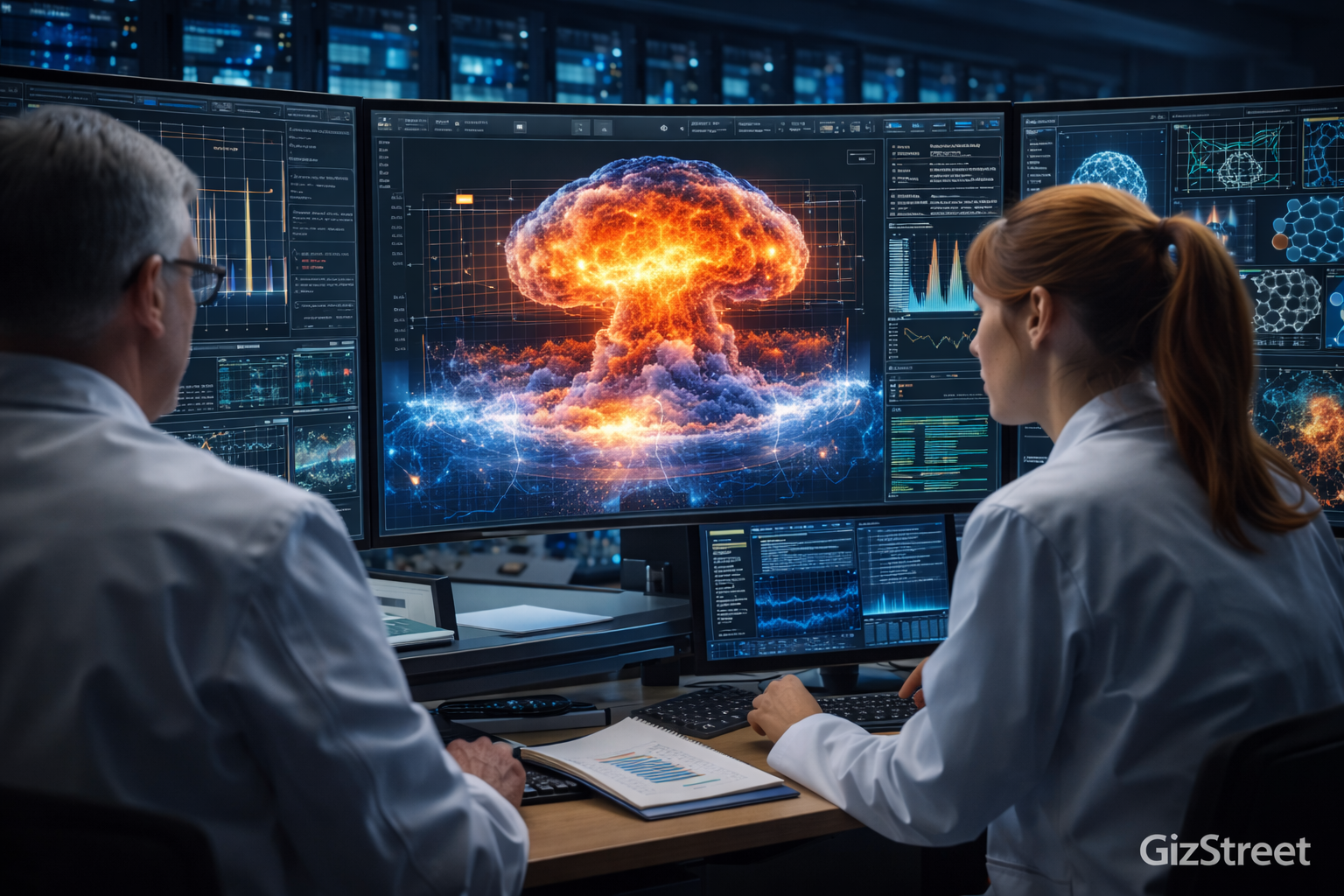
The most powerful tool in modern stockpile stewardship is advanced computer simulation. Today’s nuclear weapons laboratories operate some of the world’s fastest supercomputers — machines capable of performing quadrillions of calculations per second — to simulate nuclear weapon behavior in extraordinary detail. These simulations model the complex hydrodynamics of implosion, the neutron transport physics of chain reactions, the material properties of aging weapon components, and the effects of environmental degradation on weapon performance. While no computer simulation can perfectly replicate the complexity of a real nuclear detonation, modern codes have reached a level of fidelity that scientists are confident provides reliable assessments of stockpile health.
Subcritical experiments are another key component of stockpile stewardship. These tests use conventional explosives to drive small quantities of plutonium or uranium to near-nuclear conditions, allowing scientists to measure how the materials respond to extreme pressures and temperatures — without ever initiating a self-sustaining chain reaction. The United States has conducted dozens of subcritical experiments at the Nevada Test Site since 1997. These experiments fall outside the CTBT’s prohibition because they produce no nuclear yield.
High-energy physics facilities provide additional experimental data. The National Ignition Facility (NIF) at Lawrence Livermore National Laboratory uses powerful lasers to compress tiny fuel capsules to conditions approaching thermonuclear fusion, providing data relevant to the physics of hydrogen bomb secondaries. Sandia National Laboratories’ Z Machine generates intense X-ray bursts that can test material responses relevant to weapon design. Accelerator-based experiments at Los Alamos study the behavior of actinide materials — plutonium and uranium — under controlled conditions. Together, these approaches allow scientists to study nuclear weapons physics without ever conducting a nuclear explosion.
How Nuclear Tests Are Detected Globally
The ability to detect and verify nuclear explosions from a distance has been a central challenge in arms control since the beginning of the nuclear age. Today, the Comprehensive Nuclear-Test-Ban Treaty Organization (CTBTO) operates the world’s most sophisticated multinational monitoring system, capable of detecting nuclear explosions anywhere on Earth — underground, underwater, in the atmosphere, or in space.

Seismic monitoring is the backbone of nuclear test detection. Nuclear explosions generate distinctive seismic waves that propagate through the Earth’s crust and mantle, detectable by sensitive seismometers worldwide. Primary seismic waves (P-waves) travel faster and are detected first; secondary waves (S-waves) follow. The ratio of P-wave to S-wave amplitudes, combined with the depth of the event and the character of the seismic signature, allows analysts to distinguish nuclear explosions from natural earthquakes and conventional mining blasts with high confidence.
Hydroacoustic monitoring detects sound waves traveling through the world’s oceans, where sound propagates with remarkable efficiency through a phenomenon called the SOFAR channel — a layer of water at depth where temperature and pressure conditions minimize sound attenuation. The IMS operates eleven hydroacoustic stations capable of detecting nuclear explosions in underwater or coastal environments. Infrasound monitoring uses ultra-low-frequency microphones to detect the atmospheric pressure waves generated by large explosions. The IMS infrasound network of 60 stations can detect explosions on the surface or in the atmosphere anywhere on Earth.
Radionuclide monitoring — the detection of radioactive particles and noble gases vented by underground nuclear explosions — provides the most conclusive evidence that an explosion was nuclear rather than conventional. The IMS radionuclide network samples the atmosphere at 80 stations worldwide, identifying characteristic isotopes such as xenon-133 and xenon-135, which are produced by nuclear fission but not by any other natural or industrial process. When all four monitoring technologies detect an event in the same geographic region, analysts can achieve high confidence in both the location and the nuclear nature of the explosion.
Ethical and Geopolitical Implications
Nuclear weapons testing sits at the intersection of some of the most profound ethical and geopolitical debates of the modern era. The science of nuclear weapons cannot be fully separated from the moral questions surrounding the weapons themselves — questions about deterrence, disarmament, sovereignty, and the rights of future generations to inherit a world free from nuclear risk.

The doctrine of nuclear deterrence holds that the threat of overwhelming nuclear retaliation prevents adversaries from initiating nuclear — or even large-scale conventional — conflict. Under this framework, maintaining a credible, reliable nuclear arsenal is not only justifiable but essential to international stability. Deterrence theory provides the primary political rationale for continued nuclear weapons programs in the United States, Russia, China, the United Kingdom, France, India, and Pakistan. From this perspective, stockpile stewardship programs — and historically, nuclear testing — are legitimate tools for ensuring the credibility of the deterrent.
Critics of deterrence argue that the doctrine is morally untenable because it depends on the willingness to use weapons capable of indiscriminate mass destruction, violating fundamental principles of international humanitarian law. The International Court of Justice, in its 1996 advisory opinion, held that the threat or use of nuclear weapons would ‘generally be contrary’ to international humanitarian law. The Treaty on the Prohibition of Nuclear Weapons (TPNW), which entered into force in 2021 and has been signed by more than 90 countries, reflects a growing international consensus that nuclear weapons must be categorically eliminated — a position resisted by all nine nuclear-armed states.
Nuclear testing has also raised sharp questions about equity and colonial power. Test sites were invariably located in territories far from the metropolitan centers of nuclear-armed states — in the Pacific islands, central Asian steppes, Australian outback, and Pacific atolls — with the attendant risks borne disproportionately by indigenous and marginalized populations who had little political voice in the decisions that exposed them to harm. This dimension of nuclear testing history has become increasingly prominent in contemporary discussions of nuclear justice and reparations.
Frequently Asked Questions
- What is nuclear weapons testing?
Nuclear weapons testing is the controlled experimental detonation of a nuclear device to evaluate its performance, yield, reliability, and destructive effects. Tests have been conducted in the atmosphere, underground, underwater, and at high altitude. Over 2,000 nuclear tests were carried out by eight nations between 1945 and 1998. Today, a global moratorium is observed by all nations except North Korea, and countries use computer simulations and subcritical experiments to maintain their arsenals without explosive testing.
- How does a nuclear explosion work scientifically?
A nuclear explosion releases energy through the fission (splitting) or fusion (combining) of atomic nuclei, converting a small amount of mass into an enormous quantity of energy per Einstein’s E=mc². In a fission bomb, a chain reaction of neutrons splitting Uranium-235 or Plutonium-239 nuclei releases explosive energy. In a thermonuclear (hydrogen) bomb, a fission stage triggers a much more powerful fusion reaction between hydrogen isotopes. The energy is released as blast, heat, and radiation in millionths of a second.
- Why were nuclear tests conducted underground?
Underground testing was adopted to prevent radioactive fallout from contaminating the atmosphere and food supply. By detonating weapons deep in rock formations, the surrounding geology contains the explosion and most radioactive material. Underground tests also generate detectable seismic signals, making compliance with test ban treaties verifiable. The shift from atmospheric to underground testing began in the early 1960s following the Partial Test Ban Treaty, which prohibited atmospheric, outer space, and underwater explosions.
- What are the environmental impacts of nuclear testing?
Nuclear testing has caused widespread and lasting environmental damage. Atmospheric tests distributed radioactive isotopes globally through fallout, contaminating soil, water, and food chains. Test sites in Kazakhstan, the Marshall Islands, Nevada, and Australia show persistent radioactive contamination of soil and groundwater. Marine ecosystems at Pacific test sites suffered severe damage from radiation and blast effects. Radioactive isotopes like cesium-137 and strontium-90 remain in affected ecosystems for decades to centuries.
- Is nuclear testing still happening today?
No nation is publicly known to be conducting explosive nuclear weapons tests at present. The last confirmed nuclear test by any nation was conducted by North Korea in September 2017. The Comprehensive Nuclear-Test-Ban Treaty (CTBT), while not yet legally in force, has established a de facto global moratorium observed by all other nations. The United States, Russia, and China last conducted nuclear tests in 1992, 1990, and 1996 respectively. Countries now rely on computer simulations and subcritical experiments.
- What is the Comprehensive Nuclear-Test-Ban Treaty?
The Comprehensive Nuclear-Test-Ban Treaty (CTBT) is an international agreement adopted by the United Nations in 1996 that bans all nuclear explosions of any yield in any environment. It established the International Monitoring System — a global network of seismic, hydroacoustic, infrasound, and radionuclide sensors — to verify compliance. The treaty has not entered into legal force because eight required states, including the United States and China, have not yet ratified it, though it is observed voluntarily by all states except North Korea.
- How are nuclear tests detected internationally?
Nuclear tests are detected through four complementary monitoring technologies operated by the CTBTO’s International Monitoring System. Seismic sensors detect earthquake-like waves generated by underground explosions. Hydroacoustic sensors monitor ocean sound waves for underwater tests. Infrasound microphones detect low-frequency atmospheric pressure waves from surface or atmospheric bursts. Radionuclide detectors sample the atmosphere for radioactive isotopes characteristic of nuclear fission. Together, these systems can detect nuclear explosions anywhere on Earth with high confidence.
- What is the difference between fission and fusion bombs?
Fission bombs (atomic bombs) release energy by splitting heavy nuclei — Uranium-235 or Plutonium-239 — in a chain reaction. Their yields are typically in the range of kilotons of TNT. Fusion bombs (hydrogen or thermonuclear bombs) release energy by combining light hydrogen nuclei under extreme heat and pressure, which can only be achieved using a fission explosion as a trigger. Fusion bombs produce far greater energy per unit mass and can achieve yields in the megaton range, making them hundreds of times more powerful than fission weapons alone.
- Can nuclear testing affect global climate?
Large-scale nuclear testing — particularly extensive atmospheric tests — has been documented to have introduced radioactive isotopes into global atmospheric circulation, affecting precipitation chemistry worldwide. Some researchers have theorized that large-scale nuclear war (rather than testing alone) could trigger ‘nuclear winter,’ in which soot from fires blocks sunlight and causes global cooling. The limited atmospheric testing actually conducted has not caused measurable climate change. However, radionuclides from Cold War-era tests remain detectable in ocean sediments and ice cores as global historical markers.
- Are computer simulations replacing real nuclear tests?
Yes, advanced computer simulations have largely replaced explosive nuclear testing in nations observing the CTBT moratorium. The United States, Russia, the United Kingdom, and France all conduct stockpile stewardship programs using supercomputers capable of simulating nuclear weapon physics in detail. These simulations are complemented by subcritical experiments (which test materials without achieving nuclear yield), high-energy laser experiments, and advanced materials characterization techniques. While simulations cannot perfectly replicate all aspects of a nuclear detonation, scientific consensus holds that they are sufficient to maintain stockpile reliability.
Share this story
Related Articles
NASA Artemis IV: Astronauts to Build First Lunar Gateway Module
The upcoming mission will establish humanity's first permanent outpost in lunar orbit.
FAA Approves Nationwide Drone Delivery Expansion for Amazon and Wing
New regulations allow beyond-visual-line-of-sight operations in urban areas.

Why Do We Feel Starved for Time? New Research Offers Answers
You have a calendar app, a task manager, voice assistants, and automated reminders. Yet somehow, there are never enough hours in the day. If […]
Comments (0)