Best Budget 5G Phones Under ₹15,000 in India (2026 Buying Guide)
Table of Contents
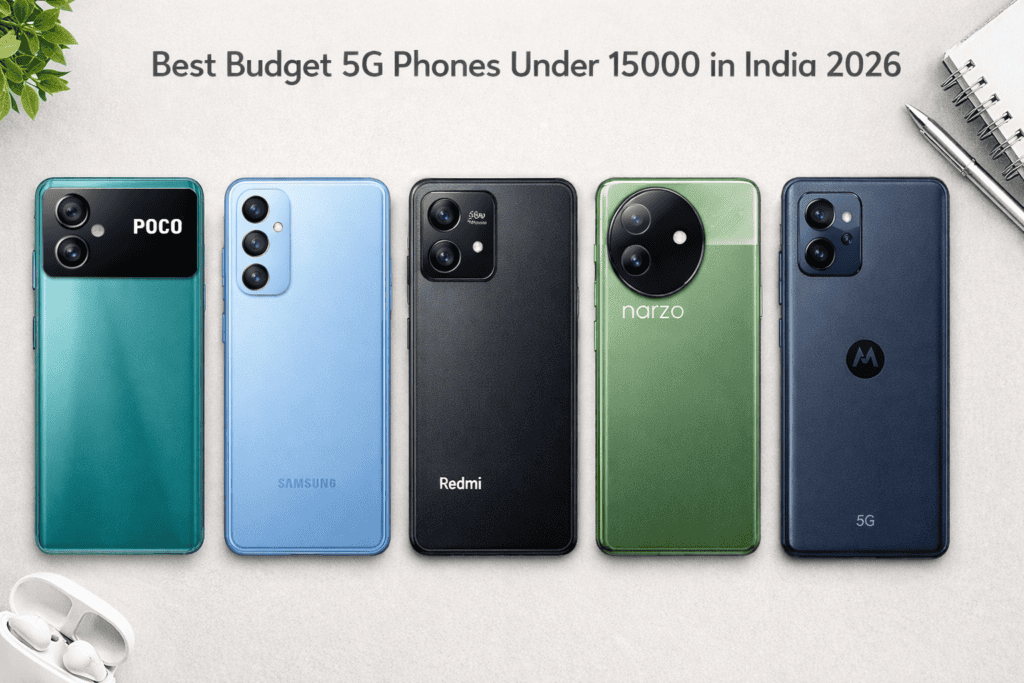
The best budget 5G phones under ₹15,000 in India are better than ever in 2026, delivering AMOLED displays, 6000mAh batteries, and fast 5G chipsets at prices that were unthinkable just two years ago. This guide covers the top five picks, compares their real-world performance, and tells you exactly which one to buy based on your priorities.
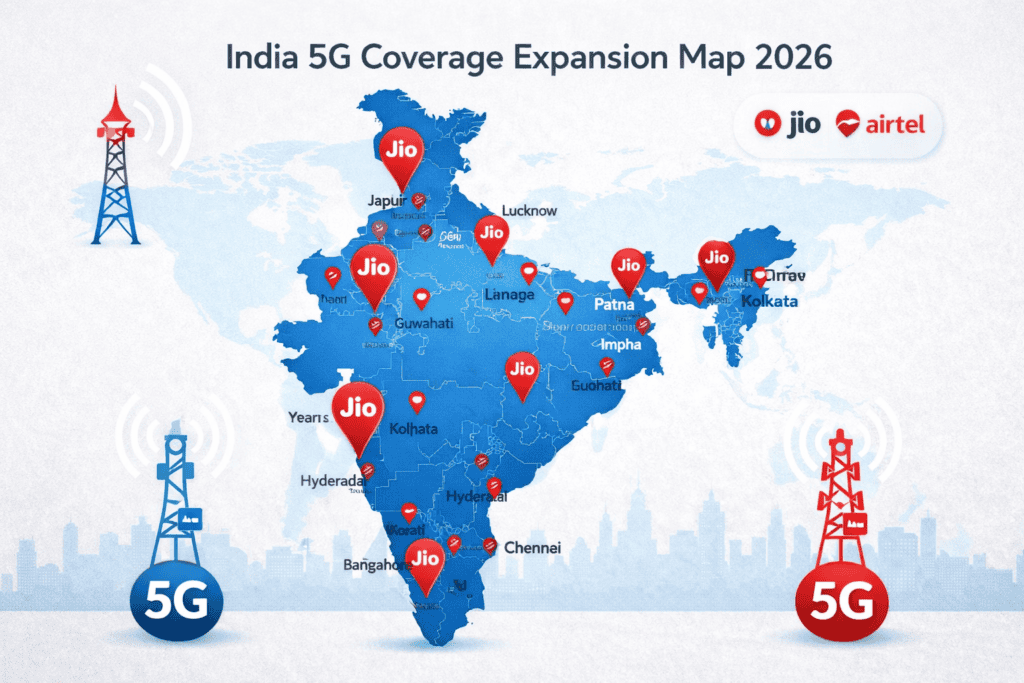
India’s 5G rollout has accelerated dramatically. Jio and Airtel now cover hundreds of cities, making 5G connectivity a practical necessity rather than a luxury feature. As a result, demand for affordable 5G handsets has surged, and smartphone makers have responded with fierce competition in the sub-₹15,000 space.
Whether you are a student, a first-time buyer, or upgrading from a 4G phone, this article breaks down exactly what you get, what you compromise on, and which device delivers the best bang for your rupee in 2026. We cover display technology, processor performance, battery endurance, camera quality, and software experience across every top contender.
Understanding the Budget 5G Landscape in India
The sub-₹15,000 smartphone segment has transformed completely. What was once a compromise-laden category now delivers feature sets that rival mid-range phones from just two years ago. Gone are the days when budget meant sluggish processors, dim displays, or weak batteries.
Today, you can find devices with 120Hz smooth displays, MediaTek Dimensity chipsets capable of handling BGMI and COD Mobile, and batteries that last a full two days on a single charge. The key shift has been in silicon availability. MediaTek’s Dimensity 6000 and 7000 series have brought robust 5G support down to the entry level, enabling brands to hit the ₹15,000 price point without crippling the hardware.
Brands competing in this space include Xiaomi’s Redmi and POCO sub-brands, Realme’s Narzo and P-series, Samsung’s Galaxy M and F lines, Motorola’s G series, and iQOO’s Z-series. Each brand emphasizes a different strength. Some chase the best display. Others focus on battery endurance, clean software, or camera hardware. Understanding those trade-offs is the first step toward choosing your perfect phone.
Quick Comparison: Top 5G Phones Under ₹15,000
Here is a side-by-side look at the leading contenders. Use this table to quickly match your priorities to the right device before diving into the detailed reviews below
| Model | Processor | RAM | Storage | Display | Battery | Charging |
| POCO M7 Pro 5G | Dimensity 7025 | 6GB | 128GB | 6.67″ AMOLED 120Hz | 5000mAh | 33W |
| iQOO Z10x | Dimensity 7300 | 6GB | 128GB | 6.67″ LCD 120Hz | 6000mAh | 44W |
| Redmi Note 14 SE 5G | Dimensity 6100+ | 6GB | 128GB | 6.67″ LCD 120Hz | 5000mAh | 33W |
| Moto G57 Power | Dimensity 6300 | 6GB | 128GB | 6.72″ LCD 120Hz | 6000mAh | 33W |
| Realme P1 5G | Dimensity 7050 | 6GB | 128GB | 6.5″ AMOLED 90Hz | 5000mAh | 45W |
As the table shows, most devices offer 6GB RAM and 128GB storage, but differ meaningfully in processor tier, display panel type, and battery capacity. These differences matter in real-world usage, which is why the detailed reviews below go beyond the spec sheet.
What to Expect from Budget 5G Phones in 2026
Processor Performance: MediaTek Dimensity Dominates
In the sub-₹15,000 segment, MediaTek’s Dimensity series chipsets are virtually universal. The Dimensity 6100+, Dimensity 6300, Dimensity 7025, Dimensity 7050, and Dimensity 7300 are the processors you will encounter most often. Each brings integrated 5G modems, efficient ARM Cortex cores, and Mali GPU support for gaming.
The Dimensity 7000 series chips sit noticeably above the 6000 series in CPU and GPU throughput. If gaming or heavy multitasking is a priority, targeting a device with a Dimensity 7025 or higher is a smart move. For everyday social media, streaming, and productivity, even the Dimensity 6100+ delivers a smooth experience.
Qualcomm Snapdragon options are rare in this price bracket in India, since MediaTek’s pricing advantage allows brands to hit the ₹15,000 ceiling while keeping margins intact. This is not a compromise. The latest Dimensity processors are competitive, efficient, and fully capable for the majority of users.
Display: AMOLED vs LCD in the Budget Segment
Display technology is one of the most debated topics in this category. AMOLED panels deliver deeper blacks, richer colors, and better power efficiency when rendering dark themes or wallpapers. They also support in-display fingerprint sensors in some implementations. However, budget AMOLED panels can struggle with outdoor visibility on very bright days.
LCD panels, on the other hand, tend to offer higher peak brightness and better legibility in direct sunlight. They are also less prone to burn-in over long-term use. The trade-off is that colors look less vivid and blacks appear gray rather than true black.
In 2026, AMOLED has finally arrived at the sub-₹15,000 tier in a meaningful way. The POCO M7 Pro 5G and Realme P1 5G both ship with AMOLED panels, which would have been considered premium-only features until recently. If you consume a lot of video or spend significant time on social media, the visual upgrade is genuinely worth it.
Refresh rate is now universally 90Hz or 120Hz in this segment. The iQOO Z10x, Redmi Note 14 SE 5G, Moto G57 Power, and POCO M7 Pro 5G all offer 120Hz panels. The Realme P1 5G comes in at 90Hz, which is the only area where it falls behind the competition in display smoothness.
Battery Life and Charging Speed
Battery capacity has improved dramatically. A 5000mAh battery is now the entry point, and several devices in this segment ship with 6000mAh cells. The Moto G57 Power and iQOO Z10x both carry 6000mAh batteries, offering endurance that regularly exceeds two days for moderate users.
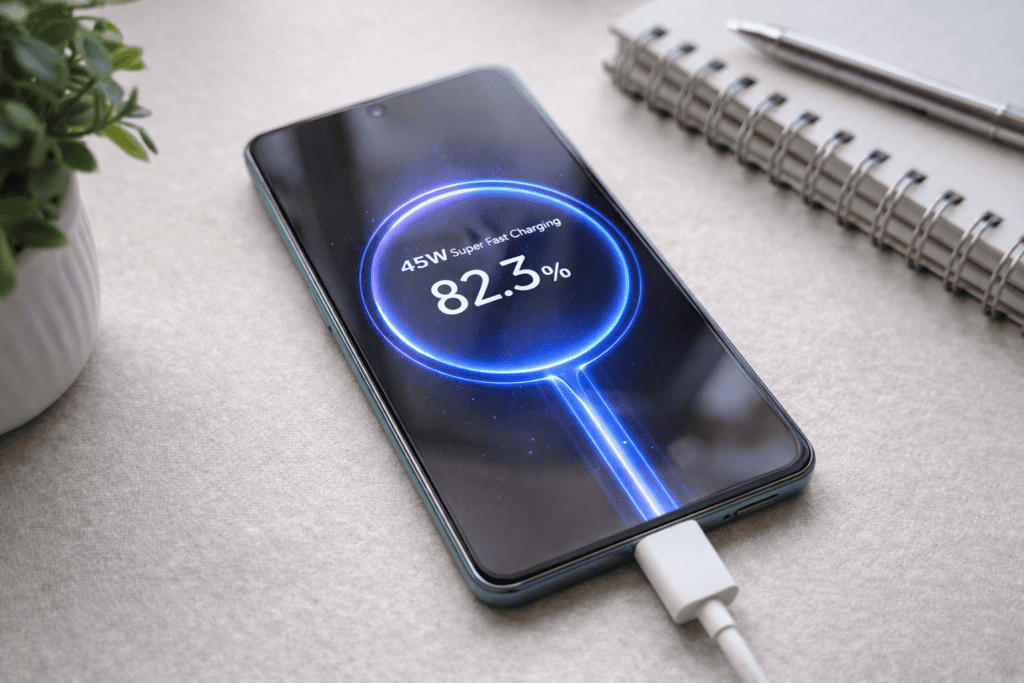
Charging speeds have also moved well past the old 10W and 15W norms. The Realme P1 5G leads the segment with 45W fast charging. The iQOO Z10x follows with 44W. Even base devices now offer 33W, which can replenish a 5000mAh battery from zero in under an hour. This practical improvement makes range anxiety a non-issue for most users.
Detailed Reviews: Top 5 Budget 5G Phones
1. POCO M7 Pro 5G — Best for Display and Entertainment
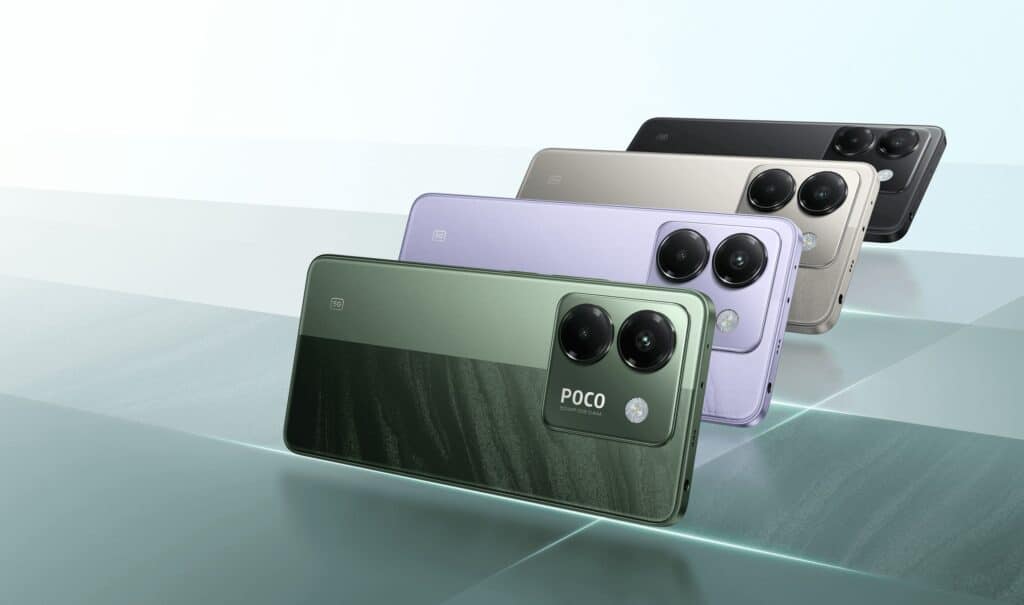
The POCO M7 Pro 5G is the standout choice for anyone who prioritizes display quality. Its 6.67-inch AMOLED panel with 120Hz refresh rate delivers an experience that was reserved for phones costing ₹25,000 or more just two years ago. Colors are vivid and punchy, blacks are genuinely deep, and motion in gaming and video playback is smooth.
Under the hood, the MediaTek Dimensity 7025 handles daily tasks and light-to-medium gaming without hesitation. BGMI runs comfortably at smooth settings, and the thermal management is solid enough to sustain longer sessions without uncomfortable heat. The 6GB RAM and 128GB storage setup is standard but fully adequate.
The 5000mAh battery delivers consistent all-day performance, and 33W charging fills it reasonably quickly. POCO’s software update track record is good, with two years of Android OS updates typically included. The main limitations are the average low-light camera performance and the plastic build, which feels less premium than its display suggests.
| ✅ Pros | ❌ Cons |
| Stunning AMOLED 120Hz display | Average low-light camera |
| Capable Dimensity 7025 processor | No ultra-wide lens |
| Great media consumption experience | Plastic build material |
| Good software update commitment |
2. iQOO Z10x — Best Battery Life
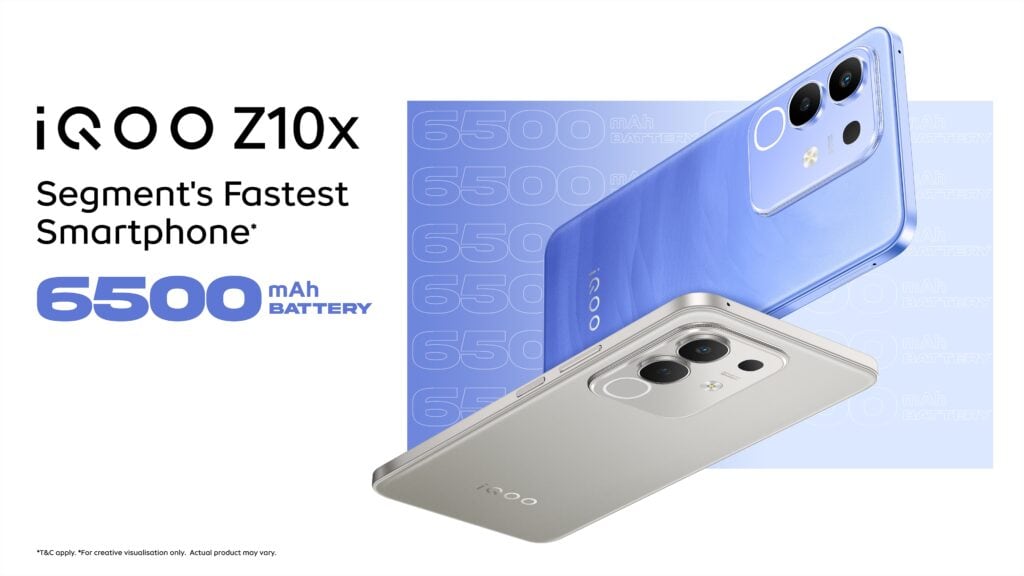
The iQOO Z10x is built for users who refuse to compromise on endurance. Its 6000mAh battery is the headline feature, delivering two full days of moderate usage and outlasting every other phone in this segment. Heavy users who stream video, play games, and stay active on social media throughout the day can comfortably get through a full day plus without reaching for the charger.
The MediaTek Dimensity 7300 is among the stronger processors available at this price point. It handles gaming well, multitasks smoothly, and the 6GB RAM ensures apps stay loaded in memory. The 6.67-inch LCD panel with 120Hz refresh rate is bright and responsive, though it cannot match the visual depth of an AMOLED display.
44W fast charging is the ideal companion for the large 6000mAh battery. While charging from zero to full takes longer than with smaller batteries, 44W significantly reduces that time compared to older 18W or 15W norms. The iQOO Z10x is slightly heavier than competitors due to its large cell, which is a reasonable trade-off for the endurance it provides.
| ✅ Pros | ❌ Cons |
| Best-in-class battery endurance | Heavier due to large battery |
| 44W fast charging | No AMOLED panel |
| Strong Dimensity 7300 chip | Camera average in low light |
| Smooth 120Hz LCD display |
3. Moto G57 Power — Best for Clean Software Experience
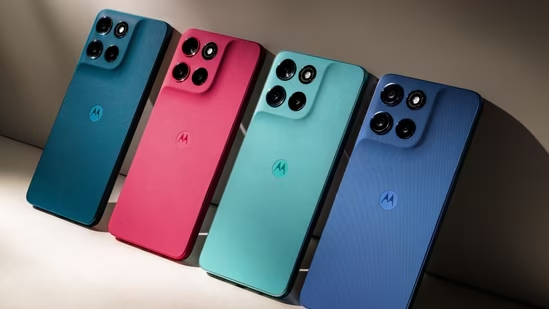
Motorola occupies a unique position in the Indian budget market. The Moto G57 Power ships with a near-stock Android interface, minimal bloatware, and a consistent promise of timely security patches. For users who have grown tired of heavily skinned interfaces packed with pre-installed apps, this phone is a genuine breath of fresh air.
The 6.72-inch LCD display is the largest screen in this comparison and provides ample real estate for content consumption and productivity. The 120Hz refresh rate keeps interactions feeling fluid. The Dimensity 6300 processor handles everyday tasks reliably, though it is the weakest chipset in this roundup and will show its limits in demanding gaming scenarios.
The 6000mAh battery is a highlight, matching the iQOO Z10x’s capacity and delivering similarly outstanding endurance. The trade-off is charging speed. At 33W, the Moto G57 Power is slower to replenish than competitors offering 44W or 45W. The camera is competent for daytime photography but trails the AMOLED-equipped phones for social media use.
| ✅ Pros | ❌ Cons |
| Near-stock Android, no bloatware | Weakest processor of the five |
| Massive 6000mAh battery | Slower 33W charging |
| Large 120Hz display | Average camera performance |
| Dependable Motorola service network |
4. Realme P1 5G — Best Fast Charging

The Realme P1 5G targets users who want to charge up and go in the shortest time possible. Its 45W fast charging is the fastest in this segment, and the combination of that speed with a 5000mAh battery means you can go from near-empty to over 60 percent in about 30 minutes. This makes it particularly well-suited for busy lifestyles where plugging in for hours is simply not practical.
The 6.5-inch AMOLED display with 90Hz refresh rate delivers beautiful visuals, making it a strong choice for media consumption. The Dimensity 7050 processor handles everyday tasks and gaming confidently, and the 6GB RAM keeps multitasking smooth. The 50MP main camera produces solid results in daylight.
The design stands out as unusually premium for the price point. Unlike many budget phones that feel plasticky and generic, the Realme P1 5G has a sleek, polished aesthetic that does not look like a budget device. The main compromises are the 90Hz display, which lacks the 120Hz smoothness of competitors, and the smaller 5000mAh battery compared to the 6000mAh cells in the iQOO and Moto alternatives.
| ✅ Pros | ❌ Cons |
| Fastest 45W charging in segment | 90Hz rather than 120Hz display |
| AMOLED display panel | Smaller 5000mAh battery |
| Premium design aesthetic | Average low-light camera |
| Good Dimensity 7050 performance |
5. Redmi Note 14 SE 5G — Best All-Rounder
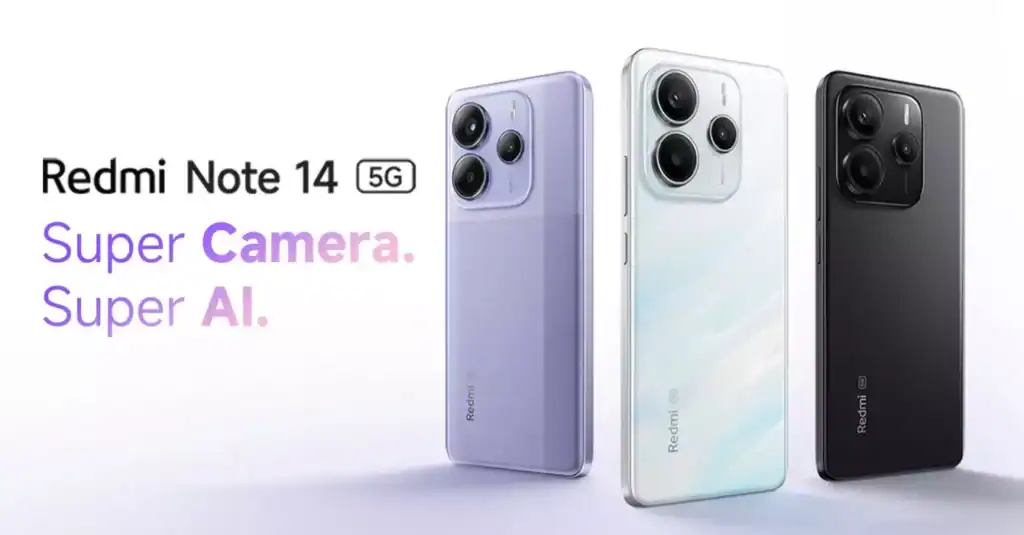
Xiaomi’s Redmi Note series has built a loyal following in India by offering dependable, well-rounded smartphones at competitive prices. The Redmi Note 14 SE 5G continues this legacy. It does not lead in any single category, but it consistently delivers reliable performance across all areas without any significant weakness.
The Dimensity 6100+ processor handles everyday tasks, social media, and casual gaming smoothly. The 6GB RAM ensures apps stay ready in memory, and the 128GB internal storage can be expanded via microSD for users who need more space. The 6.67-inch LCD display with 120Hz refresh rate provides smooth, responsive visuals for daily use.
The 5000mAh battery delivers all-day performance, and 33W charging is adequate though not class-leading. Xiaomi’s software experience, while feature-rich, does include more bloatware than Motorola’s offering, which is a personal preference factor rather than a technical limitation. The Redmi Note 14 SE 5G is particularly well-suited for users who value brand reliability and Xiaomi’s extensive service network in India.
| ✅ Pros | ❌ Cons |
| Reliable all-round performance | MIUI includes some bloatware |
| Trusted brand with wide service coverage | LCD display, no AMOLED option |
| Expandable storage support | Mid-tier chipset for gaming |
| Good software feature set |
Gaming and Multitasking Performance

Mobile gaming is a major use case for Indian smartphone buyers. Titles like BGMI, Call of Duty Mobile, and Free Fire are enormously popular, and users expect their phones to handle these games without frustrating lag or excessive heating.
Among the five phones reviewed here, the POCO M7 Pro 5G and Realme P1 5G offer the best gaming experience, thanks to their Dimensity 7025 and 7050 processors respectively. Both can handle BGMI at smooth frame rates and COD Mobile at high settings. The iQOO Z10x, with its Dimensity 7300, is also a strong performer and additionally benefits from iQOO’s gaming-focused brand DNA inherited from parent company Vivo.
The Moto G57 Power and Redmi Note 14 SE 5G are competent for casual gaming but will show limitations with the most demanding titles at high settings. For users who game seriously, the extra investment in a Dimensity 7000-series device pays off in a noticeably smoother experience. Thermal management has improved across all five devices in 2026, allowing for sustained gaming sessions without the phone becoming uncomfortably warm.
Camera Capabilities: Setting Realistic Expectations
Camera performance is an area where budget phones still show meaningful differences compared to mid-range and flagship devices. However, 2026 has seen genuine improvements in computational photography at this price level.
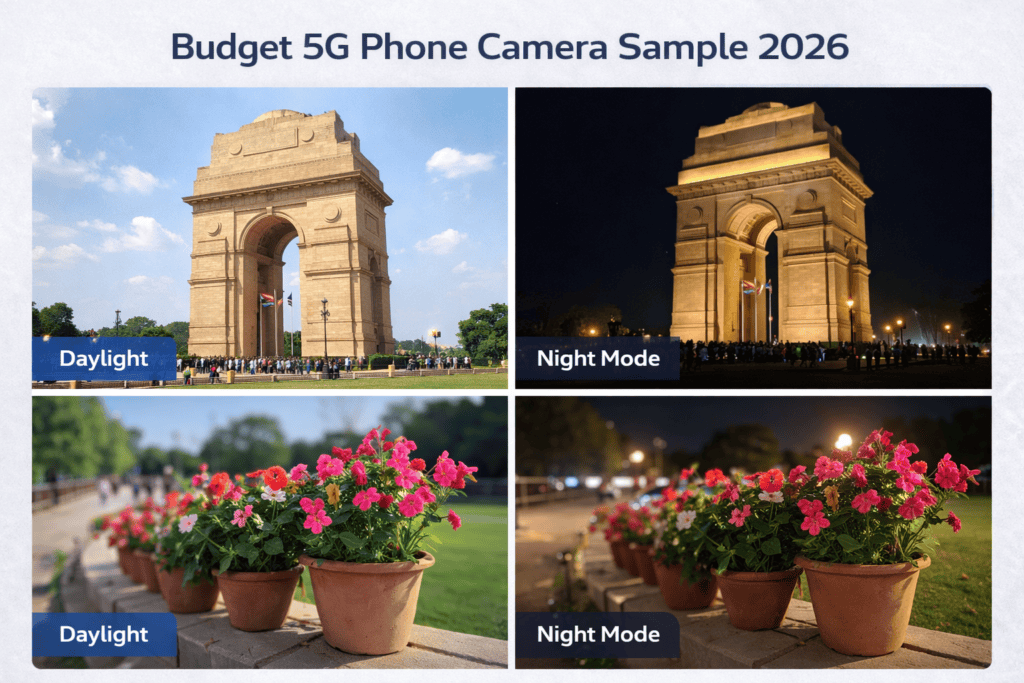
All five phones ship with 50MP primary sensors, which deliver detailed, color-accurate shots in good lighting. Outdoor photography during the day produces social media-worthy results with accurate white balance and reasonable dynamic range. When you move indoors or into lower-light environments, the differences between budget and premium cameras become apparent.
Night mode is available across all five devices and provides a noticeable improvement over standard low-light shots by merging multiple exposures. However, results still show more noise and less detail than flagship alternatives. Portrait mode performance is adequate for everyday use, but background separation is less precise than you would find in more expensive phones.
For users whose primary photography happens outdoors during the day, all five phones will satisfy. For dedicated night photographers or content creators, these devices are a starting point rather than an end destination. The POCO M7 Pro 5G and Realme P1 5G benefit from their AMOLED displays, which make photo and video review look considerably better than on LCD-equipped alternatives.
Which Budget 5G Phone Should You Buy? (By Use Case)
Choosing the right device comes down to identifying your top one or two priorities. Here is a quick decision guide based on common use cases:
- Media consumption and entertainment: POCO M7 Pro 5G — the AMOLED 120Hz display is unmatched at this price.
- Maximum battery life and endurance: iQOO Z10x — the 6000mAh cell with 44W charging is the best combination.
- Clean Android with no bloatware: Moto G57 Power — near-stock software with timely updates.
- Fastest charging and premium look: Realme P1 5G — 45W charging and sleek design stand out.
- Reliable all-rounder with service support: Redmi Note 14 SE 5G — balanced specs and a trusted service network.
All five phones support 5G bands compatible with Jio and Airtel networks in India. All include USB-C charging ports and side-mounted fingerprint sensors. Storage is expandable on all models except where noted.
Frequently Asked Questions
Q: Is 5G actually stable and useful in India in 2026?
Yes. Jio and Airtel have expanded their 5G infrastructure to cover most major cities and many smaller towns. Urban and suburban users in covered areas consistently access 5G networks. Rural coverage remains limited but is actively expanding. For most Indian buyers in cities, 5G is a present reality and worth investing in for future-proofing.
Q: Should I choose AMOLED or LCD for a budget phone?
Choose AMOLED if you watch a lot of video, use dark themes, or care about color vibrancy. The POCO M7 Pro 5G and Realme P1 5G offer AMOLED at this price. Choose LCD if outdoor brightness and durability are your priority. The iQOO Z10x and Moto G57 Power both have excellent LCD panels that are bright and smooth.
Q: How long will these phones receive software updates?
Samsung typically offers the longest update commitments, covering 2-3 years of OS upgrades and 4-5 years of security patches. Xiaomi and POCO generally provide 2 years of Android OS updates and 3 years of security updates. Motorola offers 2 years of OS updates. Realme and iQOO provide approximately 2 years of OS support.
Q: Can these phones handle BGMI or COD Mobile well?
The POCO M7 Pro 5G, Realme P1 5G, and iQOO Z10x handle BGMI and COD Mobile at medium to high settings without significant issues. The Moto G57 Power and Redmi Note 14 SE 5G are better suited for casual gaming. If BGMI performance is your top priority, the Dimensity 7000-series phones are the better choice.
Q: Which brand has the best after-sales service in India?
Xiaomi has the largest service center network in India, followed by Samsung and Realme. Motorola’s service network is solid in urban areas. iQOO service centers are growing but are fewer in number. Before purchasing, check the nearest authorized service center for your chosen brand.
Q: Is 6GB RAM enough for daily use in 2026?
Yes, 6GB RAM is comfortably sufficient for everyday tasks, social media, streaming, and casual gaming. Most apps stay loaded and ready in the background. For heavy multitasking or if you frequently switch between many demanding apps simultaneously, 8GB RAM would be preferable, but 6GB handles the needs of the vast majority of users at this price point.
Q: What 5G bands do these phones support for India?
All five phones support the key 5G bands used by Jio and Airtel in India, including n78 (Sub-6GHz). None support mmWave 5G, which is not deployed at scale in India at present. For practical 5G usage in India, Sub-6GHz support is all you need.
Conclusion: Your Perfect Budget 5G Phone Is Here
Finding the best budget 5G phone under ₹15,000 in India has never been easier. The five devices covered in this guide all deliver genuine value, capable performance, and reliable 5G connectivity at a price that was impossible just two years ago.
The POCO M7 Pro 5G wins for media lovers who want the best display. The iQOO Z10x is the choice for users who cannot afford to run out of battery. The Moto G57 Power is the answer for anyone tired of bloatware and intrusive software. The Realme P1 5G rewards users who need to charge quickly and move on. The Redmi Note 14 SE 5G is the safe, reliable all-rounder backed by Xiaomi’s vast service infrastructure.
Any of these phones will serve you well in 2026. Take a moment to identify your one or two top priorities from the buying guide section above, and your decision will be straightforward. India’s 5G future is accessible today, and it does not have to cost a rupee more than ₹15,000.
→ Check more smartphone buying guides and reviews on GizStreet.com

thank your for this article, keep up the good work
Thank you
This is really interesting, You’re a very skilled blogger. I’ve joined your feed and look forward to seeking more of your magnificent post. Also, I’ve shared your site in my social networks!