Home / Life-Saving Research on Extreme Heat Comes Under Fire
Life-Saving Research on Extreme Heat Comes Under Fire
sarankk | March 16, 2026 | 18 min read
Table of Contents
Every summer, as heat waves shatter records and emergency rooms fill with heat-stroke patients, scientists race to understand how extreme heat kills — and how to stop it. A growing body of research has provided life-saving guidance on cooling interventions, early warning systems, and public health protocols. Yet in an unexpected twist, some of that very research is now at the center of a fierce scientific and policy debate. Peer critics, policymakers, and media commentators are questioning the methods, the data, and even the motivations behind the studies meant to protect us from a warming world.
This is not an ordinary controversy. When research that informs life-or-death decisions comes under fire, the stakes extend far beyond academic journals. Urban heat adaptation plans, emergency cooling funds, and millions of dollars in public health spending are anchored to this science. If the research is wrong — or even imprecisely communicated — the consequences could be severe. And if the criticism is unfair or politically motivated, suppressing good science in a warming world could cost far more lives than any methodological debate.
This article examines the core research at the heart of the debate, the legitimate and contested criticisms it faces, how the scientific community is responding, and what this entire episode tells us about the challenges of turning climate science into policy.
What Is the Life-Saving Heat Research at the Center of the Debate?
The research now generating controversy is primarily a set of large-scale epidemiological studies published over the past several years by teams affiliated with leading global health institutions — including the London School of Hygiene & Tropical Medicine, Harvard T.H. Chan School of Public Health, and collaborating research centers across Europe, Asia, and Latin America. The work forms part of an expanding field that analyzes temperature-mortality relationships: essentially, how changes in ambient temperature drive changes in death rates across different populations and climates.
The flagship studies examined data from dozens of countries, analyzing millions of deaths across multiple decades to establish how heat exposure correlates with increased mortality — particularly from cardiovascular, respiratory, and renal causes. Crucially, these studies went beyond simple hot-day fatality counts. They modeled “attributable mortality” — the estimated share of deaths in a population that can be linked to heat exposure even on days that are not technically extreme, finding that a large proportion of heat-related deaths occurs on moderately hot days rather than record-breaking ones.
From this foundation, the research generated concrete public health recommendations: expanding urban green canopy to reduce the urban heat island effect, deploying cooling centers in low-income neighborhoods, establishing heat health action plans with defined temperature thresholds, and revising building codes to require passive cooling in residential construction. Policymakers in dozens of cities — from Phoenix to Paris to Mumbai — have referenced this research when making infrastructure and emergency preparedness decisions.

Why Extreme Heat Research Is Crucial for Public Health
Heat is one of the most underappreciated killers in modern medicine. Unlike dramatic climate events — floods, hurricanes, wildfires — heat death is often invisible. Victims die quietly in apartments, in care homes, in fields. Cause-of-death certificates rarely say “hyperthermia”; they say “cardiac arrest” or “multi-organ failure,” obscuring the underlying driver. This statistical invisibility is precisely why targeted research is essential
489,000+ Annual heat-related deaths globally (WHO est.) | 2°C Warming threshold linked to 300% rise in deadly heat events | 70% Of heat deaths occur in the elderly (65+) |
The 2003 European heat wave — which killed an estimated 70,000 people in a single summer — became a watershed moment for heat mortality research. France alone lost roughly 15,000 lives in two weeks, prompting governments across the continent to commission large-scale studies into who was most at risk and why. The research that followed revealed strikingly consistent patterns across geographies: socioeconomic vulnerability, urban density, limited green space, and absence of air conditioning are reliable predictors of heat death risk.
Who Is Most at Risk?
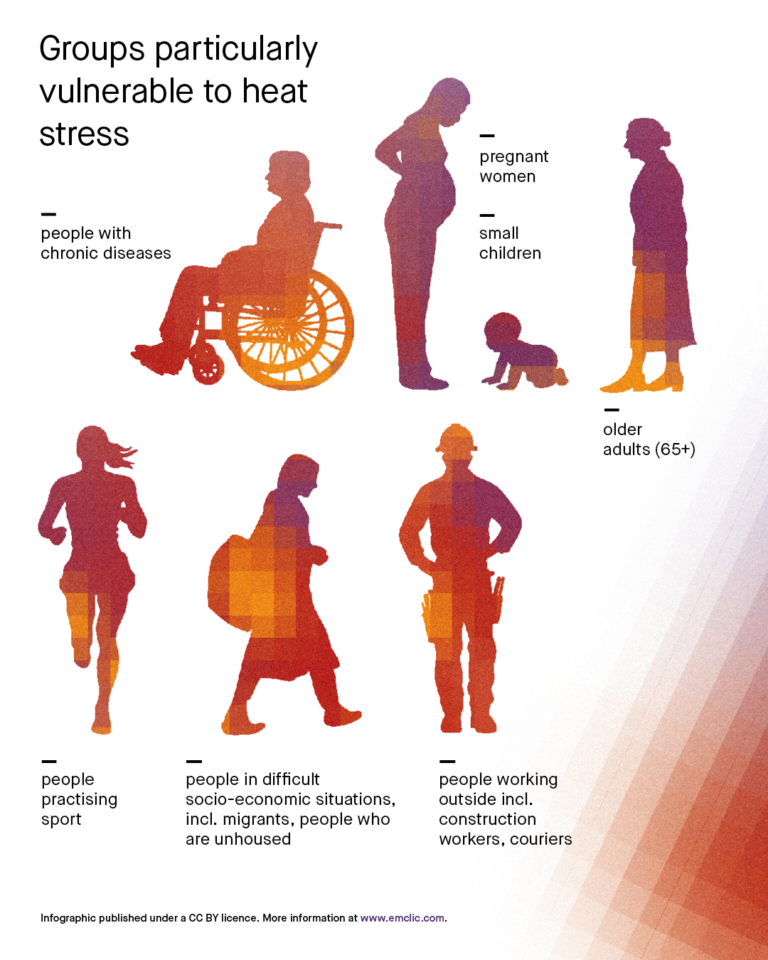
Research consistently identifies several populations as disproportionately vulnerable to extreme heat:
- Older adults (65+): Diminished thermoregulatory capacity, multiple chronic conditions, and social isolation amplify risk dramatically. Studies show mortality risk increases non-linearly with age above 75.
- Outdoor and agricultural workers: Sustained physical exertion in high-heat environments causes cumulative physiological stress that raises cardiovascular and renal risk.
- Low-income and unhoused populations: Limited access to air conditioning, poor housing insulation, and reduced access to emergency healthcare create a “heat poverty” dynamic.
- Infants and young children: Immature thermoregulatory systems and dependence on caregivers for cooling interventions.
- People with pre-existing conditions: Cardiovascular disease, diabetes, respiratory illness, and certain psychiatric medications all impair the body’s ability to cope with heat stress.
The research also addresses systemic solutions. Studies have quantified the mortality reduction associated with urban greening programs, the effectiveness of cool-roof mandates, and the cost-effectiveness of public cooling centers relative to emergency hospital admissions. In doing so, this science has shifted from purely academic to deeply operational — directly shaping the budgets and emergency protocols of municipalities worldwide.
Perhaps most importantly, the research has validated the concept of heat health action plans (HHAPs): integrated systems that trigger specific government responses — public warnings, cooling center activation, welfare checks on vulnerable residents — when forecast temperatures breach defined thresholds. Cities with functioning HHAPs have demonstrably lower excess mortality during heat events, and this evidence base was built on the research now under scrutiny.
Origins of the Controversy
The current wave of criticism began crystallizing following the wide media coverage of several high-profile attributable mortality studies — particularly those that produced sweeping global figures, such as estimates attributing hundreds of thousands of annual deaths to non-optimal temperatures. As these statistics moved from academic papers to newspaper headlines and government reports, they attracted scrutiny from scientists who felt the broader communication of the research overstated certainty or simplified complex probabilistic modeling.
The controversy is multi-layered, involving at least four distinct categories of critic: academic peers who dispute methodological choices; public health skeptics who question whether the attributable-mortality framework is appropriate for policy decisions; political actors who view the research as ideologically motivated; and science journalists and commentators who have raised concerns about transparency and replicability.
It is important to distinguish between these categories. Peer scientific criticism — even when vigorous — is a normal and healthy feature of scientific progress. Politically motivated attacks on inconvenient research are a very different phenomenon. This article focuses primarily on the scientific debate while acknowledging that the two have become entangled in public discourse.
Allegations Regarding Methodology
Among the most substantive technical criticisms leveled at the heat mortality research are concerns about how studies define and attribute deaths to heat exposure. Critics have raised the following specific methodological concerns:
- Sample and data quality variation: Large multi-country analyses depend on mortality registry data from dozens of nations with widely differing data quality standards. Critics argue that results from high-income, high-data-quality countries (where registries are comprehensive) may not be statistically valid when pooled with data from nations where cause-of-death reporting is inconsistent.
- Model assumption sensitivity: Attribution models require researchers to specify a “minimum mortality temperature” — the temperature at which heat-related mortality begins to rise above baseline. Critics argue that this threshold is difficult to determine empirically and that small variations in its assumed value can produce large swings in estimated attributable deaths.
- Correlation vs. causation framing: Some peer critics argue that the research correctly identifies statistical associations between high temperatures and elevated mortality, but that the leap to causal attribution — presenting these as deaths “caused by” heat — involves assumptions that are not always made transparent to general readers.
- Extrapolation beyond study populations: Critics have noted that policy recommendations based on studies in specific city or regional contexts are sometimes applied to very different geographic, climatic, or socioeconomic settings without adequate validation.
| Key Distinction Not all criticism of methodology is equal. Peer-reviewed rebuttals submitted to journals represent one level of scrutiny. Critiques from think tanks, media commentators, or political actors often lack the same evidentiary rigor — yet in public discourse, they can carry comparable weight. |
Policy Implications Under Scrutiny
A second strand of criticism targets not the research itself but its translation into policy. Several critics — including economists, urban planners, and public finance analysts — have questioned whether heat adaptation interventions recommended on the basis of this research are being implemented with sufficient rigor.
- Resource allocation efficiency: Critics argue that attributable mortality estimates, by their nature, include a broad range of deaths where heat is a contributing factor rather than the sole cause. Basing large capital expenditures — such as urban greening programs or large-scale retrofitting of public housing — on these estimates may produce suboptimal returns compared to other health interventions.
- Unrealistic expectations for early warning systems: Some public health officials have argued that the efficacy of heat early warning systems demonstrated in research settings is not always replicable when scaled to real-world government implementation, due to institutional inertia, underfunding, and public communication challenges.
- Regulatory overreach concerns: In several jurisdictions, heat mortality research has been cited as justification for new building regulations — including mandatory air conditioning requirements — that critics argue impose costs disproportionate to the demonstrated risk reduction, particularly in regions where extreme heat is relatively rare.

Defense From the Scientific Community
Research teams and the broader scientific community have responded to these criticisms with a combination of technical rebuttals, transparency initiatives, and direct engagement with the media. Their responses deserve serious consideration — and, notably, have in several instances strengthened the research by prompting additional validation.
On the question of data quality heterogeneity in multi-country studies, lead researchers have published detailed supplementary analyses demonstrating that study findings hold when restricted to countries with the highest-quality mortality registries. They argue that the pooled analysis is designed not to claim uniform accuracy for every country in isolation, but to identify consistent directional patterns — and that the consistency of results across geographically diverse settings is itself powerful evidence of the underlying relationship.
Regarding model sensitivity, several teams have published “sensitivity analyses” showing how their estimates change as key assumptions vary. These analyses generally show that while the precise numbers shift, the fundamental conclusion — that heat exposure is responsible for a large and measurable share of preventable mortality — is robust across a wide range of model specifications.
On the correlation versus causation question, researchers have pointed to biological plausibility: the mechanisms by which heat causes cardiovascular strain, renal stress, and electrolyte imbalance are well-documented in clinical medicine, providing causal grounding for the statistical associations.
Peer review processes have also been cited in the research community’s defense. The flagship studies were published in leading peer-reviewed journals including The Lancet and Nature Medicine, underwent extensive pre-publication review, and have since been cited hundreds of times in subsequent research that has largely replicated their core findings. Supporters argue that this track record of peer scrutiny and independent replication is the most meaningful measure of scientific validity.
| How Science Self-Corrects Scientific debate — even when heated — is a feature, not a bug. Studies undergo peer review, generate critical responses, and prompt follow-up research that refines or challenges original findings. The heat mortality research has already prompted several methodological improvements in how attributable mortality is calculated and communicated, strengthening the evidence base.
|
Perhaps most tellingly, independent research groups in North America, Asia, and Australia have produced comparable results using different datasets and methodologies. The convergence of findings from independent teams working without coordination is one of the strongest arguments for the robustness of the core conclusions, even if specific figures continue to be debated.

What This Means for Climate Policy
The controversy over heat mortality research arrives at a critical moment for climate adaptation policy. Governments worldwide are in the process of finalizing National Adaptation Plans (NAPs) — comprehensive frameworks that identify climate risks and outline investment strategies for resilience. Heat health, in many of these plans, represents one of the primary near-term mortality risks, particularly in urban areas and low-latitude regions.
If the research underlying heat mortality estimates is substantially revised downward — whether through legitimate scientific scrutiny or through politically driven pressure — the consequences for adaptation funding could be significant. Conversely, if the controversy creates a false impression of scientific uncertainty that causes governments to delay action, the human cost over coming decades could be severe.
Urban Heat Mitigation
Most large cities now include urban heat island mitigation in their climate adaptation strategies. Green corridors, cool pavements, white roofs, and expanded tree canopy are common interventions. These strategies are defended not only on heat mortality grounds but on air quality, energy efficiency, and urban livability metrics — meaning that even a partial revision of heat mortality estimates would not necessarily undermine the case for these investments.
Healthcare System Preparedness
Heat mortality research has been instrumental in persuading health ministries to include heat events in hospital surge-planning protocols alongside traditional mass-casualty scenarios. Emergency departments in heat-prone regions have developed triage protocols specifically for heat illness, and some jurisdictions have established dedicated heat mortality surveillance systems — all justified in part by the evidence from contested studies.
Research Funding Priorities
Funding agencies including the U.S. National Institutes of Health, the European Research Council, and Wellcome Trust have directed significant resources toward climate and health research following the publication of high-profile heat mortality studies. The current controversy has prompted some funders to add additional methodological review requirements — a development that researchers view as appropriate but that critics argue creates burdensome delays in an urgent field.

How Miscommunication Can Distort Public Understanding
One of the most damaging aspects of the current controversy has nothing to do with the science itself — it is the way the debate has been represented in media coverage and social media discourse. Complex, probabilistic research findings are routinely stripped of their uncertainty ranges, causal caveats, and methodological qualifications by the time they reach general audiences. This simplification works in both directions, creating problems both for those who wish to promote the research and those who wish to discredit it.
On the side of amplification, headlines that declare “X hundred thousand die from heat every year” — without the qualifier “attributed” or “estimated” — present statistical modeling results as hard counts, raising public alarm that may not be fully warranted by the actual evidence. On the side of dismissal, coverage that emphasizes methodological controversy without explaining why specific concerns have been addressed by researchers — or whether the critics’ own proposed alternatives have been peer-reviewed — creates a misleading impression of fundamental scientific failure.
Social media has accelerated both tendencies. Selective screenshots of critical papers circulate in communities skeptical of climate research, while oversimplified statistics from pro-climate advocates reach different audiences with equal selectivity. In both cases, the nuance that makes science meaningful — uncertainty ranges, confidence intervals, conditional conclusions — is lost.
❌ Common Distortions “Hundreds of thousands killed by heat” (removes statistical framing) “Scientists proven wrong on heat deaths” (ignores rebuttals) “Debate proves climate science is unreliable” (conflates fields) | ✅ Better Communication Include confidence intervals and “attributable” framing in headlines Report both the criticism AND the rebuttal in the same article Distinguish peer-reviewed critique from political commentary |
Science communicators, journalists, and researchers themselves share responsibility for improving this landscape. Research institutions can help by ensuring press releases accurately reflect the conditional and probabilistic nature of findings. Journalists can commit to seeking expert commentary from both the original research team and credible independent reviewers before publication. And readers can develop the habit of seeking primary sources rather than relying solely on interpreted summaries.
The Broader Context: Extreme Heat in a Warming World
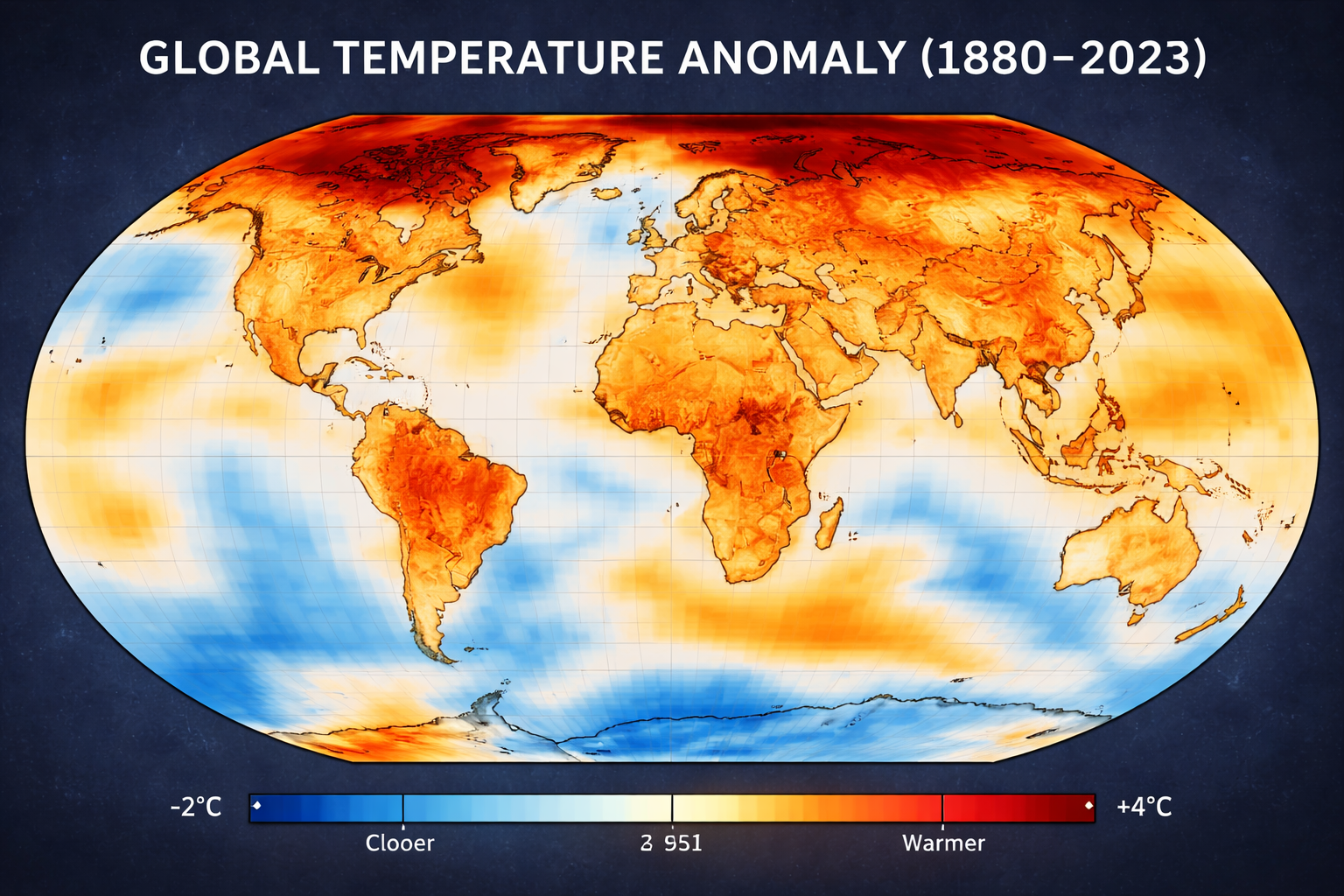
Whatever the ultimate resolution of the current methodological debate, the underlying physical reality it attempts to measure is not in serious scientific dispute. Global average temperatures have risen by approximately 1.2°C above pre-industrial levels, and the frequency, intensity, and duration of heat waves has increased measurably across most of the world’s inhabited regions. Climate models with strong predictive track records project continued acceleration of these trends.
The World Meteorological Organization has confirmed that the past decade was the hottest on record globally, and multiple independent temperature monitoring systems — from NASA and NOAA to the Berkeley Earth Surface Temperature project and the UK Met Office — show consistent warming trends. This physical reality provides the context within which heat mortality research operates.
It is also worth noting that the scientific debate over heat attribution methodology is an internal scientific debate — not a debate about whether climate change is occurring or whether heat exposure is dangerous. The dispute is about precision: how many deaths, estimated by which model, with what confidence interval. Even the most critical peer reviewers are not arguing that extreme heat is harmless or that adaptation spending is unnecessary. They are arguing for methodological improvements that would, if implemented, produce more reliable estimates — not lower ones.
The history of climate science offers instructive parallel cases. Early estimates of sea-level rise, hurricane intensification, and Arctic ice loss were all challenged, refined, and in many cases revised upward as methodologies improved and data accumulated. The trajectory of refinement in heat mortality research is likely to follow a similar path: greater precision in attribution, improved differentiation between direct and indirect heat mortality, and better integration of socioeconomic variables into predictive models.
Frequently Asked Questions
Q: Why is extreme heat research important?
Extreme heat is one of the leading climate-related causes of death worldwide, yet its mortality footprint is largely invisible on death certificates. Research in this field gives policymakers the evidence they need to build early warning systems, design cooling infrastructure, and protect vulnerable populations — particularly the elderly, outdoor workers, and low-income communities — before heat waves strike.
Q: What are the main criticisms of this particular heat research?
Critics have raised concerns about data quality variation in multi-country studies, the sensitivity of attribution models to baseline temperature assumptions, the distinction between statistical association and causal attribution, and the applicability of findings from specific geographic contexts to very different settings. These are largely methodological disputes within the scientific community, not challenges to the basic finding that heat exposure increases mortality.
Q: Does scientific debate mean the research is invalid?
No. Scientific debate is a normal and healthy part of how knowledge advances. Virtually all significant research in medicine and public health goes through cycles of publication, challenge, refinement, and replication. The existence of methodological critics does not invalidate a study; it prompts the research community to test findings more rigorously, disclose uncertainties more clearly, and improve methods for future work.
Q: How do scientists defend controversial studies?
Researchers typically respond through the same channels in which criticism is raised: peer-reviewed journals, conference presentations, and independent replication studies. In the case of heat mortality research, teams have published sensitivity analyses demonstrating that conclusions are robust across varying model assumptions, and have pointed to the biological plausibility of heat-related mortality mechanisms as causal grounding for statistical findings.
Q: Can heat wave research influence public policy?
Yes — and already does. Heat health action plans adopted by cities across Europe, North America, and Asia have been directly shaped by this research. Temperature thresholds for activating cooling centers, welfare-check protocols for vulnerable residents, and urban planning regulations all cite peer-reviewed heat mortality data. The ongoing methodological debate has prompted some agencies to apply greater scrutiny to these evidence bases, but has not, to date, produced major reversals of policy.
Q: Are heat waves linked to climate change?
Yes — this is among the most thoroughly established findings in climate science. Greenhouse gas emissions trap heat in the atmosphere, raising global average temperatures and making extreme heat events more frequent, more intense, and longer-lasting. The attribution of specific heat waves to climate change has itself become a rigorous scientific discipline, with multiple independent studies confirming that many recent events would have been essentially impossible without anthropogenic warming.
Q: How can the public interpret scientific controversy?
Several practical strategies help: distinguish between peer-reviewed criticism and political commentary; read original papers, not just media summaries; note whether critics have proposed peer-reviewed alternatives; check whether independent research teams have reached similar conclusions; and pay attention to uncertainty ranges rather than point estimates. Scientific controversies rarely mean “we know nothing” — they usually mean “we are refining how precisely we know something.”
Q: What role does media coverage play in research debates?
Media coverage can clarify public understanding of complex research — or significantly distort it. Oversimplified headlines remove the statistical qualifications that give research findings their proper context. Conversely, coverage that emphasizes controversy without explaining rebuttals can create a false impression of scientific failure. The most valuable journalism on scientific debates presents both the criticism and the response, identifies the credentials of commentators, and distinguishes empirical disputes from political ones.
Q: How can this controversy affect future research funding?
Research controversy can cut both ways for funding. Methodological scrutiny may prompt funders to require more rigorous validation protocols — a net positive for research quality. But politically motivated attacks on inconvenient science can create chilling effects, discouraging researchers from entering contentious fields. In climate health specifically, the urgency of the underlying problem means that any funding disruption carries real public health costs — making it important that debate remain grounded in evidence rather than politics.