Home / The Future of Artificial Intelligence in Business (2026 Guide)
The Future of Artificial Intelligence in Business (2026 Guide)
sarankk | March 2, 2026 | 7 min read
Table of Contents
Artificial intelligence in business is no longer experimental—it is foundational. In 2026, organizations across industries are accelerating AI adoption to remain competitive in a data-driven economy. From automated customer service to predictive supply chain management, AI future trends show a decisive shift from pilot programs to enterprise-wide deployment.
Market analysts estimate that global AI spending continues to grow at double-digit rates annually, with enterprises investing heavily in machine learning, generative AI, and intelligent automation tools. Cloud computing advancements and access to scalable AI platforms have lowered entry barriers, enabling both multinational corporations and small businesses to leverage advanced analytics.
The pressure to adapt is real. Companies that integrate AI-driven insights outperform competitors in operational efficiency, customer engagement, and decision-making speed. Meanwhile, businesses that delay adoption risk falling behind in productivity, personalization, and innovation.
The future of artificial intelligence in business is not about replacing people—it’s about augmenting human intelligence with powerful digital systems. Leaders who understand this shift and implement strategic AI adoption plans today will define tomorrow’s market landscape.
What Artificial Intelligence Really Means for Modern Businesses
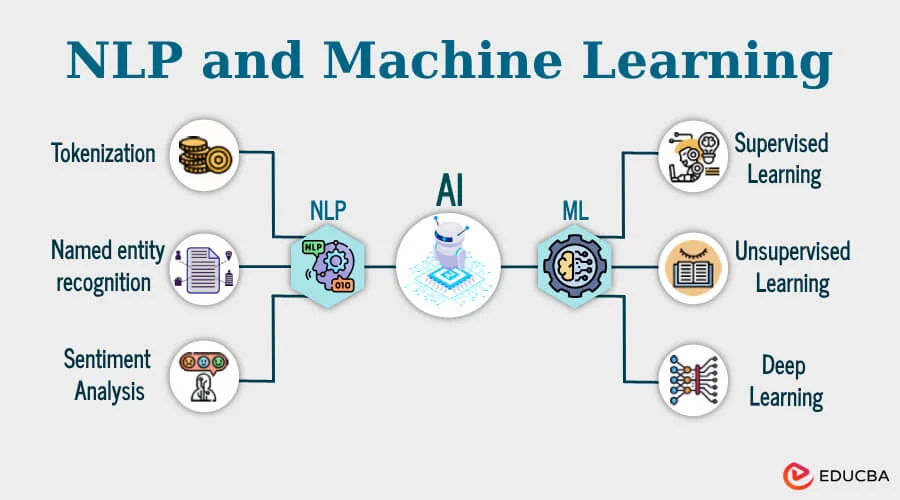
To understand AI in enterprises, it’s important to move beyond science fiction and focus on practical business automation technology. Artificial intelligence refers to computer systems designed to perform tasks that normally require human intelligence—such as learning, reasoning, problem-solving, and decision-making.
In business settings, AI typically includes:
- Machine Learning (ML):
Machine learning enables systems to learn from data and improve over time without explicit programming. For example, a sales forecasting tool can analyze historical revenue data and continuously refine its predictions as new information becomes available. - Automation and Intelligent Workflows:
Business automation technology uses AI to streamline repetitive tasks. This includes automated invoice processing, chatbots handling customer inquiries, and robotic process automation (RPA) managing administrative workflows. These systems reduce manual errors and free employees to focus on strategic work. - Predictive Analytics:
Predictive analytics applies algorithms to historical data to forecast future outcomes. Businesses use it for demand forecasting, churn prediction, maintenance scheduling, and risk assessment. Instead of reacting to problems, companies can proactively make data-backed decisions. - Natural Language Processing (NLP):
NLP allows machines to understand and generate human language. In enterprises, this powers virtual assistants, sentiment analysis tools, and document analysis systems that extract insights from contracts, emails, or customer feedback.
Ultimately, AI in enterprises is about improving efficiency, enhancing decision-making accuracy, and creating personalized customer experiences. It transforms raw data into actionable intelligence—turning information into competitive advantage.
Top AI Use Cases Across Industries
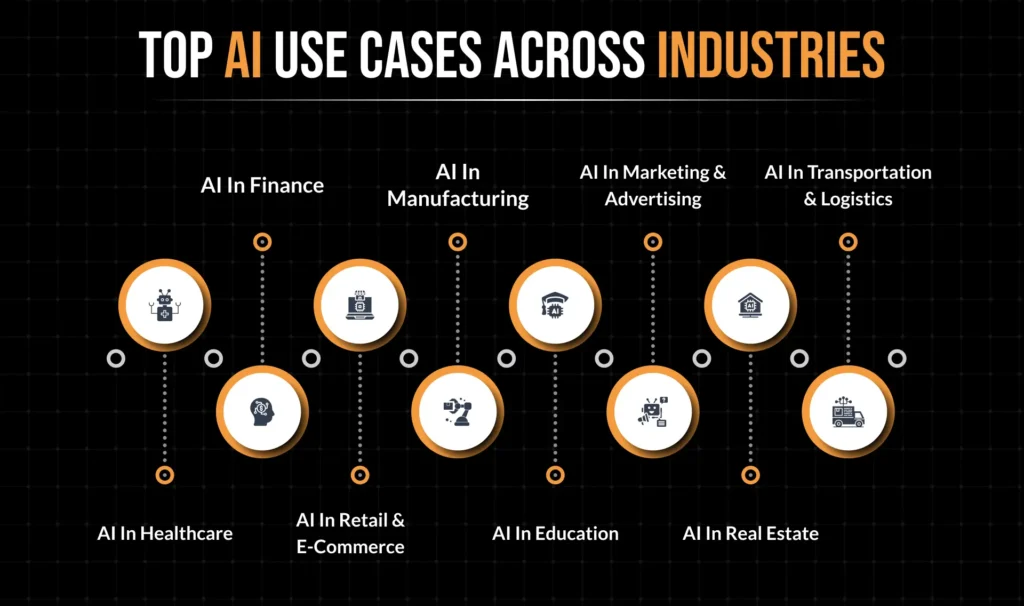
AI use cases by industry vary, but the core value remains consistent: better insights, faster decisions, and improved operational efficiency. Below are some of the most impactful AI business applications shaping industries in 2026.
AI in Healthcare

AI in healthcare is transforming patient care and operational management. Predictive diagnostics AI tools analyze medical imaging, patient histories, and genetic data to detect diseases earlier and more accurately. Machine learning models assist radiologists by identifying anomalies in X-rays and MRIs, reducing diagnostic errors.
Hospitals use AI systems to optimize staffing, predict patient admissions, and manage resources efficiently. Predictive models can identify high-risk patients and recommend early interventions, improving outcomes and reducing costs.
Additionally, AI-powered virtual assistants help patients schedule appointments, access medical records, and receive medication reminders. By combining predictive diagnostics AI with real-time data monitoring, healthcare providers are shifting from reactive treatment to proactive care.
AI in Finance
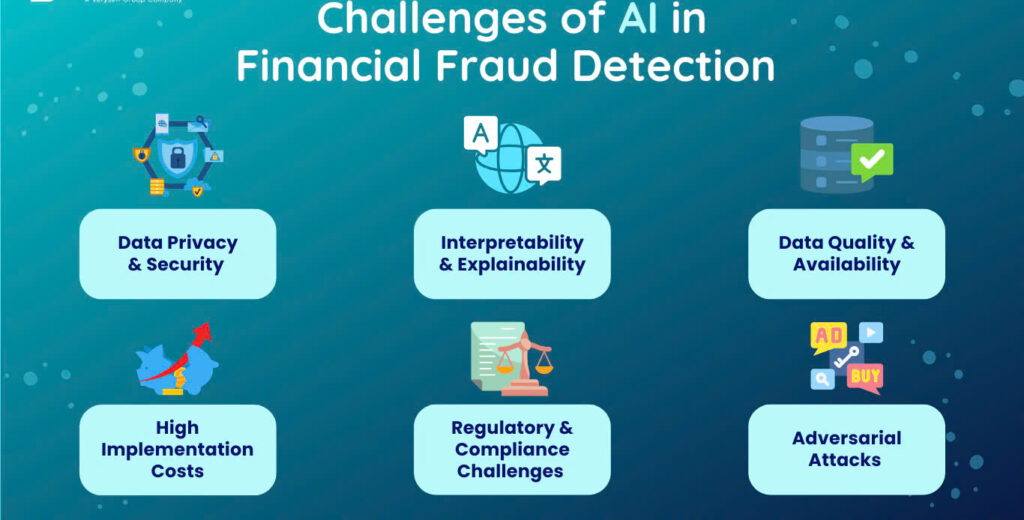
AI in finance has become essential for managing risk and detecting fraud. Fraud detection AI systems analyze transaction patterns in real time, flagging suspicious behavior within milliseconds. These tools reduce financial losses and enhance security across digital banking platforms.
Financial institutions also use AI for credit scoring and risk assessment. Instead of relying solely on traditional metrics, machine learning models evaluate diverse data sources to generate more accurate borrower profiles.
Algorithmic trading platforms leverage AI to analyze market trends and execute trades at optimal moments. Meanwhile, customer service chatbots handle account inquiries and provide personalized financial advice.
By integrating fraud detection AI and predictive analytics, financial organizations increase accuracy, reduce operational costs, and improve customer trust.
AI in Retail

AI in retail is redefining customer experiences through personalized shopping AI solutions. Recommendation engines analyze browsing history, purchase behavior, and demographic data to suggest relevant products in real time. This personalization increases conversion rates and customer loyalty.
Retailers use AI to optimize inventory management by predicting demand fluctuations. Instead of overstocking or understocking products, predictive systems ensure optimal supply levels.
Dynamic pricing tools adjust product prices based on competitor data, demand patterns, and customer behavior. Additionally, AI-powered visual search allows shoppers to upload images and find similar items instantly.
Personalized shopping AI enhances both online and in-store experiences, bridging digital and physical retail environments. As a result, retailers achieve higher revenue per customer and improved operational efficiency.
ROI of Artificial Intelligence Investments
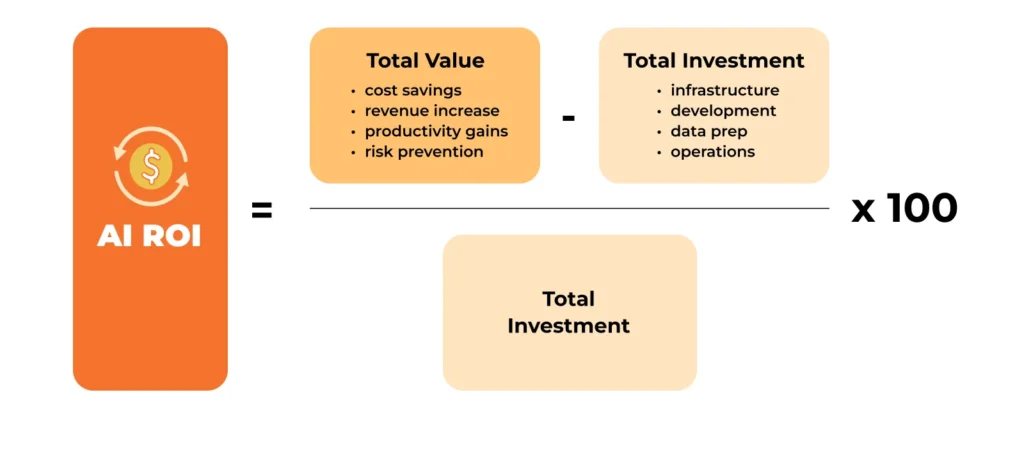
Understanding AI ROI measurement is critical for sustainable adoption. Businesses investing in AI must evaluate performance using clear AI performance metrics aligned with strategic goals.
Key performance indicators (KPIs) include cost reduction percentage, productivity improvement, revenue growth attributable to AI, customer satisfaction scores, and error rate reduction.
One major source of ROI is automation savings. By automating repetitive administrative tasks, companies reduce labor costs and minimize human errors. For example, automated invoice processing systems can significantly reduce processing expenses while improving speed and accuracy.
Another measurable benefit comes from predictive analytics. Improved demand forecasting reduces inventory waste and storage costs. In manufacturing, predictive maintenance minimizes equipment downtime, directly increasing operational efficiency.
Customer-facing AI systems also generate revenue growth. Personalized recommendation engines often increase average order value and customer lifetime value. In service industries, AI chatbots reduce response times and improve customer satisfaction metrics.
Case studies across industries show that successful AI deployments typically deliver ROI within 12–24 months, depending on implementation scale. However, accurate AI ROI measurement requires continuous monitoring, data refinement, and model optimization.
Ultimately, AI performance metrics should tie directly to business objectives. When aligned properly, artificial intelligence investments shift from experimental spending to measurable strategic assets.
Risks and Ethical Challenges of AI
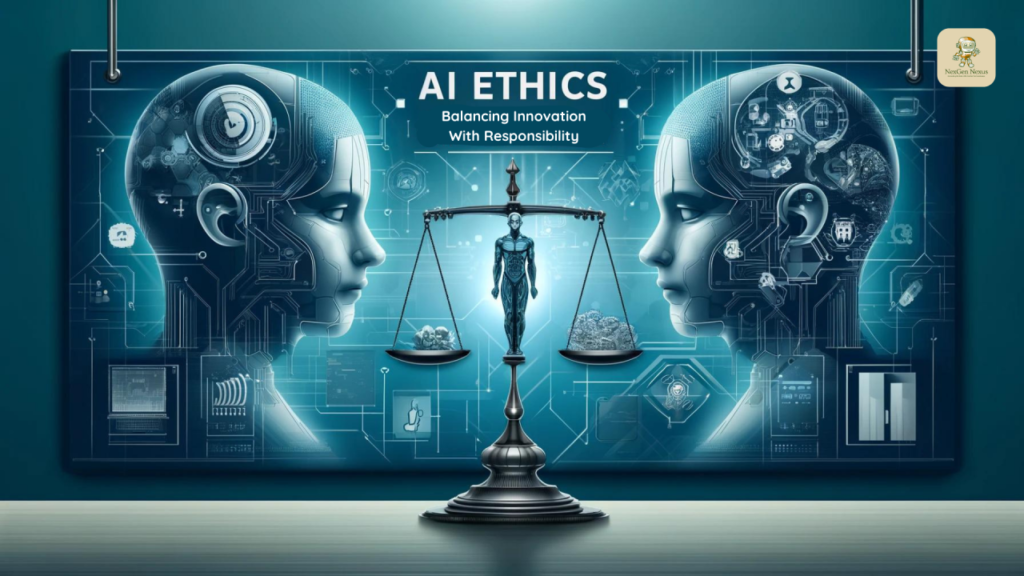
Despite its advantages, AI ethics issues present serious challenges. Businesses must address bias, privacy concerns, and regulatory compliance to ensure responsible AI deployment.
Bias in algorithms can lead to unfair outcomes, especially in hiring or lending decisions. Data privacy risks increase as organizations process vast amounts of sensitive information. Regulatory compliance requirements are evolving globally, demanding transparency and accountability.
An effective AI governance framework includes regular audits, explainable AI systems, clear data policies, and cross-functional oversight. Ethical AI adoption builds trust with customers, employees, and regulators while minimizing legal and reputational risks.
How Businesses Should Prepare for AI Adoption
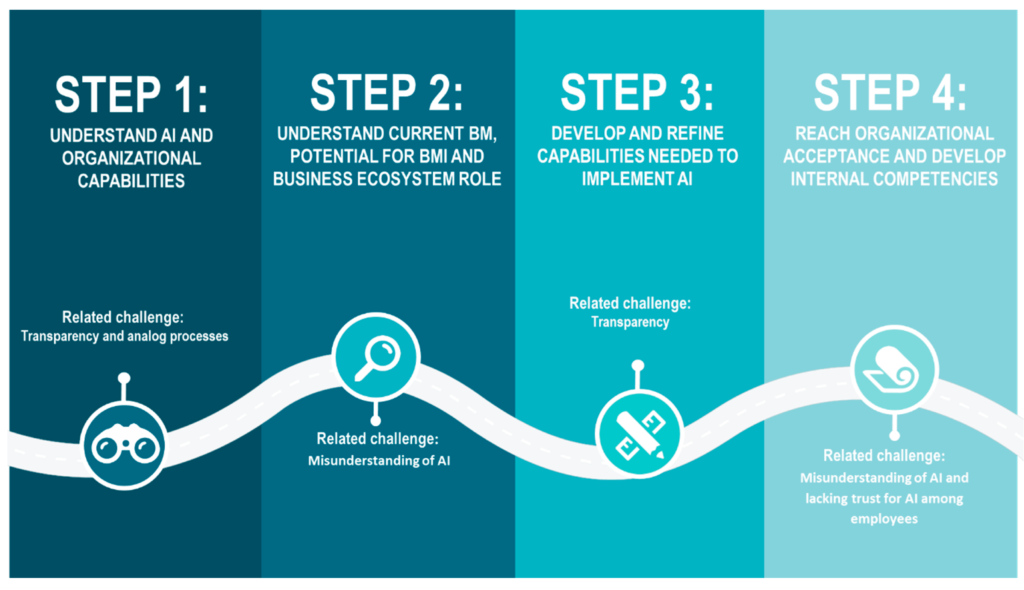
Developing a strong AI implementation strategy is crucial for long-term success. AI adoption is not just a technology upgrade—it’s a business transformation.
Organizations should define clear objectives, invest in talent and training, upgrade infrastructure, start with pilot programs, and establish governance policies.
An effective AI transformation roadmap combines technical readiness, cultural alignment, and strategic leadership. Businesses that approach AI systematically will unlock its full potential.
FAQs
How can small businesses implement AI affordably?
Small businesses can use cloud-based AI platforms and subscription tools with low upfront costs.
What industries benefit most from AI?
Healthcare, finance, retail, manufacturing, and logistics gain significant efficiency improvements.
Is AI replacing human jobs?
AI automates repetitive tasks but also creates new technology-driven roles.
What is generative AI in business?
Generative AI creates content such as text, images, and code for marketing and operations.
How do you measure AI success?
Using KPIs like cost savings, revenue growth, and productivity improvements.
What are AI compliance risks?
Data privacy violations, biased algorithms, and regulatory non-compliance.
How long does AI implementation take?
Small projects may take 3–6 months; enterprise implementations often take 12–24 months.