Low-Code and No-Code Platforms: Are They Replacing Developers? (2026 Guide)
The way software is built is changing faster than ever. Across industries, companies are racing to digitize their operations, automate workflows, and launch products […]
Contributor
The way software is built is changing faster than ever. Across industries, companies are racing to digitize their operations, automate workflows, and launch products before their competitors do. At the center of this transformation is a powerful shift in how applications are created — not always by writing code line by line, but by dragging, dropping, clicking, and configuring.
Low-code and no-code platforms have moved from niche novelty to mainstream necessity. What was once considered a shortcut for non-technical teams is now a strategic tool embraced by enterprises, startups, and developers alike. The global low-code development market was valued at over $26 billion in 2023 and is projected to surpass $187 billion by 2030, growing at a compound annual rate that few technology segments can match.
But as these platforms grow in power and popularity, a burning question follows: Are low-code and no-code platforms replacing traditional developers? This guide breaks down the debate with balanced analysis, real-world context, and a clear-eyed look at where software development is heading in 2026.
What Are Low-Code and No-Code Platforms?
Before diving into the debate, it’s important to understand what these tools actually are — because the terms are often used interchangeably, even though they serve different audiences and purposes.
No-code platforms are development environments where applications are built entirely through visual interfaces, drag-and-drop builders, and pre-built templates — with zero programming knowledge required. A marketing manager, HR professional, or small business owner can use a no-code tool to build a customer intake form, automate email sequences, or launch a basic web app without writing a single line of code. Popular examples include Webflow, Bubble, Airtable, and Zapier.
Low-code platforms, on the other hand, are built for speed and flexibility. They provide a visual development layer on top of a foundation where developers can still write custom code when needed. Low-code is particularly appealing to professional developers who want to skip repetitive boilerplate and focus their skills on complex logic, integrations, or business-critical functionality. Platforms like OutSystems, Mendix, and Microsoft Power Apps fall in this category.
The key distinction comes down to the user and the use case. No-code targets citizen developers — business users with little or no technical background. Low-code targets professional developers and teams who want to build faster without sacrificing control.
Both share a common goal: reducing the time, cost, and technical barrier required to build functional software. They do this through visual development environments, pre-built component libraries, drag-and-drop interfaces, automated testing, and one-click deployment tools.
The rise of low-code and no-code platforms is closely tied to advancements in artificial intelligence and automation. Many modern platforms embed capabilities explained in our breakdown of machine learning vs artificial intelligence to enable predictive workflows and smart applications. At the same time, businesses adopting these tools must ensure alignment with cybersecurity best practices to prevent vulnerabilities created by rapid development cycles.
Why Low-Code and No-Code Platforms Are Growing Rapidly
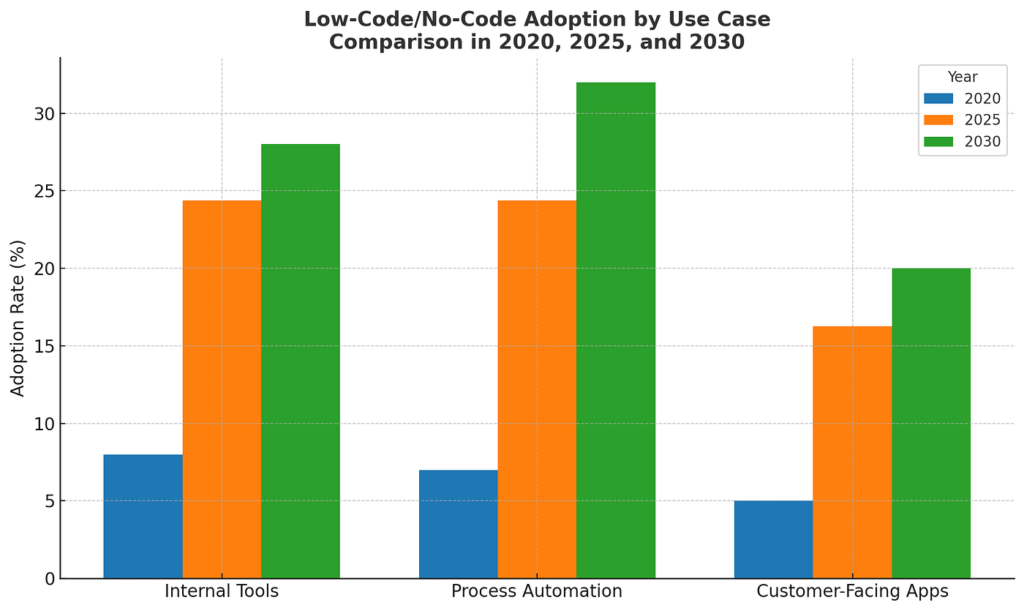
The rise of low-code and no-code is not accidental. Several powerful forces are driving adoption across every sector of the economy.
The most significant driver is the global developer shortage. There are simply not enough trained software engineers to meet the demand. According to industry estimates, the shortfall could reach 85 million tech workers by 2030. Low-code and no-code platforms help fill that gap by enabling people who are not professional developers to build functional software.
Closely related is the pressure for faster time-to-market. In competitive industries, the speed at which a company can build, test, and launch a digital product directly impacts its bottom line. Traditional development cycles measured in months are being compressed into days using visual platforms.
Cost reduction is another major factor. Hiring a team of full-stack developers to build an internal dashboard or customer portal is expensive. With low-code tools, the same outcome can often be achieved at a fraction of the cost, particularly for standard use cases that don’t require highly custom solutions.
The emergence of citizen developers — business professionals who use low-code or no-code tools to create applications for their own departments — has also expanded the market significantly. Gartner predicted that by 2026, citizen developers would outnumber professional developers by a factor of four to one within large enterprises.
Finally, the broader SaaS ecosystem expansion has made these platforms more powerful through integrations. Modern low-code tools connect seamlessly with Salesforce, Slack, Google Workspace, HubSpot, and thousands of other services, enabling complex workflows without custom API development.
Key Benefits of Low-Code and No-Code Platforms
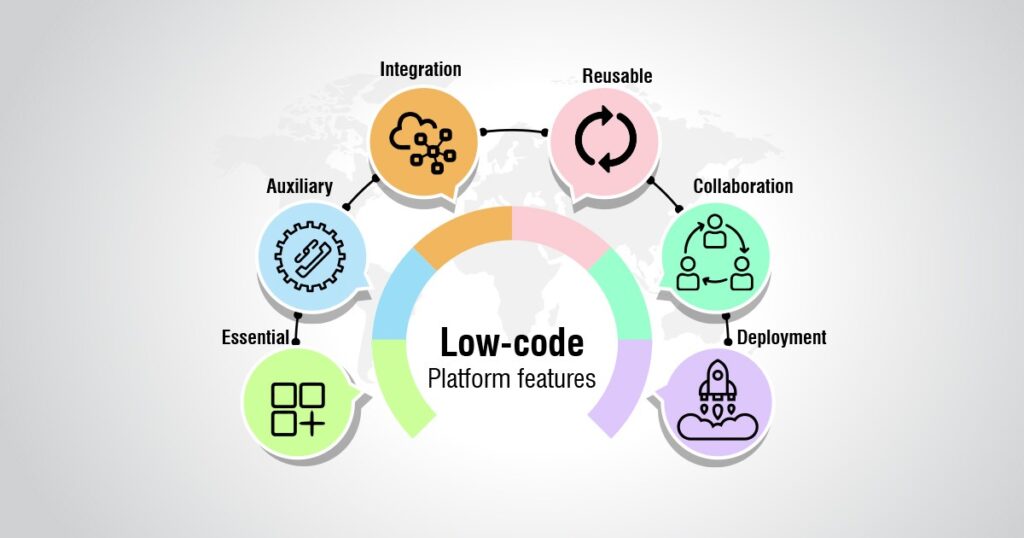
Faster Application Development
One of the most cited advantages of low-code and no-code platforms is development speed. Visual builders eliminate the need to write repetitive boilerplate code, configure environments, or debug basic functionality. What might take a developer several weeks to build from scratch — a customer onboarding portal, for example — can be assembled and deployed in days using a low-code platform. This speed advantage is particularly valuable for internal tools, proofs-of-concept, and minimum viable products where iteration matters more than perfection.
Reduced Development Costs
Building software the traditional way is expensive. Salaries for experienced developers are high, project timelines are long, and maintenance costs continue to accumulate after launch. Low-code platforms reduce these costs significantly by requiring fewer technical resources and less time. Organizations that have adopted low-code report development cost savings of 50% to 70% for appropriate use cases. For small businesses and startups with limited budgets, this makes digital product development accessible for the first time.
Empowering Non-Technical Teams
Perhaps the most transformative benefit of no-code platforms is the democratization of software creation. Business analysts, operations managers, and marketing professionals can now build the tools they need themselves, without waiting in a development queue. This reduces organizational bottlenecks, improves response times to business needs, and fosters a culture of innovation. IT departments are increasingly shifting from being builders to being enablers — setting guardrails and governance while business teams create solutions independently.
Built-in Security and Maintenance
Enterprise-grade low-code platforms handle much of the security infrastructure automatically. Authentication, encryption, access controls, and compliance frameworks are often built into the platform by default. Updates and patches are applied by the platform vendor, reducing the maintenance burden on internal teams. This is especially valuable for smaller organizations that lack dedicated security engineers. However, it also means trusting the vendor’s security posture — a trade-off worth understanding before committing to any platform.
Limitations and Risks of Low-Code and No-Code
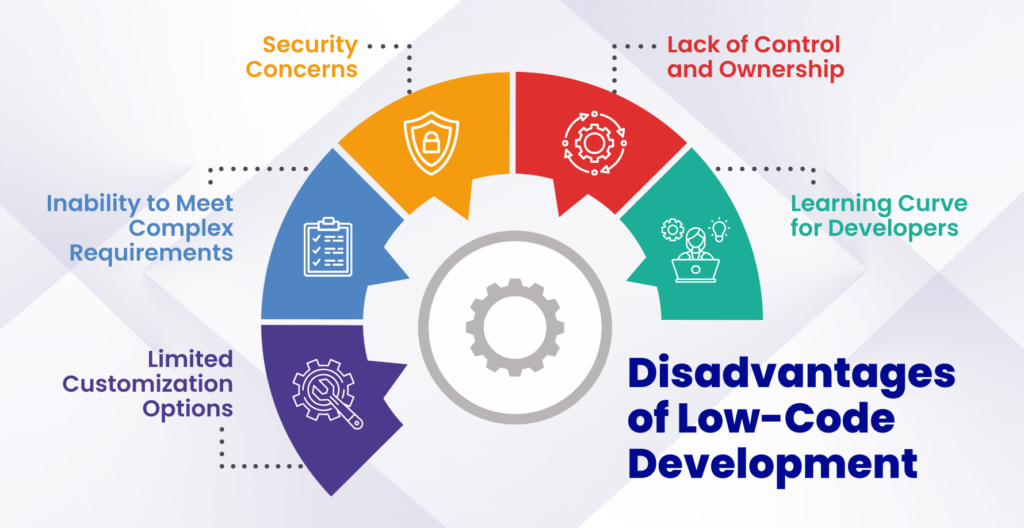
No technology is without trade-offs, and low-code and no-code platforms have meaningful limitations that organizations need to understand before committing.
Scalability Challenges
Low-code and no-code platforms work exceptionally well for apps with modest traffic and data volumes. But as applications grow in complexity or user load, many platforms begin to show their limits. Performance bottlenecks, limited database query optimization, and constrained backend logic can become serious issues at scale. Applications that start as internal tools sometimes evolve into mission-critical systems — and the platform built for the former may not be suited for the latter. Understanding a platform’s scalability ceiling before building on it is essential.
Vendor Lock-In Risks
When you build on a low-code or no-code platform, your application is deeply tied to that vendor’s infrastructure, data models, and export capabilities. If the vendor raises prices, changes its terms, or shuts down entirely, migrating your application to another platform or rebuilding it from scratch can be extraordinarily difficult and expensive. This dependency risk is one of the most overlooked challenges for organizations that build critical processes on proprietary platforms. Choosing platforms with strong data export options and open standards mitigates this risk somewhat.
Customization Constraints
By design, low-code and no-code platforms make common use cases easy and unusual use cases hard. If your business has a highly specific workflow, a unique data structure, or unusual integration requirements, you may quickly run into the limits of what visual builders can express. These customization constraints often force workarounds that are technically fragile or require the kind of custom code the platform was supposed to eliminate. For highly specialized applications, traditional development remains the more practical path.
Security and Compliance Concerns
While platforms handle baseline security, enterprise and regulated industries face additional concerns. Data residency requirements, GDPR compliance, HIPAA controls, and audit logging are not always fully supported on every platform. Organizations in healthcare, finance, legal, and government sectors need to scrutinize low-code vendors’ compliance certifications carefully. Misconfigurations by citizen developers who lack security training can also introduce vulnerabilities — making governance frameworks and IT oversight essential when rolling out these tools broadly.
Are Low-Code Platforms Replacing Developers?

This is the question at the heart of the conversation — and the answer, examined carefully, is more nuanced than either side of the debate typically acknowledges.
The short answer: No, low-code and no-code platforms are not replacing developers. They are changing what developers do.
Here is why. The kinds of tasks that low-code platforms automate away — scaffolding CRUD applications, building simple forms, connecting pre-built integrations, generating boilerplate UI components — were never the most valuable things experienced developers did anyway. These were the repetitive, time-consuming tasks that consumed hours without requiring deep expertise.
What low-code platforms cannot replicate is the thinking that underpins great software: system architecture decisions, performance optimization under load, complex algorithmic logic, security hardening, custom API development, machine learning pipeline design, and the judgment that comes from years of engineering experience. These capabilities are not only still needed — they are increasingly critical as the systems businesses depend on grow more complex.
What is actually happening is a division of labor and an evolution of roles. Citizen developers handle the long tail of simple internal tools, automations, and dashboards — freeing professional developers to focus on the systems that genuinely require their expertise. In many organizations, developers are now acting more like platform engineers and architects — building the foundations, integrations, and governance frameworks that citizen developers operate within.
There is also a growing hybrid development model emerging in mature organizations. In this model, no-code tools handle the front-end experience and business logic for straightforward workflows, while custom-coded services power the complex backend operations. Developers write APIs, custom connectors, and performance-critical components that low-code builders then consume. This hybrid approach maximizes the speed of low-code while preserving the power of custom development where it matters most.
The data supports this view. Rather than declining, demand for software developers continues to grow. The U.S. Bureau of Labor Statistics projects software development jobs to grow significantly through 2032. What is shifting is the nature of the work — away from routine implementation and toward systems thinking, platform engineering, and technical leadership.
For developers, the message is clear: low-code and no-code are not threats. They are tools. Learning to work alongside them, govern them, and extend them is becoming an increasingly valuable professional skill.
Real-World Use Cases of Low-Code and No-Code
Internal Business Tools
Some of the most compelling applications of low-code platforms are tools that organizations build for their own internal use — employee onboarding portals, inventory tracking systems, expense approval workflows, project management dashboards, and HR data entry forms. These tools often have narrow, well-defined requirements and modest user bases, making them ideal candidates for rapid low-code development. Companies that once relied on expensive custom software or messy spreadsheets are replacing both with polished internal applications built in days.
MVP and Startup Prototyping
For early-stage startups, no-code platforms have become a product development accelerator. Founders can validate their core product hypothesis by building a working prototype with Bubble, Webflow, or Glide — often without raising a single dollar of development funding. This lets them test with real users, gather feedback, and refine the concept before investing in a full engineering team. Many successful companies, including early versions of products that later raised significant venture capital, began as no-code MVPs.
Enterprise Workflow Automation
Large enterprises are using low-code platforms to digitize and automate business processes at scale — from procurement approvals and compliance checklists to customer service escalation workflows and supply chain reporting. Platforms like ServiceNow, Appian, and Microsoft Power Platform are designed specifically for enterprise-scale automation and integrate with complex legacy systems. These deployments can deliver dramatic efficiency gains and cost savings across thousands of employees.
Top Low-Code and No-Code Platforms in 2026
The platform landscape in 2026 is rich with options spanning a wide range of use cases, technical sophistication, and pricing tiers.
For enterprise use, platforms like OutSystems, Mendix, Appian, and Microsoft Power Platform lead the field. These tools offer robust security, compliance features, integration ecosystems, and professional developer extensibility. They are built for organizations deploying applications to thousands of users with complex governance requirements.
For business users and citizen developers, tools like Airtable, Monday.com, Notion, and Zapier offer accessible interfaces and powerful automation without requiring any technical background. They are ideal for workflow management, database creation, and cross-tool automation.
For web and app building, Bubble, Webflow, and Glide allow non-developers to build polished web applications and mobile experiences with sophisticated UI capabilities. Webflow in particular has become a leading choice for marketing websites and content-driven applications.
For developer-centric workflows, Retool and Internal.io are popular for building internal tools quickly while still offering the flexibility professional developers expect — including the ability to write custom JavaScript and connect to any API.
The right platform depends heavily on the specific use case, the technical skill level of the team, scalability requirements, and budget. There is no universal best choice, but there is almost certainly a platform well-suited to any given need.
Future of Software Development in the Age of Low-Code

The next chapter of software development is being shaped by the convergence of low-code platforms with artificial intelligence. AI-assisted development tools — including GitHub Copilot, Cursor, and built-in AI features within platforms like Salesforce Einstein and Microsoft Copilot Studio — are dramatically accelerating how fast both professional developers and citizen developers can work.
The trend toward hybrid development models will deepen. Organizations will increasingly maintain two parallel development tracks: a fast, visual track for standard business applications and a deep engineering track for performance-critical, complex systems. The boundary between these tracks will be managed through governance frameworks and platform APIs.
Demand for system architects and platform engineers will grow significantly. As more application logic moves into low-code tools, organizations will need professionals who can design the overall system landscape, evaluate platform dependencies, manage integration complexity, and ensure security and compliance across a heterogeneous technology stack.
DevOps and MLOps practices will extend into the low-code world as organizations treat their no-code applications with the same rigor as custom code — version control, testing pipelines, staged deployments, and incident response. Vendors who build these capabilities into their platforms will gain enterprise adoption.
The future is not a world where developers disappear. It is a world where the tools available to both technical and non-technical teams are dramatically more powerful than they were five years ago — and where the developers who thrive are those who embrace these tools rather than resist them.
Conclusion – Evolution, Not Replacement
The debate over whether low-code and no-code platforms are replacing developers misses the more interesting and accurate story: these platforms are evolving the entire discipline of software creation.
For business users, they are an unprecedented opportunity to build, automate, and innovate without depending entirely on engineering teams. For developers, they are powerful productivity multipliers that free up time for the complex, high-value work that truly requires expertise. For organizations, they represent a path to faster delivery, lower costs, and more agile operations.
The developers who will thrive in this environment are not those who ignore these tools, but those who learn to architect around them, govern them, extend them, and integrate them into a larger technical strategy.
Low-code and no-code are not the end of software development. They are the beginning of a new chapter — one where the barrier to building is lower, the speed is higher, and the collaboration between technical and non-technical teams is closer than ever before.
Frequently Asked Questions
What is the difference between low-code and no-code platforms? Low-code platforms allow developers to build applications faster using visual tools while still writing custom code when needed. No-code platforms require zero programming knowledge — everything is done through visual interfaces. Low-code targets professional developers; no-code targets business users and citizen developers.
Can low-code platforms completely replace software developers? No. Low-code platforms automate repetitive, routine development tasks but cannot replicate the skills required for complex system architecture, performance optimization, security engineering, and custom integrations. Developer roles are evolving, not disappearing.
Are no-code platforms secure for enterprise use? Enterprise-grade no-code platforms offer strong baseline security, but regulated industries must verify compliance with frameworks like GDPR, HIPAA, and SOC 2. Governance and training for citizen developers are also critical to prevent misconfigurations.
What are the biggest limitations of low-code development? The main limitations are scalability challenges at high traffic volumes, vendor lock-in risks, customization constraints for complex use cases, and compliance gaps for regulated industries.
Is low-code suitable for large-scale applications? It depends on the platform and use case. Enterprise platforms like OutSystems and Mendix are designed for large-scale deployments. However, applications with very high traffic, complex algorithms, or unique data requirements may still require traditional development.
Do professional developers use low-code tools? Yes, increasingly so. Many developers use low-code platforms to accelerate delivery of internal tools, prototypes, and standard business applications, reserving their custom coding skills for the components that genuinely require them.
What skills will developers need in a low-code future? Developers will benefit from skills in system architecture, API design, platform governance, DevOps, security engineering, and the ability to evaluate and integrate third-party platforms. Understanding how to work alongside citizen developers and extend low-code platforms with custom code will also be increasingly valuable.

Share this story
Related Articles
Winamp’s Streaming Comeback: How Its Deezer Partnership Could Bring the Iconic Music Player Back to the Spotlight
Winamp is returning to the streaming market through a partnership with Deezer. Here's everything officially confirmed, what remains unknown, and why the deal matters.

Amazon Brings Luna Cloud Gaming to Prime Video, Turning Fire TV Into an Instant Gaming Platform
Amazon has integrated Luna into Prime Video, allowing eligible Prime members on Fire TV to stream games directly without downloads or dedicated gaming hardware.
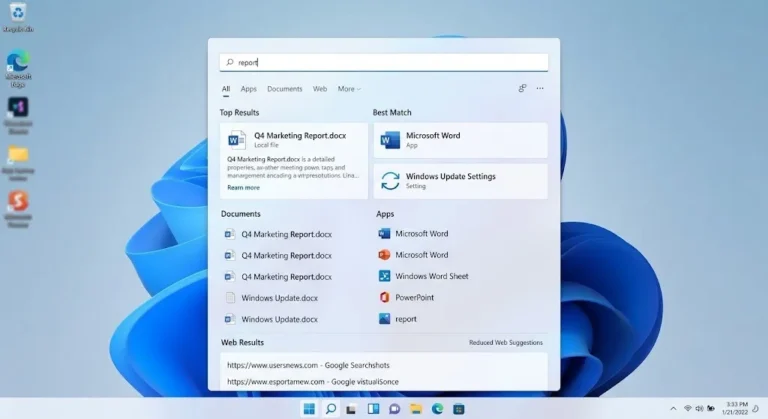
Windows 11 Search Gets a Major Cleanup: Microsoft Reduces Promotional Results and Puts Local Files First
Microsoft's latest Windows 11 Search update improves local file discovery, reduces promotional web results, and gives users greater control over their Search experience.
Comments (0)