Home / 15 Best AI Tools 2026 for Productivity, Content Creation, and Daily Tasks
15 Best AI Tools 2026 for Productivity, Content Creation, and Daily Tasks
swa | April 16, 2026 | 5 min read
Table of Contents
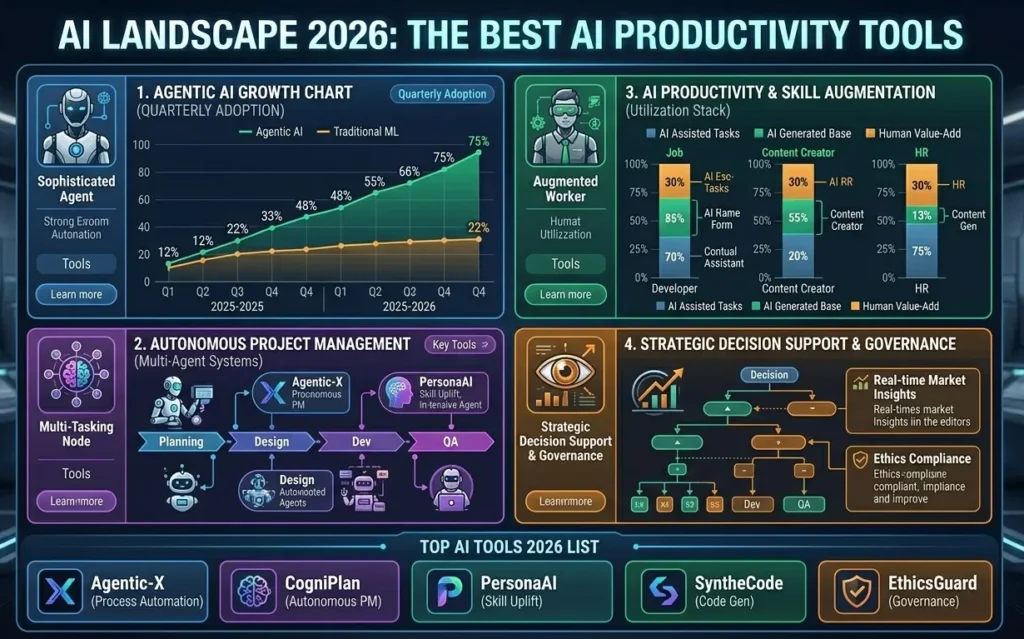
As we navigate through 2026, Artificial Intelligence hasn’t just evolved it has become the very fabric of our digital existence. From agents that manage our entire calendars to neural editors that turn a rough sketch into a cinematic masterpiece, the best AI tools 2026 has to offer are about one thing: reclaiming your time.
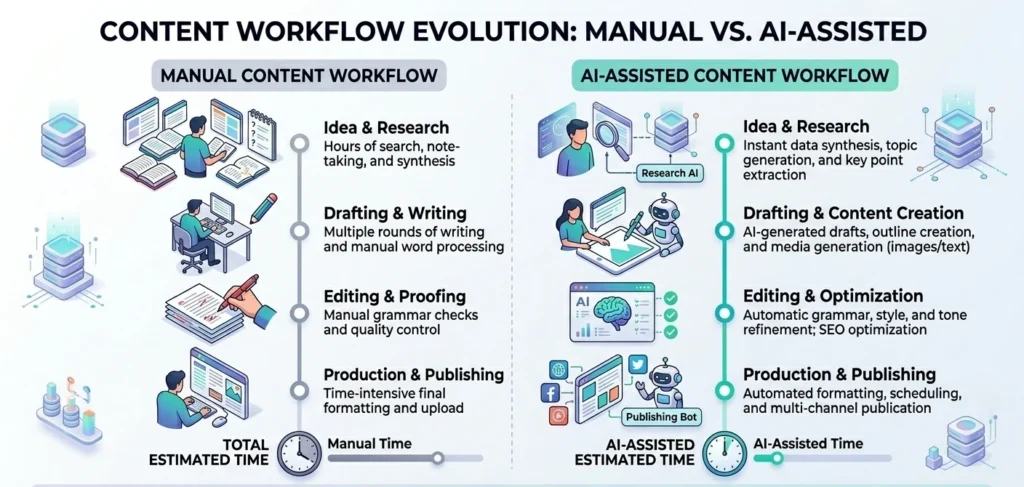
The productivity landscape has shifted from using AI to collaborating with AI. If you aren’t leveraging these specific AI productivity tools, you aren’t just working harder; you’re effectively working in the past. In this deep dive, we explore the software and AI apps list that are defining this year’s efficiency standards.

The 2026 Shift: Why These AI Software Choices Matter
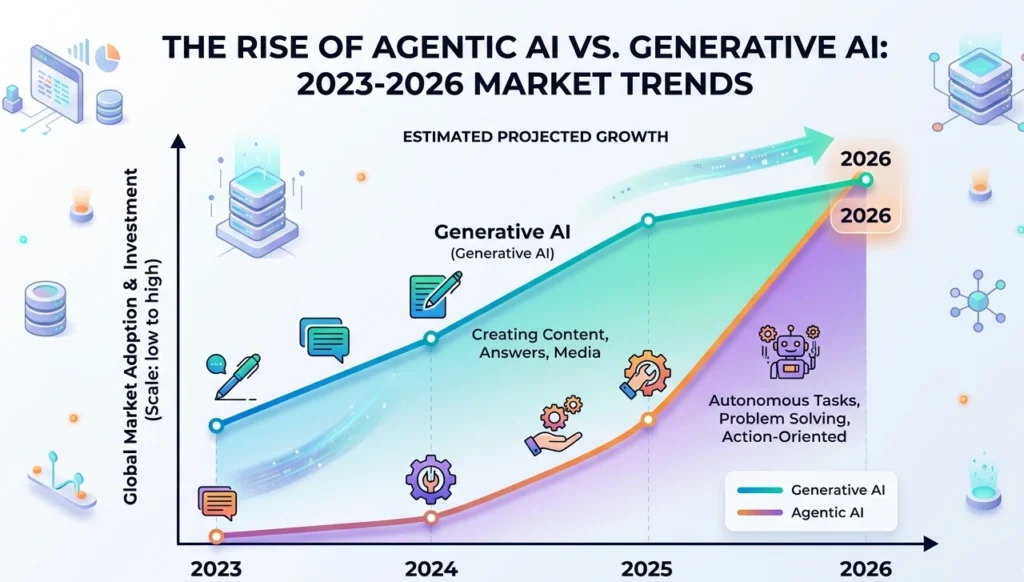
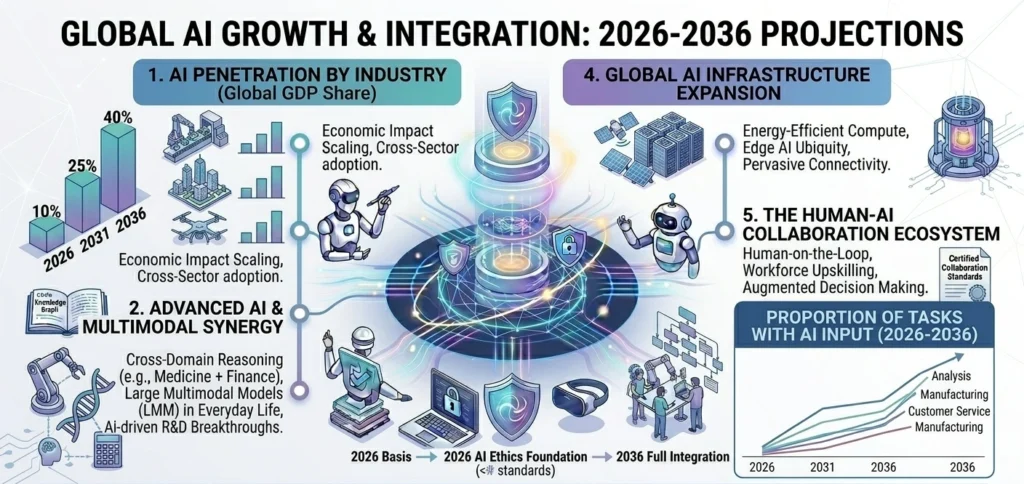
The global AI market is projected to reach over $1.8 trillion by 2030, and 2026 is the year we see Agentic AI take center stage. Unlike the static tools of 2023, today’s best AI tools 2026 don’t wait for your prompt; they anticipate your needs.
Why does this matter now? Because the productivity tax that soul-crushing time spent on emails, scheduling, and basic research has finally been abolished for those using the right AI software.
Productivity & Workflow Automation
- Claude: Renowned as the best all-around assistant for business. It uses Projects to store custom instructions and can even control your desktop via Claude Cowork to edit local files.
- Gumloop: A top choice for building autonomous AI agents using natural language. It connects your entire tech stack (Slack, Webflow, etc.) to automate complex operations without needing API keys.
- Perplexity: The go-to for research, providing high-quality answers with direct source citations, making it more reliable than standard search engines.
- Motion: An AI-driven calendar that auto-schedules your day by prioritizing tasks and adjusting your meeting schedule in real-time.
- Zapier Central: An evolution of classic automation, allowing you to teach AI agents how to behave across 6,000+ apps using plain language.

Writing & Content Creation
- Jasper AI: The gold standard for long-form marketing content. It includes 50+ templates for blogs and ads that stay consistent with your brand voice.
- Grammarly: Now an advanced writing partner that suggests tone adjustments and structural rewrites directly within your browser or email.
- Gamma: Effortlessly converts notes into professional presentations, documents, or even full webpages in seconds.
- Clearscope: A mature SEO tool that uses AI to analyze top-ranking competitors and tell you exactly which keywords to include to maximize your reach.
- NotebookLM: A personalized research assistant that summarizes your uploaded PDFs and can even turn your notes into an engaging podcast-style audio recap.

Video, Audio & Design
- Descript: Revolutionary media editor that lets you edit video or audio by simply deleting or changing text in the transcript.
- Synthesia: Best for corporate training and marketing videos, featuring 140+ realistic AI avatars that can speak over 120 languages.
- ElevenLabs: The industry leader for realistic AI voice generation, capable of cloning voices and creating real-time conversational voice agents.
- Canva Magic Design: A drag-and-drop tool that generates complete design layouts and social media graphics based on a simple prompt.
- Adobe Firefly: Integrated into Creative Cloud, it offers commercially safe image generation and Generative Fill to seamlessly extend or edit visuals.

Challenges and The Human Element: Can AI Replace Us?
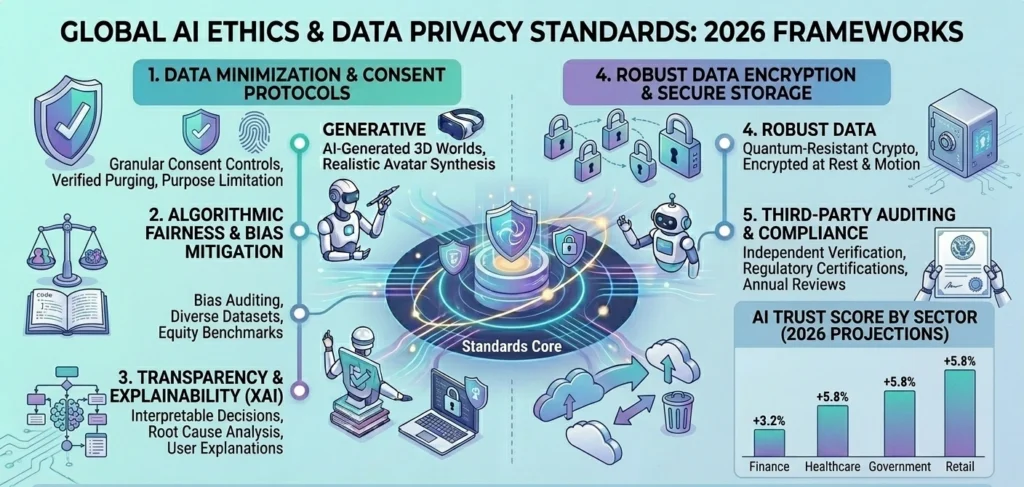
A common question we hear is Can AI tools replace humans? The answer in 2026 is No, but a human using AI will replace a human who isn’t. We still face significant challenges regarding AI safety and data privacy. The goal of AI in 2026 isn’t to think for us, but to give us the space to think about things that matter.
Safety concerns linger, 43% fear job loss but tools like Claude prioritize ethics. By 2027, expect deeper agentic AI. Choose based on needs: free for starters (ChatGPT, Gemini), pro for scale (Jasper).

Future Outlook: Beyond 2026
As we look toward 2027, the trend is moving toward Physical AI—the integration of these high-level LLMs into humanoid robotics for household chores. The best AI tools 2026 are just the foundation for a world where software becomes service in the most literal sense.

Conclusion
Choosing from the best AI tools 2026 depends on your specific bottlenecks. Whether you need the agentic power of OpenAI Jarvis or the creative freedom of Adobe Firefly, the goal is the same: efficiency. By adopting these AI productivity tools and exploring our AI apps list, you are positioning yourself at the forefront of the digital revolution.
FAQs
1. What are the best AI tools in 2026?
Perplexity, NotebookLM, Fathom, Gamma, Claude Code, Lovable, FLUX.2, Ideogram 3.0, Adobe Firefly are some of the best AI tools in 2026.
2. Which AI tool is free?
- Chat and Writing: ChatGPT, Google Gemini, and Grammarly (Basic).
- Research: NotebookLM and Perplexity (limited daily searches).
- Design: Canva (Magic Studio) and Adobe Firefly (limited credits).
- Coding: GitHub Copilot (free for students and open-source).
3. How to choose AI tools?
4. Are AI tools safe?
- Data Privacy: Information you share might be used to train future models. Avoid entering sensitive or personal data unless using a team or enterprise version with privacy protections.
- Inaccuracy: AI can hallucinate or provide confidently wrong information. Always fact-check critical outputs.
- Security Risks: AI-generated code can sometimes include vulnerabilities, and malicious actors can use AI for more convincing phishing scams.