Top 10 Technology Trends in 2026 That Will Shape the Future of Innovation
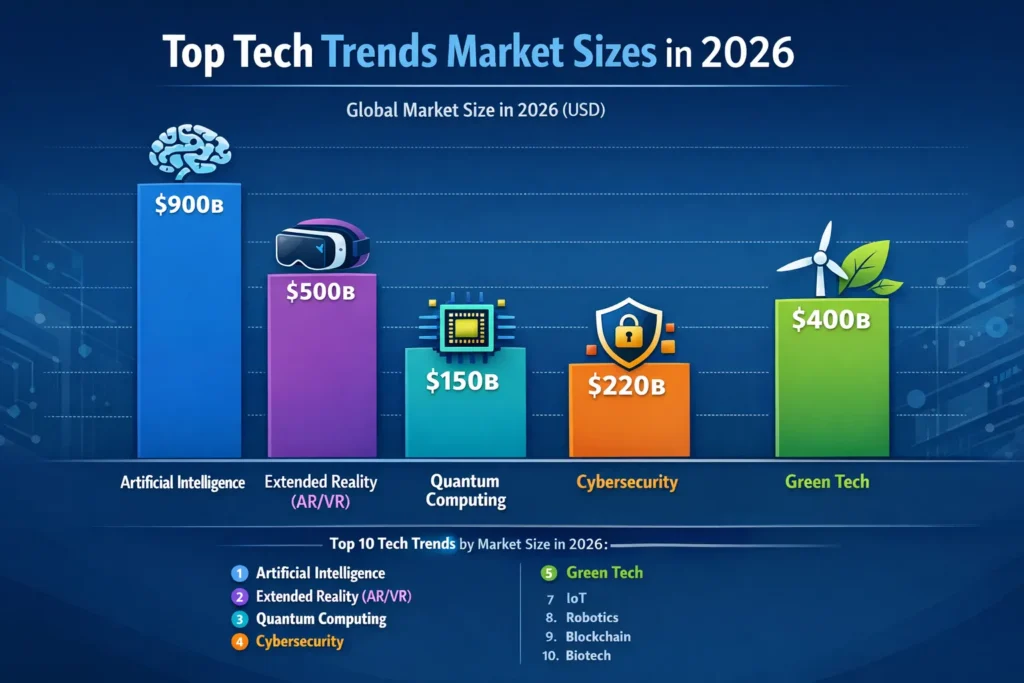
Here’s a question worth sitting with: what does the world look like when AI can outthink a doctor, when your glasses replace your smartphone, […]
Contributor
Here’s a question worth sitting with: what does the world look like when AI can outthink a doctor, when your glasses replace your smartphone, and when the computer solving climate change fits in a university lab? That world isn’t science fiction, it’s 2026. And if you’re not paying attention to the tech trends 2026 has ushered in, you’re already playing catch-up.
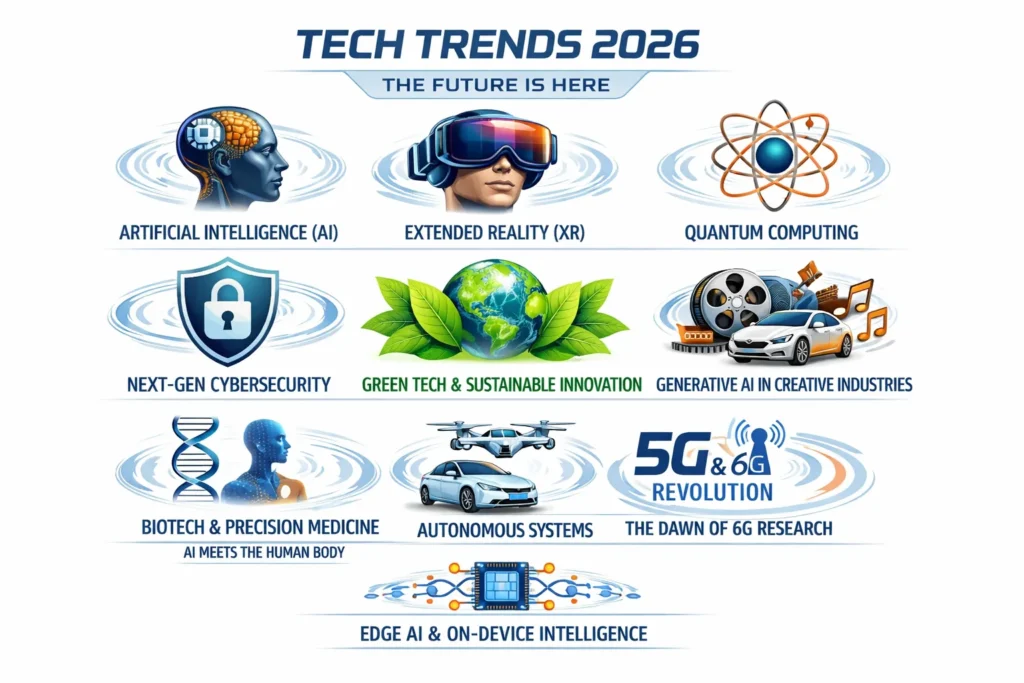
We’re living through a rare convergence. Multiple breakthrough technologies are maturing simultaneously, colliding and amplifying each other in ways that are reshaping industries, rewriting job descriptions, and rewiring daily life. From AI’s next leap to the quiet revolution in quantum hardware, this is the definitive guide to the ten trends every curious, forward-looking person needs to understand right now.
1. Agentic AI: From Chatbot to Co-Worker
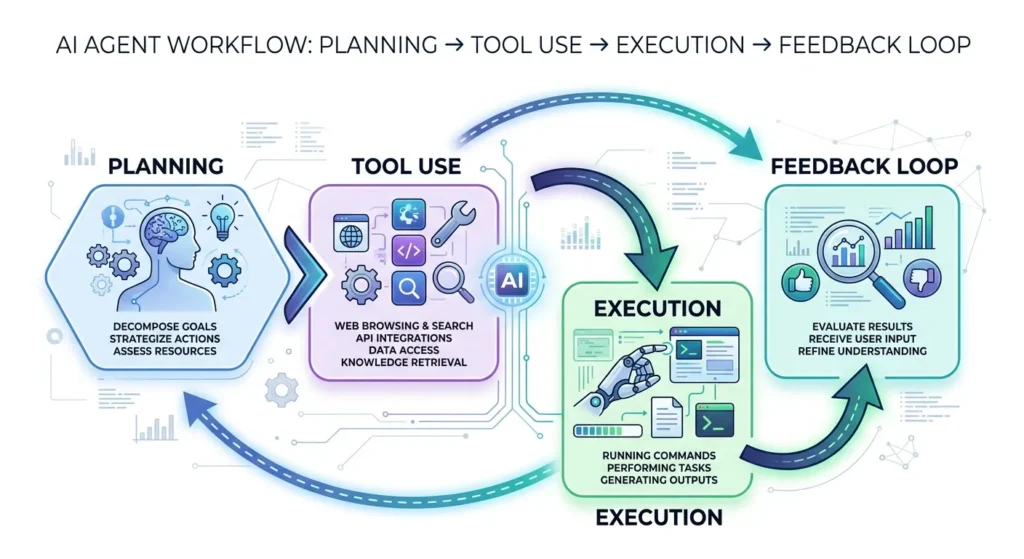
Let’s be honest, ChatGPT was just the warm-up act. The real disruption arrives with agentic AI: systems that don’t just answer questions but autonomously plan, execute multi-step tasks, and make decisions across complex workflows without hand-holding. In 2026, AI agents are embedded in enterprise software, conducting research, drafting contracts, managing supply chains, and even debugging entire codebases. According to Gartner, by 2026 over 80% of enterprises will have deployed some form of AI agent, up from less than 5% in 2023. That’s not incremental that’s a structural shift.
What Makes an Agent Different?
Unlike traditional LLMs that respond to single prompts, agentic AI maintains memory across sessions, uses external tools, browses the web, writes and executes code, and self-corrects when it makes mistakes. Think of it as the difference between a search engine and an employee.
- Multi-step planning and execution without constant human prompting
- Tool use: web search, code execution, file management, API calls
- Persistent memory and context across long workflows
- Self-evaluation and error correction loops
2. Extended Reality (XR): The Spatial Computing Era Begins
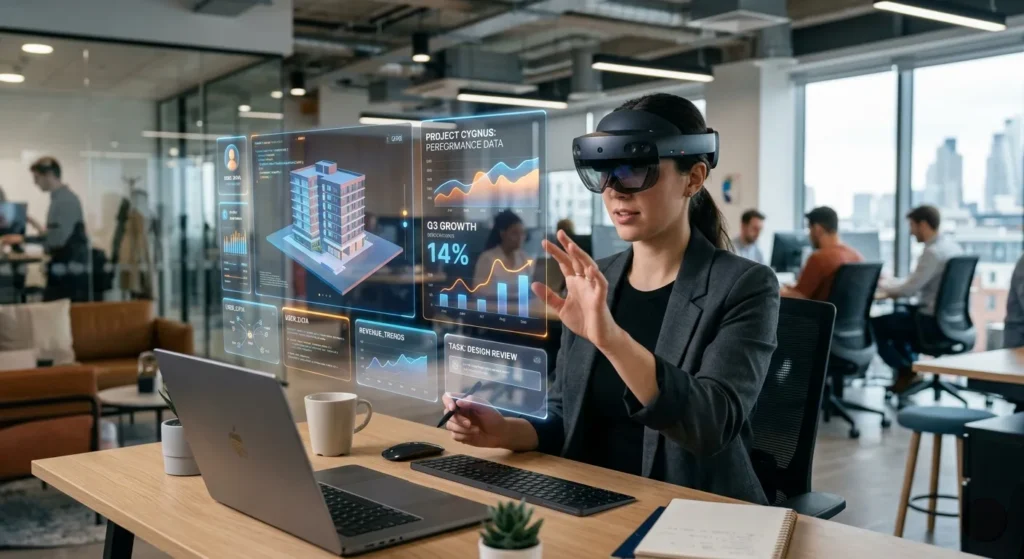
XR — the umbrella term for Virtual Reality (VR), Augmented Reality (AR), and Mixed Reality (MR) has spent years promising to change everything. In 2026, it’s actually doing it. The catalysts? Lighter hardware, better eye-tracking, and a developer ecosystem that’s finally hit critical mass.
Apple Vision Pro, launched in 2024, it introduced a new category of computing. By 2026, second-generation spatial computing devices from Apple, Meta, and Samsung have slashed prices and weight, and enterprise adoption has exploded.
What Is XR, Exactly?
XR (Extended Reality) is any technology that blends physical and digital worlds. VR immerses you completely in a virtual environment. AR overlays digital content onto the real world. MR allows digital and physical objects to interact in real time.
The XR market is projected to reach $345 billion by 2030, according to PwC, with spatial computing driving the majority of growth. In 2026, we’re right in the knee of that adoption curve.
3. Quantum Computing Crosses the Practicality Threshold
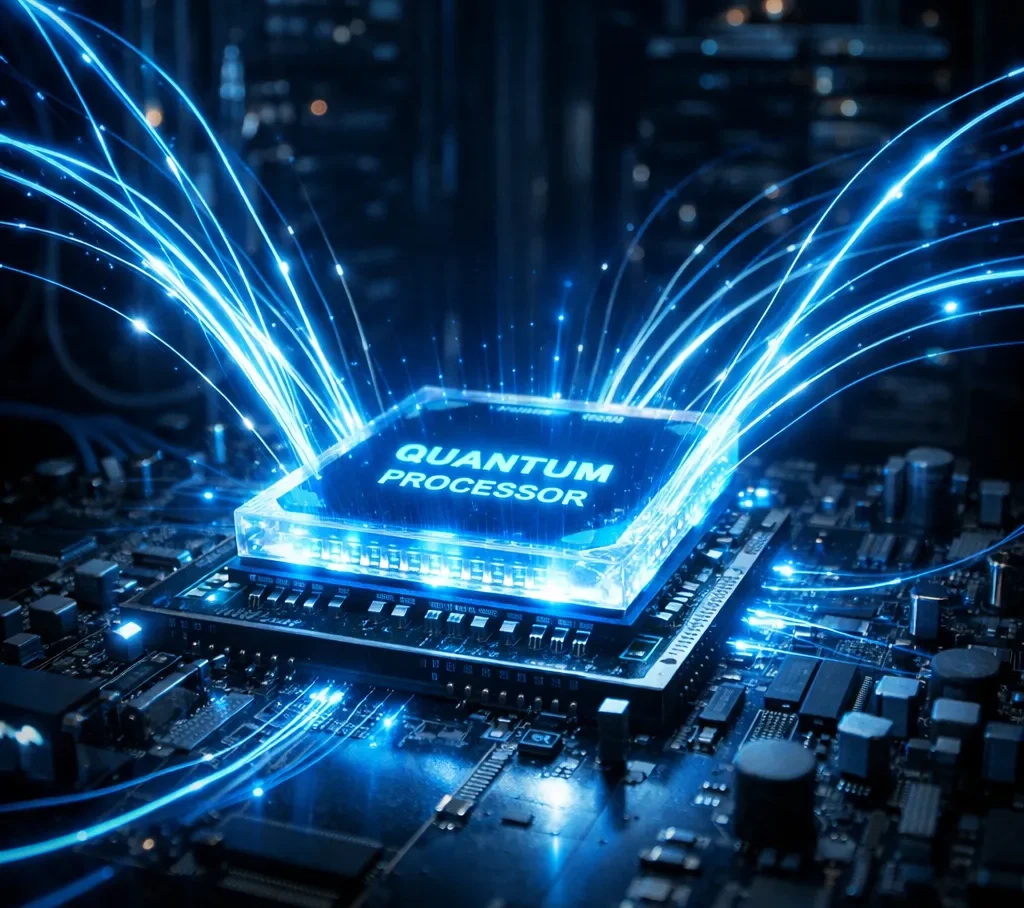
For years, quantum computing was the technology of perpetual promise, always five years away from being useful. 2026 is the year that changes. IBM’s 1,000-qubit Condor processor and Google’s continued push toward error correction have created machines that are genuinely useful for specific, high-value problems.
We’re not at general-purpose quantum computing yet. But in drug discovery, financial portfolio optimization, logistics routing, and materials science, quantum computers are now demonstrably outperforming classical systems. That’s a crucial distinction and a massive business opportunity.
Where Quantum Wins in 2026
- Pharmaceutical companies simulating molecular interactions to accelerate drug discovery
- Financial institutions optimizing portfolios across millions of variables simultaneously
- Logistics firms solving complex routing problems that are intractable classically
- Cybersecurity researchers modelling post-quantum encryption standards
4. Next-Generation Cybersecurity: AI Fighting AI
Here’s the uncomfortable truth about 2026’s cybersecurity landscape: the attackers are using AI too. Deepfake-powered phishing, AI-generated malware that rewrites itself to avoid detection, and automated vulnerability discovery have pushed the threat surface to unprecedented levels.
AI-native security platforms is designed. Companies like CrowdStrike and Palo Alto Networks have deployed large language models that monitor network traffic, detect anomalies in real time, and autonomously isolate threats, often before human analysts even see the alert.
Zero Trust Is Now Table Stakes
The old perimeter-based security model trust everything inside the firewall is dead. Zero Trust Architecture (ZTA), which treats every user and device as potentially compromised, has moved from best practice to regulatory requirement in most enterprise sectors. By 2026, 60% of enterprises have formally adopted ZTA, up from 15% in 2022 (Forrester Research).
- Post-quantum cryptography standards being finalized by NIST and deployed at scale
- AI-powered threat detection reducing mean time to respond (MTTR) by up to 90%
- Deepfake detection tools becoming standard in enterprise communication stacks
- Biometric and behavioral authentication replacing traditional passwords

5. Green Tech & Sustainable Innovation at Warp Speed
Climate tech has moved from niche to necessity. With 2023 and 2024 setting back-to-back records for global temperatures, investor appetite for sustainable technology has reached fever pitch. In 2026, green tech isn’t just good ethics it’s the fastest-growing segment of the global economy.
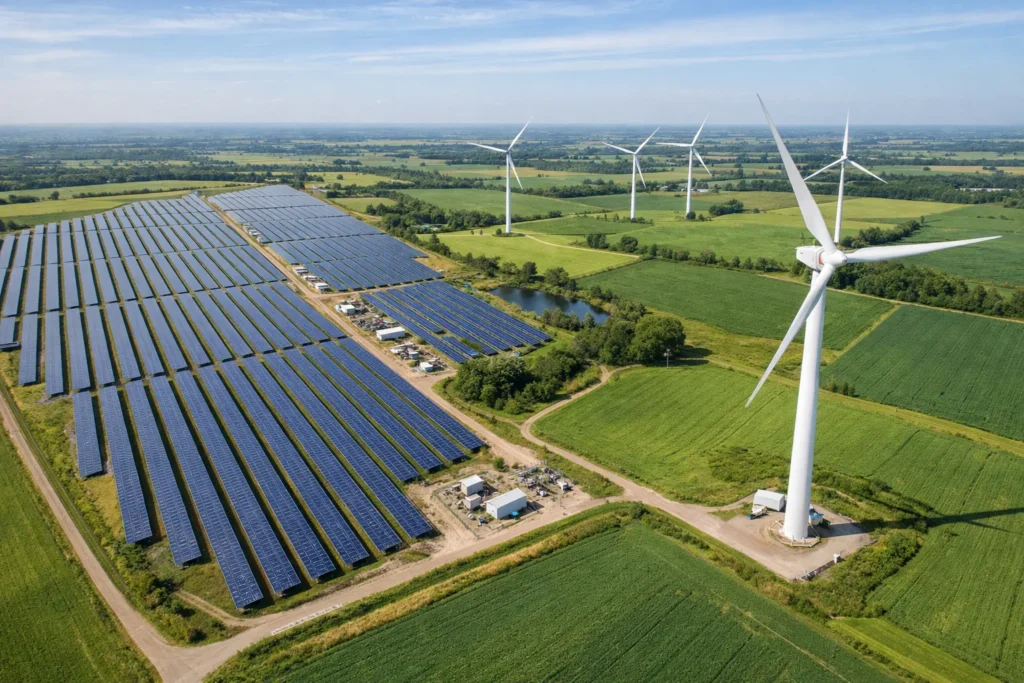
Next-generation solar panels with perovskite cells are hitting efficiency rates above 30%, up from 22% just three years ago. Solid-state batteries of EV technology are now in limited production, offering double the energy density of lithium-ion. And direct air carbon capture facilities are coming online at commercial scale for the first time.
The Circular Economy Goes Digital
AI is playing a surprising role in sustainability. Machine learning models are optimizing energy grids in real time, reducing waste by up to 40% in some utility networks. Smart agriculture platforms using satellite data and AI are cutting water usage by 30% while increasing crop yields. Climate tech attracted $69 billion in venture investment in 2024 alone (BloombergNEF), and 2026 shows no signs of slowdown.
6. Generative AI in Creative Industries: The New Co-Creator
Generative AI has graduated from novelty to necessity in creative industries. In 2026, virtually every major film studio, advertising agency, game developer, and publishing house has integrated generative AI into its production pipeline. Adobe’s Firefly, Midjourney’s next-generation models, Sora-class video generators, and custom enterprise models are producing commercial-quality content at a fraction of the cost and time.
The Copyright Question Isn't Going Away
Legal frameworks are still catching up. In the US, the Copyright Office issued guidance in 2025 that AI-generated works without meaningful human authorship cannot be copyrighted. The EU’s AI Act has imposed transparency requirements on generative AI systems. Expect 2026 and beyond to see continued regulatory evolution in this space. For creators, the takeaway is clear: the tool is powerful, but the human perspective, taste, and judgment still matter enormously.
7. Biotechnology & Precision Medicine: AI Meets the Human Body
The convergence of AI and biology is one of the most profound tech trends 2026 has to offer and one of the least understood outside specialist circles. AlphaFold 3, DeepMind’s protein structure prediction model, has accelerated drug discovery timelines from decades to years. In 2026, the first generation of AI-designed drugs are in Phase 2 and Phase 3 clinical trials. Meanwhile, CRISPR gene editing has moved from research labs to the clinic. In late 2023, the FDA approved the first CRISPR-based therapy for sickle cell disease. By 2026, the pipeline includes potential treatments for cancer, rare genetic disorders, and even some cardiovascular conditions.
Wearable Health Tech Gets Serious
Consumer-grade biosensors are now capable of continuous monitoring of glucose, cortisol, and hydration levels non-invasively. Apple Watch’s FDA-cleared sleep apnea detection feature, launched in 2024, was just the beginning. By 2026, your smartwatch is beginning to function as a genuine early-warning system for metabolic health, not just a step counter.

8. Autonomous Systems: Robots, Drones & Self-Driving Finally Deliver
We’ve been promised self-driving cars since at least 2014. The technology has had a famously rocky road. But 2026 marks a genuine turning point not because the technology is perfect, but because the regulatory, mapping, and business model pieces have finally aligned in key geographies.
Waymo operates fully commercial, driverless robotaxi services across five major US cities. Tesla’s Full Self-Driving has achieved Level 3 autonomy (the driver can legally divert attention) in a growing number of jurisdictions. In logistics, autonomous mobile robots (AMRs) now handle over 60% of warehouse fulfilment at Amazon and other major retailers.
Drones Go Beyond Delivery
Drone technology has expanded well beyond Amazon’s delivery ambitions. In 2026, agricultural drones are autonomously planting, spraying, and harvesting in large-scale farming operations. Emergency services drones deliver defibrillators to cardiac arrest patients. Infrastructure inspection drones are routinely surveying bridges, power lines, and oil pipelines reducing cost and human risk simultaneously.
9. 5G Maturity & the Dawn of 6G Research
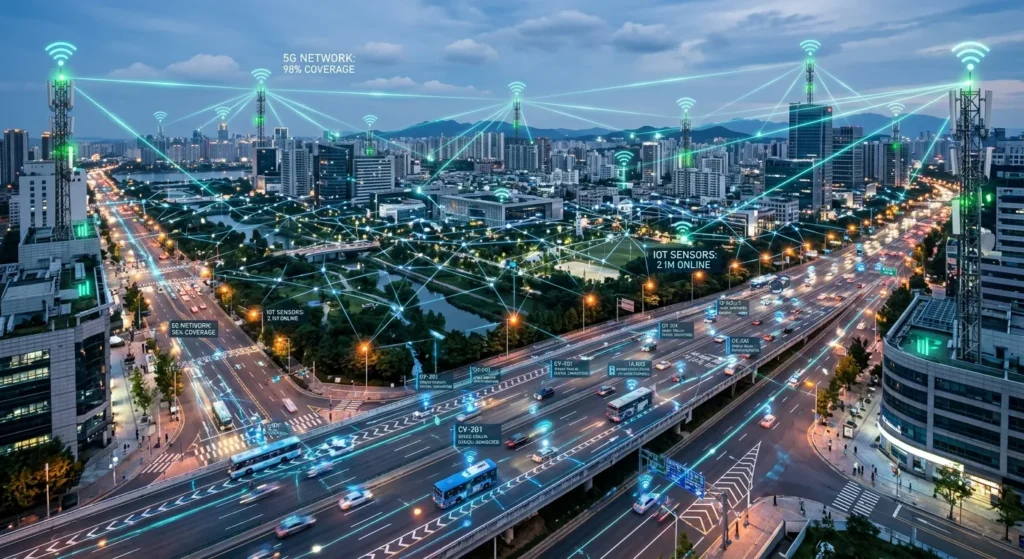
5G is no longer emerging in 2026, it’s the baseline expectation for developed-world connectivity. What’s changed is how it’s being used. The headline consumer promise (faster phone speeds) has been largely eclipsed by the industrial applications: massive IoT sensor networks, real-time industrial automation, and ultra-low-latency remote surgery.
Meanwhile, ITU standardization work on 6G is well underway, with commercial deployment targets of 2030. Early research suggests 6G will deliver terabit-per-second speeds, sub-millisecond latency, and integrated satellite-terrestrial coverage. The groundwork being laid now by labs at Samsung, Ericsson, and Nokia will define connectivity for the next decade.
The IoT Explosion
Connected devices hit 18.8 billion globally in 2024 (IoT Analytics), and by 2026, that number approaches 25 billion. Smart cities are deploying sensors that manage traffic flow, monitor air quality, and predict infrastructure failures before they happen. The data these devices generate and the AI processing it represents one of the most significant untapped resources in the global economy.
10. Edge AI & On-Device Intelligence: Power at the Periphery
Not all AI runs in the cloud. Edge AI, processing intelligence directly on devices rather than routing to remote servers is one of the most important but under-discussed tech trends 2026 has introduced at scale. Why does it matter? Speed, privacy, and resilience.
Apple’s Neural Engine, Qualcomm’s AI-powered Snapdragon chips, and NVIDIA’s Jetson series have made it possible to run sophisticated AI models on smartphones, cameras, industrial sensors, and edge servers without internet connectivity. Qualcomm claims its latest Snapdragon 8 Elite can run a 3-billion-parameter language model entirely on-device.
Industry Applications Leading the Way
Manufacturing plants use edge AI cameras to catch defects in real time on production lines with zero latency and zero cloud dependency. Retail stores use on-device computer vision for inventory management. Hospitals process sensitive patient data locally, maintaining HIPAA compliance while still benefiting from AI diagnostics. Edge AI doesn’t replace cloud AI, it complements it, handling time-critical and privacy-sensitive tasks where the cloud simply can’t compete.
Challenges & Controversies: The Flip Side of Innovation
No honest technology analysis can skip the hard part. These tech trends 2026 represents are extraordinary in their potential and genuinely concerning in their risks.
Job Displacement at Scale
The IMF estimates that AI could affect 40% of jobs globally, with higher-income economies facing the most disruption. While history suggests technology creates as many jobs as it displaces, the speed of this transition is unprecedented. Governments and companies are scrambling to develop reskilling programs, but early data suggests execution is lagging urgency.
AI Bias and Hallucination
Despite massive investment in AI safety and alignment, large language models still hallucinate confidently generating false information. AI systems trained on historical data often perpetuate racial, gender, and socioeconomic biases. In high-stakes domains like healthcare, hiring, and criminal justice, these failures have real human consequences.
Energy Consumption
Training large AI models is extraordinarily energy intensive. GPT-4’s training run is estimated to have consumed roughly the same electricity as 100 average US households use in a year. As model sizes grow and inference scales globally, the carbon footprint of AI becomes a serious sustainability concern, one the industry has not yet adequately addressed.
Future Outlook: Where Do These Trends Lead?
Looking past 2026, the convergence of these tech trends points toward a world of profound capability and equally profound responsibility. Artificial General Intelligence (AGI), AI that matches or exceeds human cognitive ability across all domains, remains the subject of genuine scientific debate. But few experts now believe it’s decades away.
The next frontier is physical intelligence: AI-powered robots that can operate effectively in unstructured environments. Combine that with advances in biotech, quantum computing, and energy storage, and the transformation of how we work, heal, move, and communicate will accelerate further.
The most important question isn’t what technology can do, it’s what we choose to do with it. The tech trends 2026 has crystallized represent tools. Extraordinary, powerful, occasionally dangerous tools. The difference between utopia and dystopia will be determined by governance, equity, and intent, not by the technology itself.

Conclusion: Are You Ready for What's Coming?
The tech trends 2026 has brought to center stage, agentic AI, extended reality, quantum computing, advanced cybersecurity, green tech, generative AI, biotech, autonomous systems, next-gen connectivity, and edge intelligence aren’t independent developments. They’re interlocking pieces of a single, massive transformation.
The window to understand and adapt is now. Whether you’re a student choosing a career path, an entrepreneur spotting an opportunity, or an executive planning a strategy, these trends will touch your world within the next 12 to 36 months. The companies and individuals who engage with them proactively will be the ones writing the next chapter of the innovation story.
Frequently Asked Questions (FAQ)
1. What are tech trends 2026?
Tech trends 2026 refers to the most significant technological developments shaping industries and daily life this year. The top trends include agentic AI, extended reality (XR), quantum computing, advanced cybersecurity, green tech, generative AI, precision medicine via biotech, autonomous vehicles and drones, 5G/6G connectivity, and edge AI.
2. Which tech is growing the fastest in 2026?
Agentic AI and edge computing are among the fastest-growing segments in 2026. Agentic AI, AI that autonomously executes multi-step tasks, is being rapidly adopted across enterprise sectors. The edge AI market is growing at over 25% annually. Extended Reality is also accelerating fast, driven by affordable spatial computing hardware.
3. What is the role of AI in the future?
AI’s future role extends far beyond chatbots. AI trends point toward autonomous systems that conduct scientific research, manage complex business operations, provide personalized healthcare, and augment human creativity. The transition from AI as a tool to AI as a collaborator is already underway in 2026, with AGI remaining a serious long-term prospect.
4. What is XR technology?
XR, or Extended Reality, encompasses Virtual Reality (VR), Augmented Reality (AR), and Mixed Reality (MR). VR places users in fully virtual environments. AR overlays digital content onto the real world (think HoloLens or AR glasses). MR allows digital and physical objects to interact. In 2026, XR is being used in surgery, education, architecture, retail, and entertainment.
5. How can I stay updated on future technology trends?
The best ways to stay current on emerging tech include following high-authority technology publications, monitoring reports from Gartner, IDC, and McKinsey, subscribing to newsletters from MIT Technology Review and IEEE Spectrum, and engaging with developer communities on GitHub and Hacker News. Attending key events like CES, Google I/O, and WWDC also provides early visibility into major developments.

Swathi is a contributor at GizStreet with a master’s degree in science and a strong background in technical writing and product review. She covers gadgets, software, and consumer tech, with a focus on breaking down complex products into clear, practical takeaways for readers.
Share this story
Related Articles

Haier HQLED P7 Pro Series Arrives in India With Built-In 50W Audio, Google TV and Gemini Integration
Haier's HQLED P7 Pro Series arrives in India with Google TV, Gemini integration, Dolby Atmos, gaming features and prices starting at ₹35,990.
AMD’s Next-Generation EPYC “Venice” Explained: How Zen 6 and 256 Cores Push the Data Center Forward
AMD has unveiled the EPYC 9006 server platform based on Zen 6 with up to 256 cores, PCIe Gen 6 and TSMC's 2nm process. Here's what the official announcements reveal.
AMD Helios AI Rack: Why AMD Is Moving the AI Race Beyond Individual Chips
AMD Helios is a rack-scale AI infrastructure solution designed for frontier AI workloads, combining AMD GPUs, CPUs, networking, and ROCm software.
Comments (0)