Home / How Did BTS Become One of the Biggest Global Music Acts in Sports Entertainment?
How Did BTS Become One of the Biggest Global Music Acts in Sports Entertainment?
swa | May 15, 2026 | 12 min read
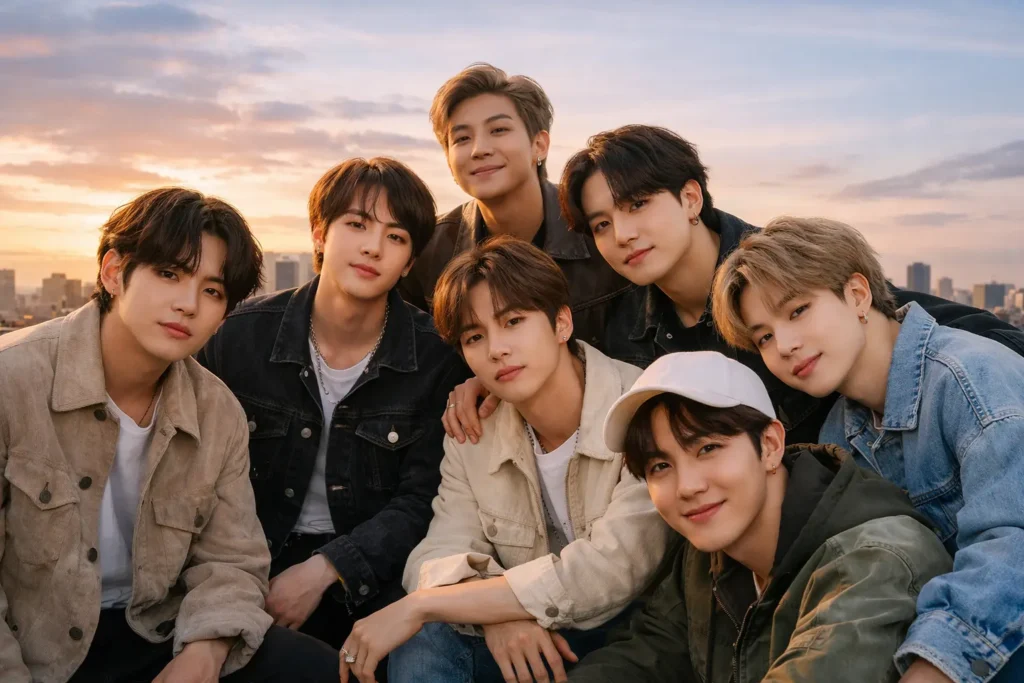
Table of Contents
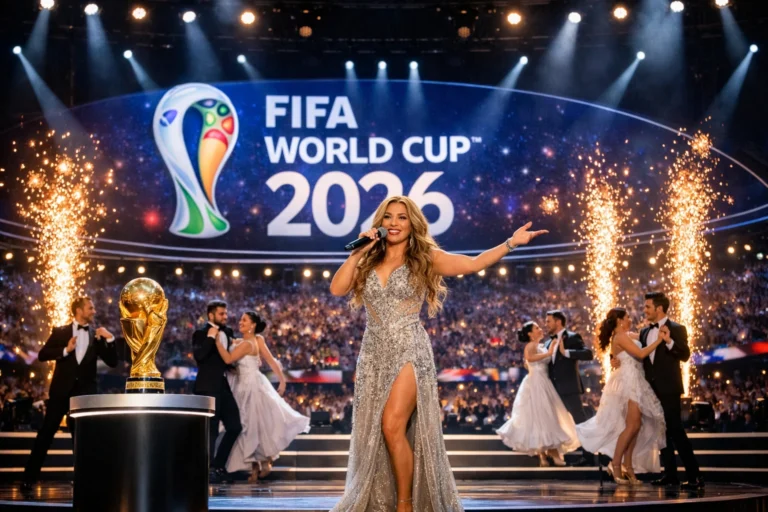
When BTS debuted on June 13, 2013, with a modest hip-hop single under a small Seoul label, nobody predicted they would one day co-headline the world’s most-watched sporting event. Today, BTS global popularity is not a music industry talking point, it is a geopolitical and cultural force. In 2026, the seven-member K-pop group will share the stage with Madonna and Shakira at the first-ever FIFA World Cup Final halftime show at MetLife Stadium in New Jersey, cementing their status not just as music icons, but as cornerstones of global sports entertainment.
What makes this milestone remarkable is the journey behind it. BTS didn’t cross borders by chasing Western trends, they rewrote the playbook entirely. Through an almost fanatical devotion to their craft, radical authenticity on social media, and the unstoppable power of their fanbase (known as ARMY), BTS became the first Asian act to win Artist of the Year at the American Music Awards, the first K-pop group to top the Billboard Hot 100, and now, the first Korean act to headline a FIFA World Cup Final performance.
The FIFA 2026 announcement is the latest chapter in a story that has been building for over a decade. With their 2026 album ARIRANG debuting atop the Billboard 200 with a historic 641,000 equivalent album units in its opening week, BTS isn’t riding a nostalgia wave, they’re actively redefining what global pop stardom looks like in the modern era.
BTS Confirmed for the 2026 FIFA World Cup Final Halftime Show
In May 2026, it was confirmed that BTS will co-headline the inaugural FIFA World Cup Final halftime shows alongside Madonna and Shakira. The event takes place on July 19, 2026, at MetLife Stadium in New Jersey, as part of the largest-ever FIFA World Cup, which features 48 teams and spans the United States, Canada, and Mexico.
This is a landmark moment in both K-pop and sports entertainment history. FIFA has historically not staged halftime performances at World Cup Finals, a tradition more associated with American events like the Super Bowl. The 2026 edition marks the first time FIFA is introducing this format at the most-watched annual sporting event on Earth.
Timeline of the BTS–FIFA Connection
- 2022 — Jung Kook Opens the FIFA World Cup: At the 2022 Qatar World Cup opening ceremony in Al Khor, BTS member Jung Kook performed “Dreamers,” becoming the first Asian artist to perform at a FIFA World Cup. The performance drew global attention and millions of social media impressions overnight.
- 2025 — FIFA Tests Halftime Entertainment: FIFA experimented with halftime shows at the 2025 Club World Cup Final between Chelsea and PSG, featuring Doja Cat, J Balvin, and Tems.
- 2026 — Full BTS at the FIFA World Cup Final: Building on both milestones, FIFA announced BTS as co-headliners for the 2026 World Cup Final halftime show, a full-circle moment from Jung Kook’s solo 2022 appearance.
The 2022 World Cup Final drew an average global live viewership of 571 million, dwarfing even the Super Bowl. BTS’s performance will likely be the most-watched concert moment in K-pop history.
The Intersection of K-Pop and Global Sports Entertainment
The BTS FIFA announcement is trending for reasons that go far beyond music fandom. It represents the formal arrival of K-pop at the intersection of global sports, culture, and commerce, a merging of two of the planet’s most powerful entertainment forces.
Social Media Reactions
Within hours of the announcement, #BTSxFIFA, #BTS2026, and related tags trended globally on X (formerly Twitter), reflecting the kind of organized, passionate social mobilization that has long defined ARMY’s presence online. In a typical year, BTS-related hashtags generate close to 370 million tweets, a testament to how structurally engaged this fanbase is at all times.
Fans highlighted the full-circle nature of the moment: from Jung Kook performing alone in 2022, to all seven members reuniting post-military service in 2026 for the world’s biggest stage. The reunion storyline added emotional weight to what was already a massive sports-entertainment news event.
K-Pop's Global Expansion is Real and Documented
BTS’s FIFA inclusion also accelerates the broader narrative of K-pop global expansion. The genre, once largely confined to Southeast and East Asian markets, now commands billion-dollar touring revenues, Hollywood partnerships, and now, halftime show slots at events with 500+ million viewers. BTS has served as the primary engine of this expansion, opening doors for groups like BLACKPINK, Stray Kids, and TWICE in Western markets.
From a Small Seoul Label to a Global Phenomenon
BTS, comprising RM, Jin, Suga, J-Hope, Jimin, V, and Jungkook, was formed in 2012 through a series of auditions by Big Hit Entertainment, a then-minor Seoul label. Their debut in 2013 was modest, but a clear artistic identity, mixing hip-hop, R&B, and pop with deeply personal, socially conscious lyrics, began drawing a dedicated domestic audience.
Key Milestones in BTS's Rise
- 2015: The Most Beautiful Moment in Life, Pt. 2 becomes BTS’s first album to chart on the Billboard 200, arriving at No. 171.
- 2017: BTS wins the Billboard Music Award for Top Social Artist, their first major US recognition, beating Justin Bieber and introducing them to a mainstream Western audience.
- 2018: Love Yourself: Tear debuts at No. 1 on the Billboard 200, becoming the first K-pop album to reach the summit.
- 2019: BTS becomes the first group since The Beatles to earn three No. 1 albums on the Billboard 200 in less than a year — a record The Beatles had held for 22 years.
- 2020: “Dynamite,” their first English-language single, makes BTS the first all-South Korean act to reach No. 1 on the Billboard Hot 100.
- 2021: BTS wins Artist of the Year at the American Music Awards — the first Asian act in the show’s 49-year history to do so.
- 2022: Jung Kook performs at the FIFA World Cup opening ceremony; BTS is inducted into the Guinness World Records Hall of Fame.
- 2025–2026: Members complete mandatory South Korean military service and regroup; ARIRANG (2026) debuts at No. 1 on the Billboard 200 with 641,000 equivalent album units sold.
Key People
- Bang Si-hyuk (Bang PD): Founder of Big Hit Entertainment, the visionary producer who signed and developed BTS.
- RM (Kim Namjoon): Group leader, lyricist, and spokesperson; known for his articulate English-language advocacy at the United Nations.
- Jungkook: Lead vocalist and the member who performed at the 2022 FIFA World Cup, paving the way for the group’s 2026 appearance.
Key Facts and Important Details
- 🌍 571 million average live viewers watched the 2022 FIFA World Cup Final — making the 2026 halftime show likely the most-watched performance in K-pop history
- 🏆 500+ awards won by BTS throughout their career, including 67 Daesangs (South Korea’s highest music honors)
- 📊 26 Guinness World Records, including most Twitter engagements for a music group and most-viewed YouTube video in 24 hours (multiple times)
- 🎵 6 No. 1 singles on the Billboard Hot 100, including “Dynamite,” “Butter,” “Permission to Dance,” and “My Universe” (with Coldplay)
- 📀 641,000 equivalent album units sold in the opening week of ARIRANG (2026), the highest opening-week numbers for any K-pop album in Billboard 200 history
- 💰 $3.9 billion estimated annual contribution to the South Korean economy from BTS’s brand value
- 🐦 370 million BTS-related tweets per year at peak ARMY activity
- 🎤 First Asian act to win Artist of the Year at the American Music Awards (2021)
- 🇰🇷 First K-pop act nominated for a Grammy Award (Best Pop Duo/Group for “Dynamite,” 2021)
- ⚽ First Asian artist to perform at a FIFA World Cup (Jungkook, 2022 Qatar opening ceremony)
- 🎙️ BTS has addressed the United Nations General Assembly twice — in 2018 and 2021 — on youth and COVID recovery
How the World Responded
Fan Reactions (ARMY)
ARMY’s reaction to the FIFA 2026 halftime announcement was, predictably, volcanic. Fan accounts worldwide coordinated real-time celebrations, trending hashtags across multiple languages simultaneously. Many fans pointed to the emotional resonance of all seven members reuniting on the world’s biggest stage after years of individual military service, a reunion that carries deeply personal meaning for a fanbase that has grown up alongside the group.
The ARMY community is also notable for the social good it drives. In 2020, when BTS donated $1 million to the Black Lives Matter movement, ARMY matched the donation within 24 hours, raising over $1 million through a Twitter campaign with 35,000+ donors. This level of organized, civically engaged fandom is unprecedented in music history.
Industry Commentary
Music industry analysts have framed BTS’s FIFA role as the culmination of K-pop’s decade-long global expansion, noting that BTS succeeded where many expected them to plateau: breaking through Western markets not through assimilation, but through cultural confidence. Their willingness to sing primarily in Korean even at the height of their US popularity was both a commercial risk and a cultural statement and it paid off.
FIFA’s decision to inaugurate its halftime show format with BTS, Madonna, and Shakira signals a new commercial strategy for the organization: using pop entertainment to deepen engagement with younger, global audiences, particularly in the key US market where the 2022 World Cup drew only 25.8 million viewers versus 125+ million for the Super Bowl.
Media Coverage
The announcement was covered globally by Variety, Billboard, BBC, Olympics.com, and Sherwood News, framing it as both a K-pop milestone and a strategic pivot for world football’s governing body. Analysts noted that the lineup, BTS representing Asia-Pacific, Shakira representing Latin America and Europe, and Madonna representing the US, reflects FIFA’s ambition to create a halftime show with truly universal cultural appeal.
The Road Ahead for BTS and K-Pop in Sports Entertainment
The 2026 FIFA World Cup Final (July 19, 2026)
The immediate next milestone is the performance itself. With MetLife Stadium at capacity and a global live audience potentially exceeding 500 million, the BTS FIFA halftime show will be a defining moment — not just for the group, but for K-pop’s place in the global cultural hierarchy.
The ARIRANG Era
With ARIRANG already a commercial juggernaut, BTS is expected to announce a major world tour in 2026. The album’s thematic grounding in Korean history and culture, combined with the global stadium infrastructure BTS has built, positions the tour as one of the most anticipated events in live music.
K-Pop's Next Chapter
BTS’s continued success as fully reunited, post-military artists sets a template for younger K-pop groups facing similar service obligations. Their return demonstrates that cultural relevance can be sustained through genuine artistic evolution and that the global infrastructure K-pop has built over the last decade is robust enough to support extended absences.
Predictions:
- The BTS FIFA halftime performance will generate the highest single-event social media engagement in K-pop history
- ARIRANG will be submitted for Grammy consideration in the 2027 cycle, potentially ending BTS’s long Grammy drought
- FIFA and other global sports organizations will deepen K-pop partnerships as a strategy to capture younger global audiences
Conclusion
BTS’s journey from a small Seoul entertainment label to co-headliners of the FIFA World Cup Final is one of the most extraordinary stories in modern cultural history. Their BTS global popularity was never accidental, it was built on artistic authenticity, an unprecedented connection with their ARMY fanbase, and a willingness to push cultural boundaries at every stage of their career.
The 2026 FIFA World Cup halftime show is not an endpoint; it is the latest chapter in a story that continues to evolve. With ARIRANG already rewriting chart records and a reunion that has energized millions of fans worldwide, BTS’s second act may prove even more impactful than their first. For K-pop as a genre, sports entertainment as an industry, and global pop culture at large, BTS’s trajectory tells us one thing clearly: the borders between sport, music, and culture are dissolving and BTS are among those doing the dissolving.
FAQs
1. Why is BTS’s inclusion in the 2026 FIFA World Cup halftime show important?
It marks the first time a K-pop act has headlined a FIFA World Cup Final performance, the most-watched sporting event on the planet. It validates BTS global popularity as a genuine cross-cultural force, not just a music industry phenomenon, and accelerates K-pop’s integration into global sports entertainment.
2. What does BTS performing at the FIFA World Cup mean for K-pop?
It signals that K-pop has fully arrived on the world stage not as a novelty, but as a mainstream cultural export capable of representing global audiences at the biggest events in sport. It opens the door for other K-pop acts to receive similar opportunities at major sports events worldwide.
3. Where can fans watch the BTS FIFA World Cup Final halftime show?
The 2026 FIFA World Cup Final will be broadcast on Fox Sports and Telemundo in the United States, and across FIFA’s global broadcast partners. The event takes place on July 19, 2026, at MetLife Stadium in New Jersey.
4. Who is involved in the 2026 FIFA World Cup halftime show?
BTS will co-headline alongside Madonna and Shakira. The lineup was curated to reflect global musical diversity, K-pop (BTS), Latin pop (Shakira, who also performs FIFA’s official anthem “Dai Dai”), and American pop royalty (Madonna).
5. When did BTS first connect with FIFA?
The formal connection began at the 2022 Qatar World Cup, where Jungkook performed “Dreamers” at the opening ceremony, becoming the first Asian artist to perform at a FIFA World Cup. The 2026 halftime appearance brings all seven members together for the first time on a FIFA stage.
6. Has BTS ever won a Grammy?
Not yet, though they have received multiple nominations, including Best Pop Duo/Group Performance for “Dynamite” (2021), “Butter” (2022), and “My Universe” with Coldplay (2023), as well as Best Music Video for “Yet to Come.” They remain the first Korean act to be Grammy-nominated, and their 2026 album ARIRANG is expected to be a strong contender in the next cycle.
7. How large is the BTS ARMY fanbase?
ARMY is widely considered the most globally organized fanbase in music history, with active communities in virtually every country. In peak years, BTS-related hashtags have generated close to 370 million tweets annually, and the fanbase has demonstrated remarkable mobilization for both music charts and social causes.