Home / Why Is Shakira So Closely Connected to FIFA World Cup History?
Why Is Shakira So Closely Connected to FIFA World Cup History?
swa | May 16, 2026 | 13 min read
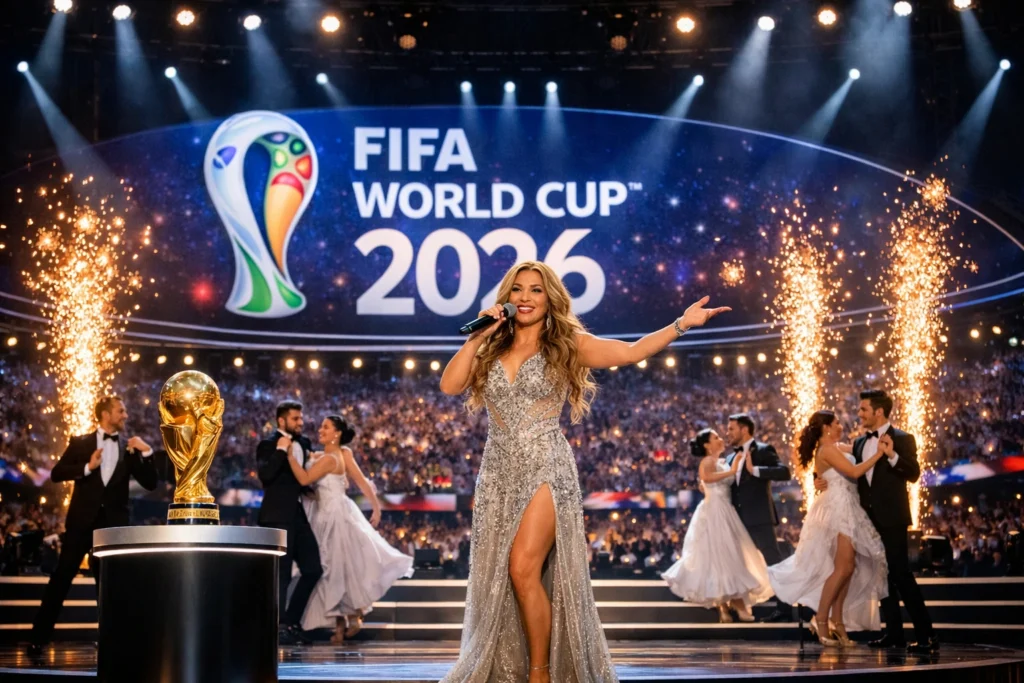
Table of Contents
When the FIFA World Cup rolls around, billions of fans across the globe expect two things: spectacular football and an unforgettable soundtrack. For over two decades, one name has been inseparable from that soundtrack — Shakira. The Colombian-born global superstar has performed at not one, but two FIFA World Cups, cementing her place as the most iconic voice in FIFA anthem history. Her Shakira World Cup songs have transcended sport to become genuine cultural milestones, played in stadiums, schools, and streets from Bogotá to Bangalore.
No artist in modern football history has matched Shakira’s unique blend of Latin pop influence, global appeal, and raw stadium energy. Whether it was her electrifying 2006 performance or the earth-shaking anthem that defined South Africa 2010, Shakira has done something remarkable: she made the world’s biggest sporting event feel personal. Her music didn’t just accompany the World Cup, it became the World Cup for an entire generation of fans.
With ongoing conversations about the FIFA 2026 World Cup (hosted across the United States, Canada, and Mexico) and speculation about who will carry the torch of official anthem duties, Shakira’s legacy is trending once again. Fans, journalists, and music critics are revisiting her unmatched contributions to FIFA music legacy, making this the perfect moment to answer the question: why is Shakira so closely connected to FIFA World Cup history?
Shakira's Journey with the FIFA World Cup
Shakira’s relationship with the FIFA World Cup began building long before she took the stage at an official tournament. Here is a clear timeline of how it all unfolded:
2006 — FIFA World Cup Germany
The Opening Act Shakira performed “The Time of Our Lives” alongside Alejandro Sanz at the Opening Ceremony of the 2006 FIFA World Cup in Munich, Germany. This marked her first major FIFA stage appearance and introduced her to a global football audience of over 700 million television viewers.
2010 — FIFA World Cup South Africa
Waka Waka Changes Everything. This is the chapter that defines Shakira’s FIFA legacy. In collaboration with South African group Freshlyground, Shakira released “Waka Waka (This Time for Africa)” as the official anthem of the 2010 FIFA World Cup. The song, rooted in a traditional Cameroonian soldiers’ chant called “Zangalewa,” became one of the fastest-selling World Cup songs in history. The live performance at Soccer City Stadium in Johannesburg drew over 84,000 fans in attendance and hundreds of millions more watching worldwide.
Post-2010 — Enduring Cultural Presence
After 2010, Shakira continued to be the face of FIFA’s musical legacy. “Waka Waka” remained a fixture at football events, fan parks, and tournament broadcasts for over a decade. She also appeared at the 2014 FIFA World Cup Brazil Closing Ceremony, performing her song “La La La (Brazil 2014)” alongside Carlinhos Brown, though this time as a supporting cultural act rather than the lead anthem artist.
The Renewed Global Interest in Shakira's FIFA Legacy
Several converging factors have pushed Shakira’s World Cup songs back into the global conversation in 2025:
FIFA 2026 Anticipation
With the 2026 FIFA World Cup, the largest in history at 48 teams approaching and set to span North American host cities from New York to Mexico City, debates about the official anthem and who will perform it are dominating social media. Shakira’s name is repeatedly invoked as the gold standard that any new artist must measure up to.
The Waka Waka Viral Renaissance
“Waka Waka” has experienced repeated viral cycles on TikTok, Instagram Reels, and YouTube Shorts. Football content creators frequently use it as a nostalgic backdrop for match highlights, throwback clips, and World Cup countdown content, introducing the song to a new generation of Gen Z fans who weren’t alive during South Africa 2010.
Shakira's Personal Comeback Narrative
Shakira’s high-profile personal and legal battles between 2022 and 2024, followed by a remarkable artistic resurgence with new music releases have made her one of the most-discussed pop figures worldwide. Fans and media are celebrating her resilience, and her World Cup legacy features prominently in that narrative.
Social Media Reactions
Hashtags like #WakaWaka, #Shakira2026, and #FIFAAnthem have collectively generated tens of millions of impressions across platforms. Clips of her 2010 Closing Ceremony performance have racked up hundreds of millions of cumulative views on YouTube, with comment sections filled with nostalgia from fans calling it “the best World Cup ever, partly because of her.”
How Shakira Built Her FIFA Music Legacy
To understand Shakira’s connection to FIFA, it helps to understand who she was before the World Cup amplified her global status and what the intersection of Latin pop and football culture really means.
Shakira Before the World Cup
Born Shakira Isabel Mebarak Ripoll on February 2, 1977, in Barranquilla, Colombia, Shakira had already achieved massive international fame by the mid-2000s. Her 2001 English-language crossover album Laundry Service, featuring “Whenever, Wherever”, sold over 13 million copies worldwide. By 2006, she was one of the best-selling Latin artists of all time, renowned for her distinctive voice, belly dancing, and ability to blend Middle Eastern, rock, and Latin rhythms.
The South Africa 2010 Context
The 2010 FIFA World Cup was a landmark event for Africa; the first time the continent had hosted football’s biggest stage. FIFA wanted an anthem that honoured African culture while commanding global appeal. Shakira, already a multicultural icon fluent in Spanish, English, Portuguese, Arabic, and Italian, was the natural choice. Her collaboration with Freshlyground, a Cape Town-based Afro-pop group gave the anthem authentic African roots while ensuring worldwide commercial reach.
The Zangalewa Connection and Waka Waka Meaning:
The Waka Waka meaning has roots in the Cameroonian Makossa military song “Zangalewa,” first recorded in 1986 by the group Golden Sounds. The phrase “Waka Waka” is derived from Fang, a Bantu language spoken in Cameroon, Equatorial Guinea, and Gabon, roughly translating to “do it” or “burn it.” Shakira and her team sampled and reimagined this traditional song, sparking both celebration of its reach and ongoing debate about cultural attribution and royalties, a conversation that remains relevant to discussions of FIFA music legacy and artistic ethics.
Key People Involved
- Shakira — Lead artist and creative force behind the FIFA anthem
- Freshlyground — South African band providing authentic African musical partnership
- Golden Sounds / Original “Zangalewa” Artists — Original Cameroonian creators whose work formed the musical foundation
- Jerome Valcke — FIFA Secretary General in 2010, who officially commissioned the anthem
- Carlos Vives — Colombian music collaborator involved in earlier Shakira FIFA-adjacent work
Key Facts and Important Details
- “Waka Waka” has accumulated over 3.5 billion views on YouTube, making it one of the most-watched music videos in history and the most-watched World Cup song ever.
- Shakira is the only artist to have performed at both a FIFA World Cup Opening Ceremony (2006) and Closing Ceremony (multiple editions).
- The 2010 World Cup Final between Spain and the Netherlands drew an estimated global television audience of 619 million, the largest sporting audience ever at the time, all of whom heard “Waka Waka” as part of the tournament experience.
- “Waka Waka” debuted at No. 1 in over 15 countries simultaneously, including Germany, Italy, Spain, and Australia.
- Shakira’s 2014 contribution, “La La La (Brazil 2014),” was produced by Carlinhos Brown and recorded in both Spanish and Portuguese, demonstrating her commitment to cultural authenticity at each tournament.
- Football clubs worldwide use “Waka Waka” as a pre-match warm-up and goal celebration anthem, with its FIFA football songs DNA deeply embedded in global stadium culture.
- FIFA’s official anthem selection process typically involves shortlisting 3–5 global artists 18–24 months before a tournament. Shakira was reportedly confirmed for 2010 nearly two years in advance.
- Spotify statistics show “Waka Waka” consistently spikes in monthly streams during major football tournaments, often entering the global Top 50 during World Cup months even 14+ years after its release.
What the World Said Then and Now
Fan Reactions (2010)
When “Waka Waka” was released in May 2010, reactions were overwhelmingly euphoric. Fans from Africa felt genuine pride at hearing a song that honoured their continent’s musical heritage. Latin American supporters celebrated another milestone for a regional icon. European and Asian fans simply loved the energy. Social media in 2010 was still nascent — Twitter had only 75 million registered users at the time, yet “Waka Waka” dominated trending topics globally for weeks.
Fan Reactions (2025)
Today, the nostalgia around Shakira’s World Cup songs is almost sacred. TikTok comments on Waka Waka clips routinely include statements like “This song takes me back to a simpler time” and “No World Cup anthem has touched this since.” Polls run by major sports pages consistently show “Waka Waka” winning Best FIFA Anthem by wide margins over other contenders.
Expert and Industry Commentary
Music industry analysts have noted that Shakira’s FIFA collaborations represent a master class in combining commercial appeal with cultural relevance. Billboard’s Latin music editors have called “Waka Waka” the greatest crossover sports anthem of the 21st century. Academics studying music and globalisation frequently cite it as a case study in how popular music can both celebrate and complicate multicultural exchange.
Rolling Stone ranked it among the Top 10 sports anthems of all time, writing that Shakira managed to make a South African-inspired record that felt simultaneously local and universal — a feat few artists have replicated.
Cultural Debate
Not all reactions have been uncritical. Some Cameroonian musicians and cultural commentators argued that the heavy borrowing from “Zangalewa” without adequate initial recognition or compensation represented a form of cultural appropriation. FIFA and Shakira’s team later navigated settlements and acknowledgments, and this debate has become a healthy reference point in broader conversations about FIFA music legacy, artist rights, and global pop’s relationship with traditional music.
Media Coverage
Every major outlet from The Guardian to CNN to Al Jazeera covered both the 2010 performance and its 2025 nostalgia renaissance. Shakira’s World Cup identity has been the subject of documentaries, magazine features, and academic papers — a testament to her cultural footprint.
The Future of Shakira and FIFA Music
FIFA 2026 and the Anthem Race
The FIFA 2026 World Cup, officially titled FIFA World Cup 26™, is just around the corner. With matches spanning 16 cities across the USA, Canada, and Mexico, it will be the largest World Cup in history. The official anthem selection has been one of the most-watched decisions in sports entertainment. While FIFA has not yet (as of May 2025) confirmed the headline musical act, Shakira’s name has been widely mentioned in industry circles.
Several analysts and music journalists believe that given the tournament’s North American and Latin American geography, a Shakira appearance, whether as lead anthem artist or in a ceremonial capacity, would be a culturally resonant choice. Her massive following in the USA, Mexico, Colombia, and across Latin America aligns perfectly with the host demographic.
Shakira's Artistic Trajectory
After a period of intense personal difficulty, Shakira released a string of chart-dominating singles in 2023–2024, including her record-breaking collaboration tracks. She has signalled in interviews that she is entering what she calls a “new chapter” , creatively liberated and commercially potent. This resurgence makes a FIFA comeback not just plausible but genuinely exciting.
The Legacy of FIFA Football Songs
The broader conversation about FIFA anthem history is also evolving. Streaming platforms have given past World Cup songs new life, and FIFA’s partnership with major music labels means the 2026 anthem will likely be part of a larger multi-track cultural package. Future anthems will be measured against Shakira’s standard for years to come.
Predictions
- “Waka Waka” will almost certainly feature in the 2026 World Cup broadcast package as a legacy anthem.
- Shakira is a top-five favourite among music industry insiders to be involved in some capacity with FIFA 2026.
- The ongoing streaming renaissance of her World Cup songs will likely push her cumulative FIFA-related streams past 10 billion before the 2026 tournament begins.
Conclusion
Shakira’s connection to FIFA World Cup history is not a coincidence, it is the result of a unique convergence of talent, timing, cultural intelligence, and extraordinary stage presence. From her debut on the world’s biggest football stage in Munich 2006, to her earth-moving performance in Johannesburg 2010, to her continued relevance in 2025, she has proven that Shakira World Cup songs are not just anthems for a tournament, they are soundtracks for a generation.
The Waka Waka meaning speaks to something deeper than a catchy hook: it represents the power of music to bridge continents, cultures, and languages in service of shared human joy. That is precisely why Shakira’s FIFA football songs endure while others fade. No World Cup broadcast montage feels complete without her voice. No list of great FIFA anthems is credible without her at the top.
As FIFA 2026 approaches and a new chapter in World Cup history begins, Shakira’s legacy sets an almost impossibly high bar. Whether she takes the stage again or passes the torch to a new voice, her place in FIFA music legacy is permanent, celebrated, and genuinely irreplaceable.
FAQs
1. Why is Shakira so important to FIFA World Cup history?
Shakira is the only major pop artist to have performed at multiple FIFA World Cup ceremonies. Her 2010 anthem “Waka Waka” became one of the most-viewed music videos in history and is widely regarded as the greatest official FIFA anthem ever produced. Her combination of Latin pop influence, multicultural appeal, and extraordinary stage presence made her the defining musical voice of the modern World Cup era.
2. What does Waka Waka mean?
The phrase “Waka Waka” comes from Fang, a Bantu language spoken in parts of Central and West Africa, roughly translating to “do it” or “burn it.” The song is based on “Zangalewa,” a traditional Cameroonian military chant. Shakira collaborated with South African band Freshlyground to reimagine it as the official 2010 FIFA World Cup anthem.
3. Which FIFA World Cups did Shakira perform at?
Shakira performed at the 2006 FIFA World Cup Germany Opening Ceremony, the 2010 FIFA World Cup South Africa Closing Ceremony (her career-defining FIFA performance), and the 2014 FIFA World Cup Brazil Closing Ceremony.
4. Where can I watch Shakira’s FIFA World Cup performances?
All of Shakira’s major FIFA World Cup performances are available on YouTube. The 2010 “Waka Waka” live performance at the Closing Ceremony in Johannesburg is particularly popular, with multiple versions of the video accumulating billions of views. FIFA’s official YouTube channel also hosts archived ceremony footage.
5. Who is involved in creating FIFA World Cup anthems?
Official FIFA anthem selection involves FIFA’s marketing and partnerships division working with major record labels and global artist management teams. The process typically considers an artist’s global reach, cultural relevance to the host nation, and ability to deliver a live stadium performance. For 2010, Shakira and Freshlyground were selected to represent both global appeal and African musical heritage.
6. When did “Waka Waka” come out?
“Waka Waka (This Time for Africa)” was officially released on May 9, 2010 — approximately one month before the 2010 FIFA World Cup kicked off on June 11, 2010.
7. Will Shakira perform at the 2026 FIFA World Cup?
Yes, Shakira is confirmed to co-headline the first-ever FIFA World Cup 2026 Final Halftime Show on July 19, 2026, at MetLife Stadium in New Jersey, alongside Madonna and BTS. The performance, curated by Coldplay’s Chris Martin in collaboration with Global Citizen, aims to bring a Super Bowl-style show to the tournament’s final match.