Apple’s Reported M2 Extreme and M3 Extreme Chips: What We Know, What We Don’t, and Why It Matters
Apple's reported M2 Extreme and M3 Extreme chips remain unconfirmed. Learn what Apple has officially revealed about M2 Ultra and UltraFusion technology.
Contributor
Executive Summary
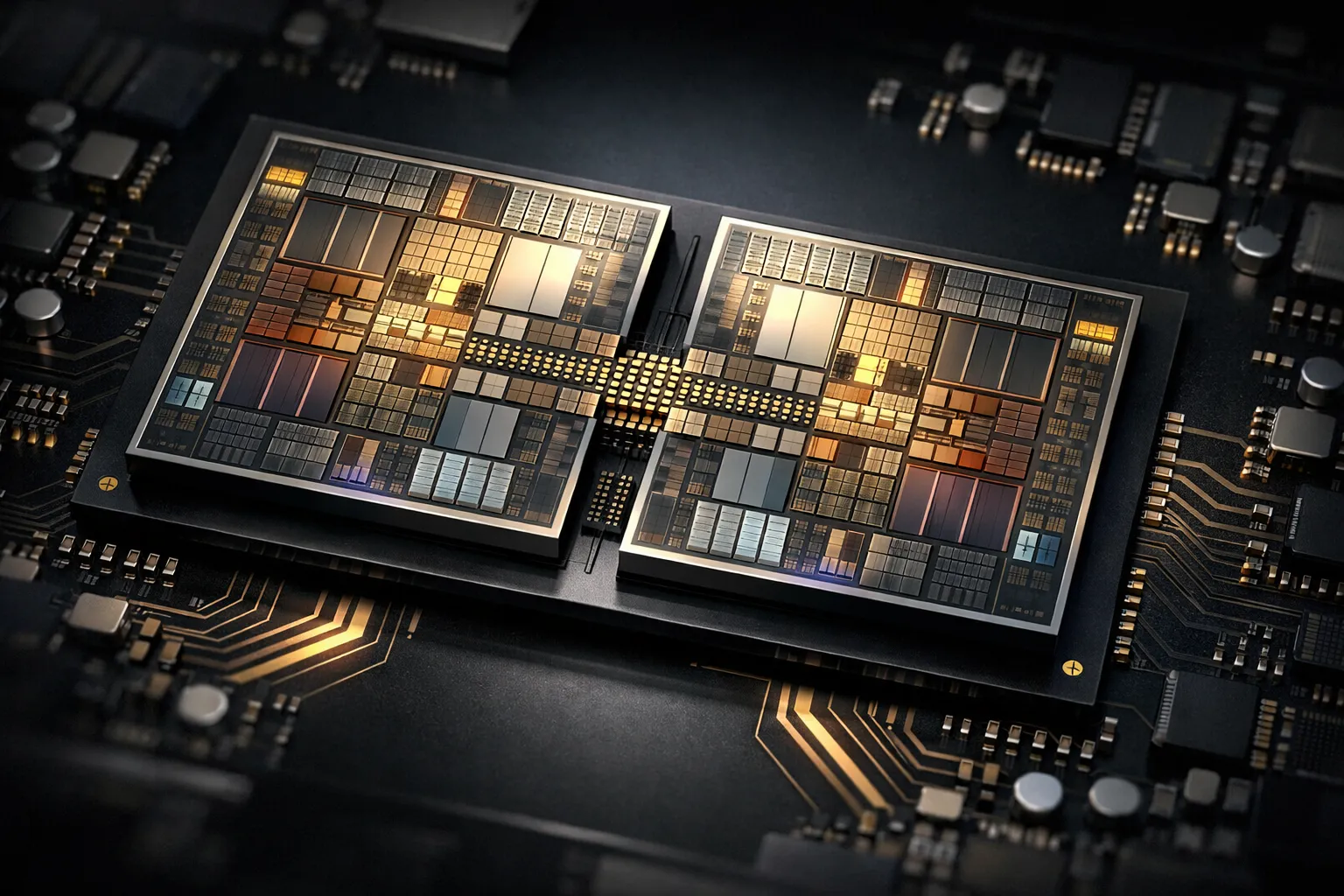
Reports have suggested that Apple explored “Extreme” versions of its M2 and M3 chips before abandoning the projects over manufacturing costs. However, Apple has never officially confirmed that either an M2 Extreme or an M3 Extreme processor existed. Apple M2 Extreme and M3 Extreme chips are never confirmed officially.
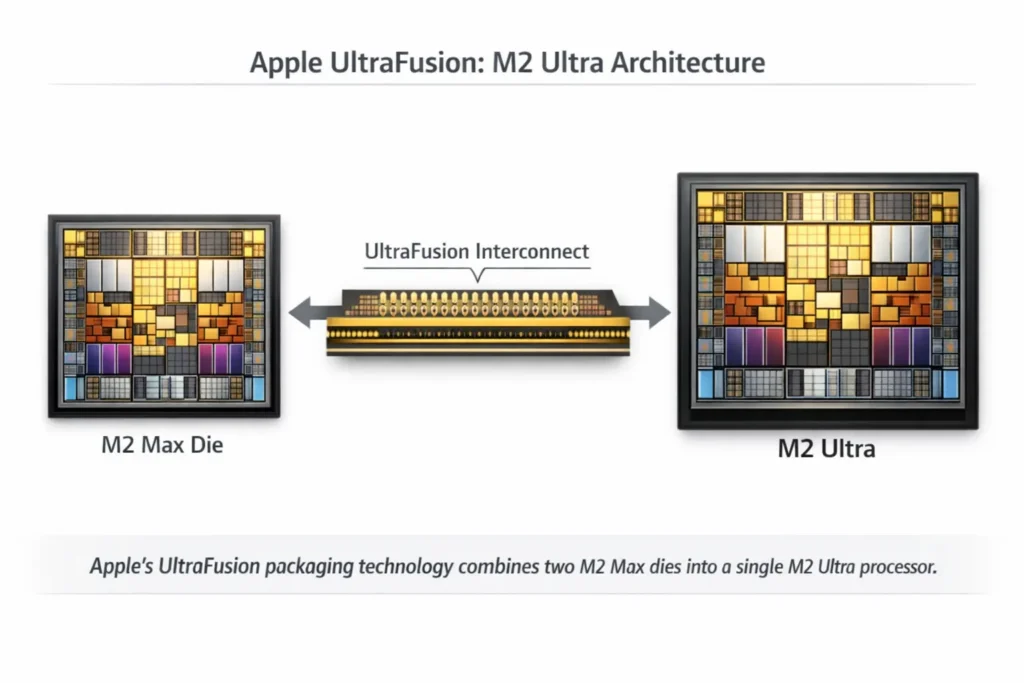
What Apple has confirmed is its current high-end Apple Silicon strategy, including the M2 Ultra, which combines two M2 Max dies using the company’s UltraFusion packaging technology. Claims surrounding cancelled Extreme chips remain based on industry reporting rather than official Apple documentation.
That difference matters. Understanding where verified engineering ends and unconfirmed reporting begins helps provide a clearer picture of Apple’s processor roadmap.
What Has Apple Actually Confirmed?
Apple’s official documentation confirms several high-end Apple Silicon products:
- M2 Max
- M2 Ultra
- Mac Studio with M2 Ultra
- Mac Pro with M2 Ultra
The company has not announced:
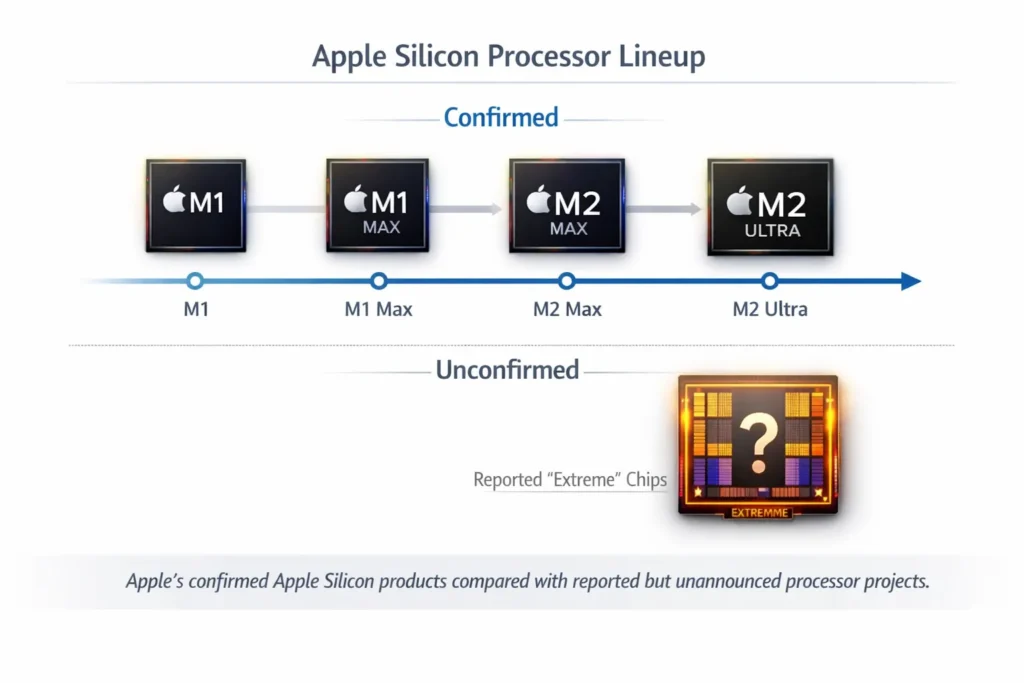
- M2 Extreme
- M3 Extreme
There are no official Apple newsroom announcements, product pages, developer documents, technical specifications, or release notes for either processor.
Important
The reported cancellation of M2 Extreme and M3 Extreme cannot currently be verified through any official Apple source.
Where Did the Extreme Chip Reports Come From?
Reports about Apple’s possible Extreme-class processors originated from industry reporting that cited Bloomberg journalist Mark Gurman’s Power On newsletter.
Those reports claimed Apple had explored processors beyond the Ultra tier, including:
- M2 Extreme
- M3 Extreme
The reported chips were described as designs intended to deliver significantly more CPU and GPU capability than existing Ultra models. The same reports suggested the projects were cancelled before reaching consumers.
However, Apple has not publicly confirmed these claims.
A report from a reliable source can provide insight into possible internal developments, but it should not be treated as equivalent to an official product announcement.
How Does Apple's Current M2 Ultra Compare?
Apple’s highest officially released desktop processor from the M2 generation is the M2 Ultra.
Rather than creating a single massive processor die, Apple uses UltraFusion, a packaging technology that connects two M2 Max dies and allows them to operate as one system-on-chip.
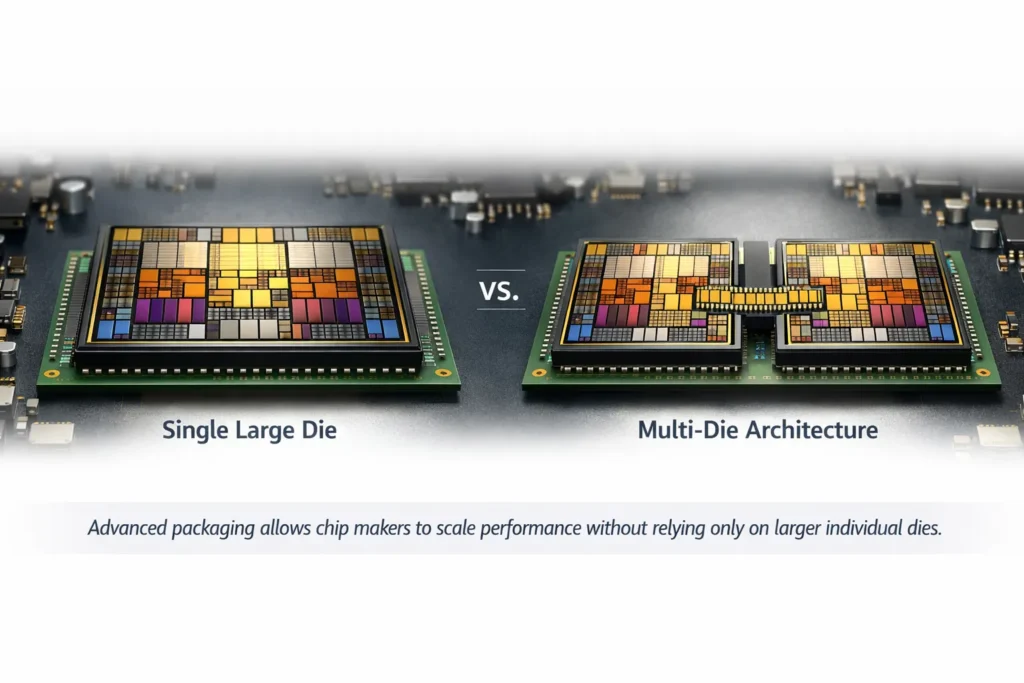
This approach gives Apple a way to scale performance while avoiding some of the challenges involved in producing an extremely large single die.
Official M2 Ultra Specifications
| Specification | Official Value |
|---|---|
| CPU | 24-core |
| GPU | Up to 76-core |
| Neural Engine | 32-core |
| Unified Memory | Up to 192 GB |
| Memory Bandwidth | 800 GB/s |
| Manufacturing Process | Second-generation 5 nm |
| Transistors | 134 billion |
Apple states that UltraFusion uses:
- more than 10,000 interconnect signals
- over 2.5 TB/s of low-latency interprocessor bandwidth
These specifications represent Apple’s officially documented approach to scaling Apple Silicon performance.
Why Would an Extreme Chip Be Difficult to Build?
Although Apple has not confirmed an Extreme processor, semiconductor engineering provides context for why ultra-large chips can be challenging.
As processor dies become larger, manufacturers face several potential problems:
- lower manufacturing yields
- higher production costs
- increased power requirements
- greater heat output
- more complex cooling requirements
A larger chip contains more components, which increases the chance that a manufacturing defect could affect the entire die. That makes production efficiency a major consideration when designing high-end processors.
These challenges are common across the semiconductor industry. However, Apple has not confirmed that manufacturing difficulties were the reason for cancelling any Extreme chip project.
Why UltraFusion Matters to Apple's Chip Strategy
UltraFusion is one of the most important technologies behind Apple’s current high-end desktop processors.
Instead of building one extremely large processor, Apple connects multiple dies into a single package. This approach allows the company to increase performance while maintaining a balance between manufacturing complexity, power consumption, and system design.
The technology provides:
- scalable performance
- high memory bandwidth
- low-latency communication between dies
- improved efficiency compared with some traditional multi-chip approaches
The M2 Ultra shows Apple’s preference for advanced packaging rather than simply making a single processor die larger.
Why This Story Matters Beyond One Cancelled Chip
Even though the reported Extreme processors remain unconfirmed, the discussion reflects broader changes in chip design.
Chip manufacturing has become a balancing act
Modern processors contain billions of transistors. Increasing performance is no longer simply a matter of adding more cores. Manufacturers must also consider efficiency, manufacturing costs, and thermal limits.
Advanced packaging is becoming a key technology
The industry is increasingly using packaging techniques that combine multiple smaller dies rather than relying only on larger individual chips.
Efficiency remains central to Apple’s approach
Apple’s official processor announcements have consistently focused on delivering higher performance while maintaining power efficiency rather than pursuing maximum core counts alone.
What We Know vs. What Remains Unconfirmed
| Verified Information | Unconfirmed Claims |
|---|---|
| Apple announced M2 Ultra. | Apple developed M2 Extreme. |
| UltraFusion connects two M2 Max dies. | Apple developed M3 Extreme. |
| M2 Ultra includes a 24-core CPU. | Apple cancelled Extreme chips because of manufacturing costs. |
| M2 Ultra supports up to 192 GB unified memory. | Technical specifications for Extreme processors. |
| M2 Ultra powers Mac Studio and Mac Pro. | Pricing, availability, or release plans for Extreme chips. |
The Bigger Industry Picture
Unreleased hardware projects are common in the technology industry. Semiconductor companies often investigate multiple designs before deciding which products make commercial sense.
Many of these projects never reach consumers because companies must weigh engineering ambition against manufacturing realities, market demand, and product positioning.
That makes verification especially important. The technology industry often discusses internal projects long before companies officially reveal them.
For readers, the distinction is simple:
- Official announcements confirm products.
- Industry reports can reveal possible developments.
- Unconfirmed projects should remain treated as possibilities, not finished products.
What Should Readers Watch Next?
Apple has not commented publicly on the reported Extreme processors.
Future Apple Silicon announcements may reveal how the company plans to continue scaling performance in professional desktop systems. Until then, the M2 Ultra remains the highest officially announced M2-generation desktop processor.
Any confirmation of future Extreme-class chips would need to come from Apple through official announcements, technical documentation, or product releases.
Conclusion
The reported story of Apple’s M2 Extreme and M3 Extreme chips highlights the gap between ambitious semiconductor projects and officially released products. While reports suggest Apple explored processors beyond the Ultra tier, the company has not confirmed their existence or cancellation.
What is clear is Apple’s current approach: use technologies like UltraFusion to scale performance while balancing efficiency, manufacturing complexity, and product needs.
For now, the M2 Ultra remains the company’s confirmed high-end M2 desktop processor. Any future move toward an Extreme-class Apple Silicon chip will depend on official announcements rather than industry speculation.
Frequently Asked Questions
1. Did Apple officially announce the M2 Extreme?
No. Apple has not announced an M2 Extreme processor.
2. Is the M3 Extreme a confirmed Apple product?
No. Apple has not officially announced an M3 Extreme chip.
3. Who reported the existence of Apple’s Extreme chips?
Reports were attributed to Bloomberg journalist Mark Gurman’s Power On newsletter.
4. What is Apple’s most powerful officially announced M2 chip?
The M2 Ultra is Apple’s highest officially announced M2-generation processor.
5. What is UltraFusion?
UltraFusion is Apple’s packaging technology that connects two M2 Max dies to create a single M2 Ultra processor.
6. Which computers use the M2 Ultra?
Apple introduced the M2 Ultra in the Mac Studio and Mac Pro.
7. How much memory can the M2 Ultra support?
The M2 Ultra supports up to 192 GB of unified memory.
8. Has Apple explained why an Extreme chip was cancelled?
No. Apple has not confirmed that an Extreme chip existed or that any cancellation occurred.
9. Are there official specifications for M2 Extreme or M3 Extreme?
No. Apple has not published specifications for either processor.
10. Should reported Extreme chips be considered real products?
No. Until Apple confirms them, they should be considered unverified reports rather than announced products.

Swathi is a contributor at GizStreet with a master’s degree in science and a strong background in technical writing and product review. She covers gadgets, software, and consumer tech, with a focus on breaking down complex products into clear, practical takeaways for readers.
Share this story
Related Articles

Oppo A7 Pro Max Surfaces in Geekbench Listing, but Official Details Are Still Missing
The Oppo A7 Pro Max has surfaced in a Geekbench listing, revealing early hardware details. Here's what has been verified and what remains unconfirmed ahead of any official announcement.

Vivo X500 Ultra Leak Reveals Three 200MP Periscope Camera Sensors Under Consideration
Vivo X500 Ultra is reportedly being tested with three 200MP periscope camera sensors as the company balances zoom performance and smartphone design.

Samsung One UI 9 Leak Suggests Galaxy S25 Could Get a Galaxy S26 Camera Feature, but Samsung Has Not Confirmed It
Samsung One UI 9 Beta is confirmed for Galaxy S26, while reports of a Galaxy S25 Horizontal Lock camera feature remain unverified.
Comments (0)