Googlebook Explained: How Google Is Reimagining the Laptop for the Gemini AI Era
Googlebook is Google's new AI-first laptop platform powered by Gemini Intelligence. Here's what has been announced, what's coming in Fall 2026, and what remains unknown.
Contributor

Executive Summary
Google has unveiled Googlebook, a new category of laptops built around Gemini Intelligence, signaling one of its most significant shifts in personal computing since the debut of Chromebooks. Rather than treating artificial intelligence (AI) as just another application, Google is placing AI at the center of the laptop experience.
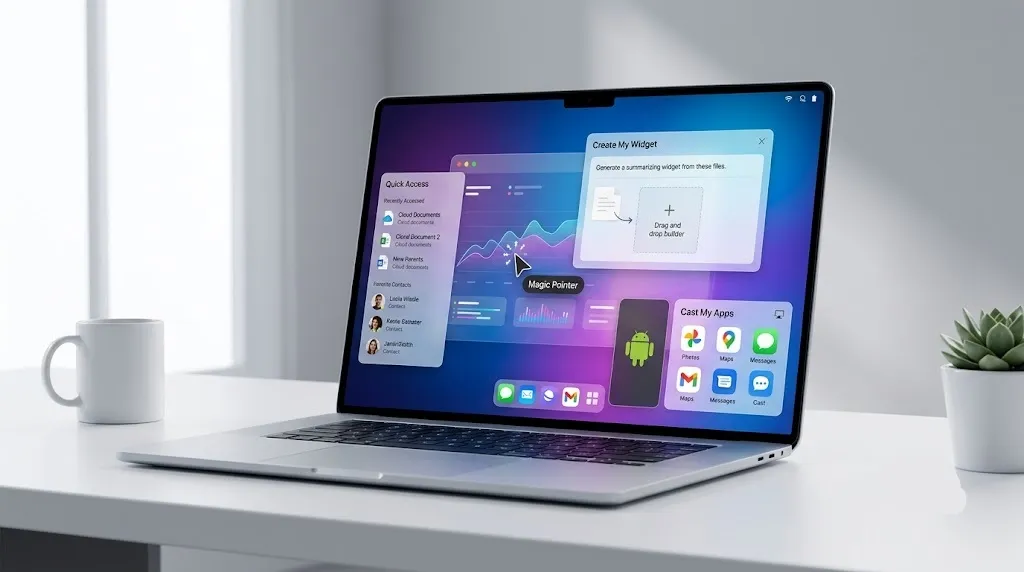
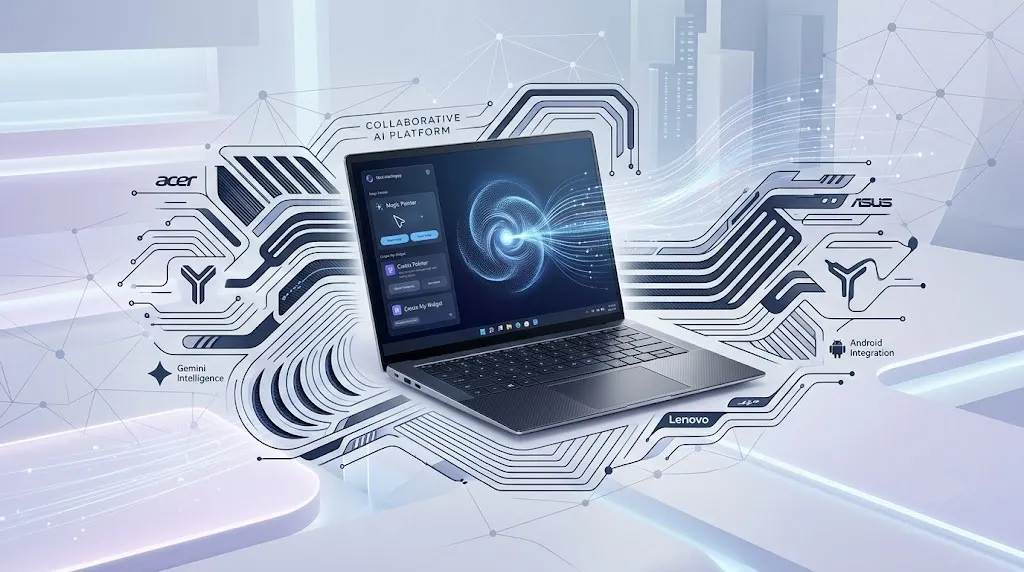
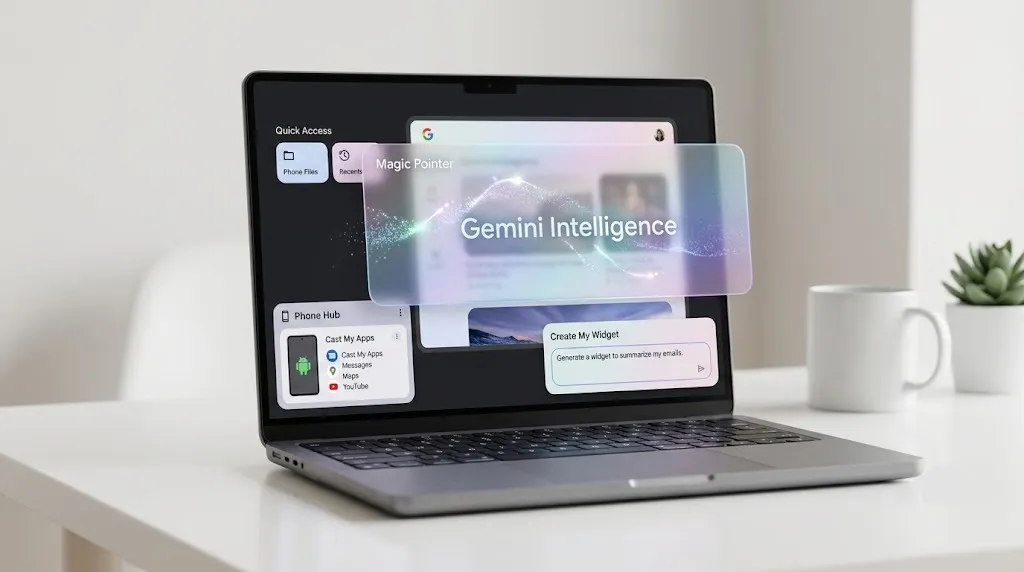
Announced on May 12, 2026, Googlebook introduces features such as Magic Pointer, Create My Widget, Cast My Apps, and Quick Access, all designed to work closely with Gemini and Android. The first devices are expected to arrive in Fall 2026 from hardware partners including Acer, Asus, Dell, HP, and Lenovo.
While Google’s vision is now clearer, many practical details—including hardware specifications, pricing, and the operating system behind Googlebook—remain under wraps.
Google Is Moving Beyond the Chromebook

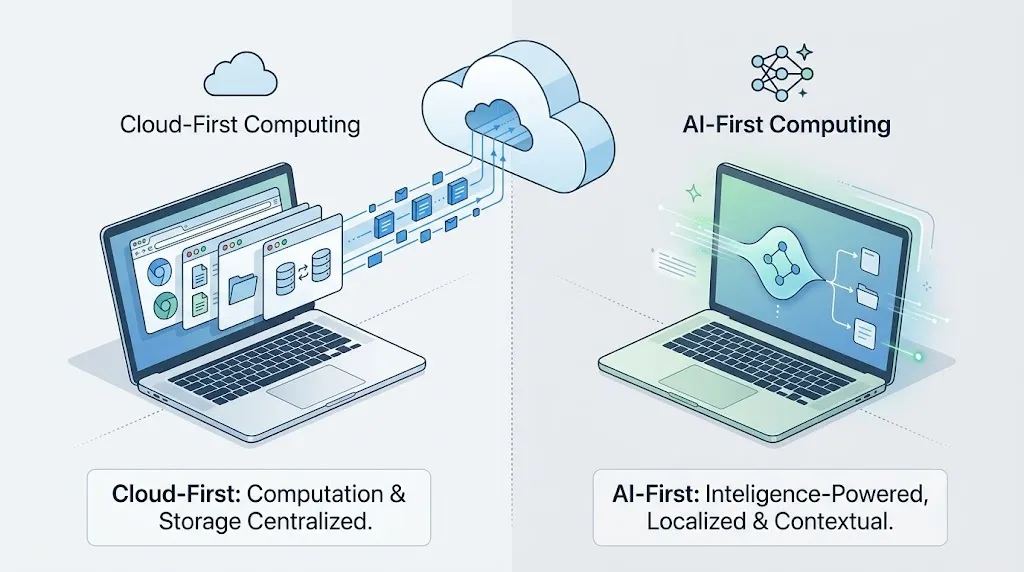
For more than a decade, Chromebooks embodied Google’s cloud-first approach to computing, focusing on lightweight software, web-based applications, and browser-centric workflows.
Googlebook takes a different path.
Instead of building laptops primarily around web browsing, Google is designing this new platform around Gemini Intelligence. The goal is to make AI a core part of everyday computing rather than a feature users launch separately.
Google describes this shift as moving from an operating system to what it calls an “intelligence system,” where AI is woven throughout the experience instead of sitting alongside traditional software.
Important
Google has not announced that Googlebook will replace Chromebooks. It has introduced Googlebook as a separate product category alongside its existing lineup.
What Makes Googlebook Different?
The biggest difference is Google’s decision to build the laptop experience around AI rather than treating AI as an optional add-on.
Several capabilities have already been confirmed.
| Feature | What It Does |
|---|---|
| Magic Pointer | Lets users select content and immediately ask Gemini questions, compare information, or generate new content. |
| Create My Widget | Uses Gemini to create custom widgets through natural language prompts. |
| Cast My Apps | Opens supported Android phone apps on the laptop without requiring installation. |
| Quick Access | Provides direct access to files stored on a connected Android phone. |
| Gemini Intelligence | Integrates Google’s AI capabilities throughout the laptop experience. |
Googlebook is also designed to work closely with Android smartphones, extending Google’s strategy of tighter integration between mobile devices and laptops.

Who Will Build Googlebook Laptops?
As with Chromebooks, Google is relying on established PC manufacturers rather than producing every device itself.
The first Googlebook laptops will come from:
- Acer
- Asus
- Dell
- HP
- Lenovo
This partner-driven approach allows Google to focus on the platform while hardware companies offer devices across different price points and form factors, although those details have yet to be announced.

When Will Googlebook Be Available?
Google has confirmed the following launch timeline.
| Item | Status |
|---|---|
| Announcement | May 12, 2026 |
| Availability | Fall 2026 |
| Pricing | Not announced |
| Regional availability | Not announced |
Preorders have not been announced.
What We Still Don't Know
Google has shared its vision for Googlebook but has stopped short of revealing many of the details buyers typically look for before making a purchase.
The following information has not yet been announced:
- Processor options
- Memory configurations
- Storage capacities
- Display specifications
- Battery life
- Hardware specifications
- Pricing
- Regional availability
- Official operating system name
- Security features
- Version history
Until those details are available, meaningful comparisons with other AI-focused laptops remain limited.
Note
Missing specifications do not necessarily indicate missing features. Google simply has not released those details yet.
Why This Matters
Googlebook reflects a broader shift taking place across the PC industry.
Instead of adding AI capabilities to existing laptops, companies are increasingly designing hardware with AI at its core. Google’s approach puts Gemini at the center of everyday computing, pointing toward a future where users rely more on natural language interactions, contextual assistance, and seamless cross-device experiences.
The close integration with Android further reinforces Google’s long-term strategy of connecting its ecosystem across phones and laptops.
What Does This Mean for Chromebook Users?
Existing Chromebook owners shouldn’t assume an immediate transition.
Googlebook has been introduced as a new product category, not as a replacement for ChromeOS or Chromebook devices.
Several questions remain unanswered, including:
- How Googlebook relates to ChromeOS
- Whether existing Chromebook applications will remain compatible
- How migration between Chromebook and Googlebook will work
- Future software support policies
Google is expected to provide more clarity as the Fall 2026 launch approaches.
Industry Perspective
Googlebook arrives at a time when AI is becoming a defining feature of personal computing.
While Microsoft has pushed AI-enabled PCs through its Copilot+ PC initiative, Google is pursuing its own strategy by building a laptop experience centered on Gemini Intelligence and deeper Android integration.
The long-term success of Googlebook will depend on more than AI features alone. Performance, battery life, application compatibility, pricing, and overall usability will ultimately shape how it competes once those details become public.
Timeline
| Date | Event |
|---|---|
| May 12, 2026 | Google officially announced Googlebook. |
| June 5, 2026 | Google included Googlebook in its May AI announcements recap. |
| Fall 2026 | The first Googlebook laptops are scheduled to launch through partner manufacturers. |
Conclusion
Googlebook represents a notable shift in Google’s approach to laptops, placing Gemini Intelligence at the center of the computing experience instead of treating AI as an optional feature. The announcement outlines Google’s direction for AI-first personal computing while strengthening the connection between laptops and Android devices.
Much of the story, however, is still to come. Hardware specifications, pricing, software architecture, and availability remain unknown. As the planned Fall 2026 launch draws closer, those details will determine how Googlebook fits into an increasingly competitive market for AI-powered PCs.
Frequently Asked Questions
1. What is Googlebook?
Googlebook is a new category of AI-focused laptops designed around Gemini Intelligence.
2. Is Googlebook replacing Chromebooks?
No. Google has introduced Googlebook as a separate product category and has not announced that it will replace Chromebooks.
3. When will Googlebook be available?
The first Googlebook laptops are expected to launch in Fall 2026.
4. Which companies are building Googlebook laptops?
Google has announced Acer, Asus, Dell, HP, and Lenovo as its initial hardware partners.
5. What does Magic Pointer do?
Magic Pointer allows users to select content and instantly use Gemini to ask questions, compare information, or generate new content.
6. What is Create My Widget?
Create My Widget lets users generate custom widgets using natural language prompts through Gemini.
7. Will Googlebook work with Android phones?
Yes. Google says Googlebook is designed to work seamlessly with Android devices, with certain cross-device features requiring Android 17 or later.
8. Has Google revealed pricing?
No. Pricing has not yet been announced.
9. What operating system does Googlebook use?
Google has not disclosed the operating system or provided technical details about it.
10. What information is still missing?
Google has yet to announce hardware specifications, processor options, memory, storage, battery life, display configurations, pricing, and regional availability.
Swathi is a contributor at GizStreet with a master’s degree in science and a strong background in technical writing and product review. She covers gadgets, software, and consumer tech, with a focus on breaking down complex products into clear, practical takeaways for readers.
Share this story
Related Articles

How to Choose a Laptop: A Complete Buying Guide
Buying a laptop can be surprisingly confusing. A product page may list a processor, RAM, SSD, graphics processor, display resolution, refresh rate, battery capacity […]

Lenovo Yoga 9i 2-in-1 Aura Edition: What Official Information Confirms About Lenovo’s Premium Hybrid Laptop
Discover the officially confirmed specifications and features of the Lenovo Yoga 9i 2-in-1 Aura Edition, and understand what is verified versus editorial opinion.

Acer Aspire 5 A514-54H Review: A Practical 14-Inch Laptop That Prioritises Performance Over Premium Design
The Acer Aspire 5 A514-54H brings Intel Core Ultra 5 performance, 16GB RAM and a 512GB SSD to a practical 14-inch productivity laptop. Here's everything officially verified.
Comments (0)