Monday, July 20, 2026
Technology

Smart Scales Have Evolved Beyond Weight Tracking—Here’s What Bioelectrical Impedance Analysis Really Tells You

Smart scales do more than measure weight. Learn how Bioelectrical Impedance Analysis works, what body composition metrics mean, and why long-term tracking matters.
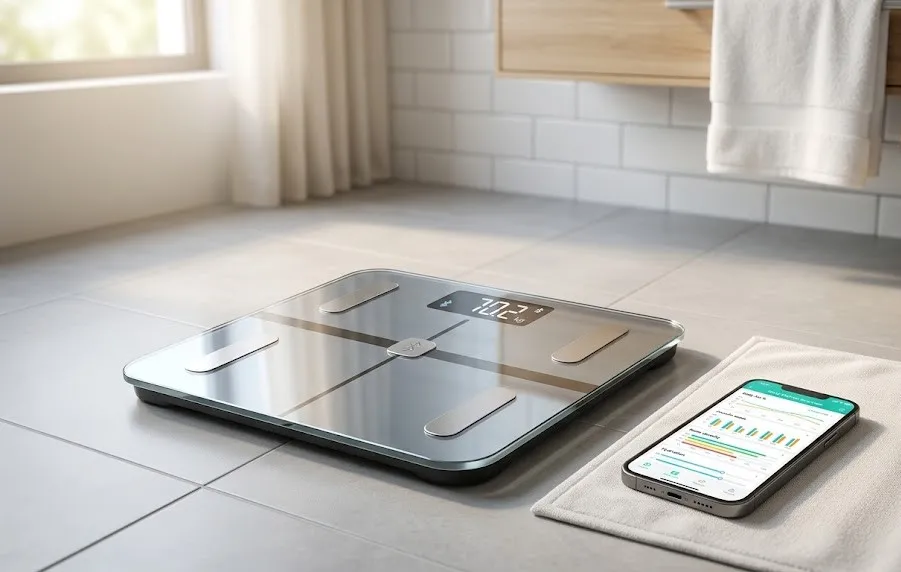
Modern smart scale paired with a smartphone displaying body composition metrics.

Executive Summary

A bathroom scale used to serve one purpose: measuring body weight. Today’s smart scales aim to provide a broader picture of personal health by estimating body composition through Bioelectrical Impedance Analysis (BIA). Manufacturers including Wyze and RENPHO describe BIA as a technique that sends a weak electrical current through the body to estimate measurements such as body fat percentage and muscle mass.

Those extra insights can be useful for tracking long-term health trends, but they come with an important caveat. Manufacturers also emphasize that these figures are estimates rather than medical-grade measurements. That makes the overall experience—including the companion app and the way data is presented—just as important as the scale itself.

Why Smart Scales Offer More Than Weight

For decades, stepping onto a bathroom scale answered a single question: “What do I weigh today?”

Modern smart scales try to answer several more. Alongside body weight, many models estimate measurements such as:

  • Body fat percentage
  • Muscle mass
  • Bone-related metrics
  • Additional body composition values, depending on the manufacturer

These estimates are made using Bioelectrical Impedance Analysis (BIA), a technology that has become common across consumer smart scales.

How Bioelectrical Impedance Analysis (BIA) Works

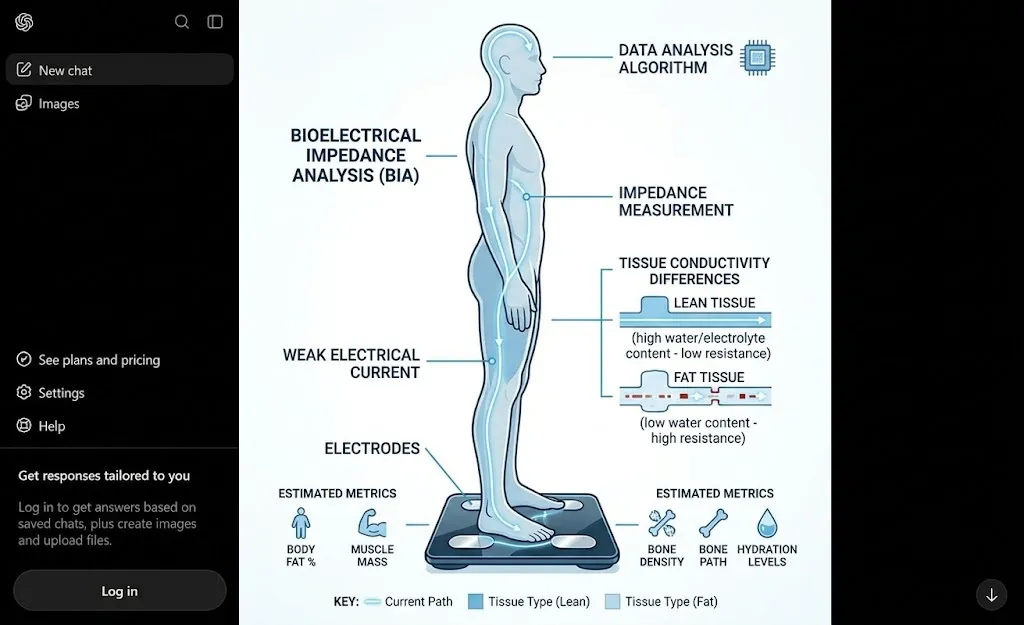
Bioelectrical Impedance Analysis estimates body composition by measuring the body’s electrical resistance.

Official documentation from Wyze and RENPHO explains that the scale sends a weak electrical current through the body. Because different tissues conduct electricity differently, the device combines the measured resistance with personal information such as height, age, and sex to estimate body composition.

The entire process takes only a few seconds while standing on the scale.

Important

BIA does not directly measure body fat or muscle mass. It estimates these values using electrical impedance and manufacturer-developed algorithms.

Illustration showing how Bioelectrical Impedance Analysis works. Smart Scales
BIA estimates body composition by measuring the body's electrical resistance.

What Can Modern Smart Scales Measure?

The exact list of measurements varies by brand and model, but official documentation commonly lists the following:

Measurement

Purpose

Body Weight

Primary measurement

Body Fat Percentage

Estimated proportion of body fat

Muscle Mass

Estimated muscle content

Heart Rate*

Available on some supported models

Additional Body Composition Metrics

Vary by manufacturer

*Availability depends on the specific product.

Understanding the Limits of Accuracy

Weight is measured directly using sensors inside the scale. Body composition is not.

Instead, smart scales calculate estimates using BIA. Wyze notes in its official documentation that home BIA measurements are estimates and may differ from results obtained with professional medical equipment.

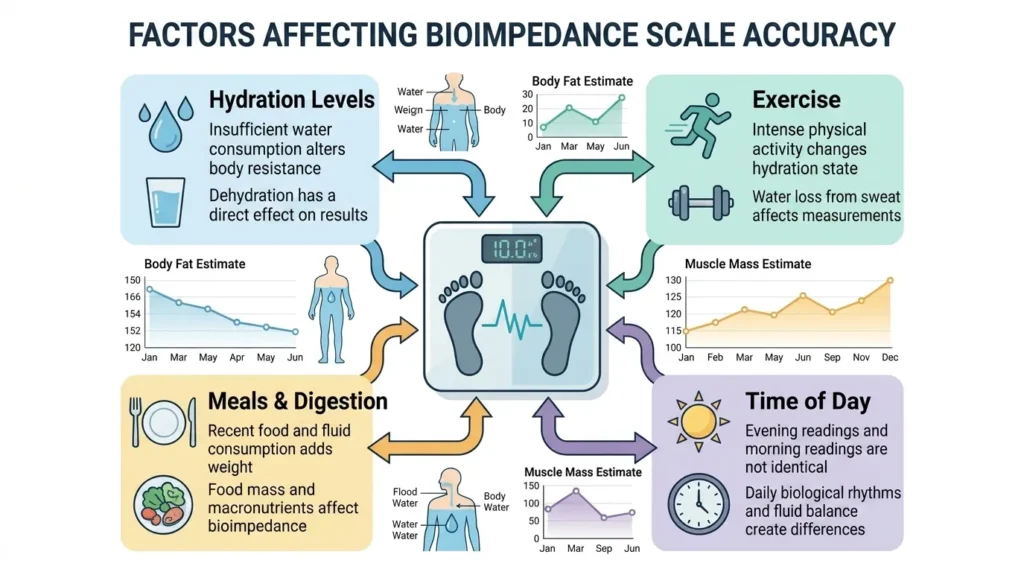
Several everyday factors can affect readings, including:

  • Hydration levels
  • Time of day
  • Recent exercise
  • Food intake

Because of these variables, a single reading is rarely the most meaningful indicator. Consistent measurements taken under similar conditions are generally more useful for identifying long-term trends.

Factors that can influence smart scales body composition estimates.
Daily habits and body conditions can affect BIA measurements.

Why the Companion App Matters

The hardware is only one part of the experience.

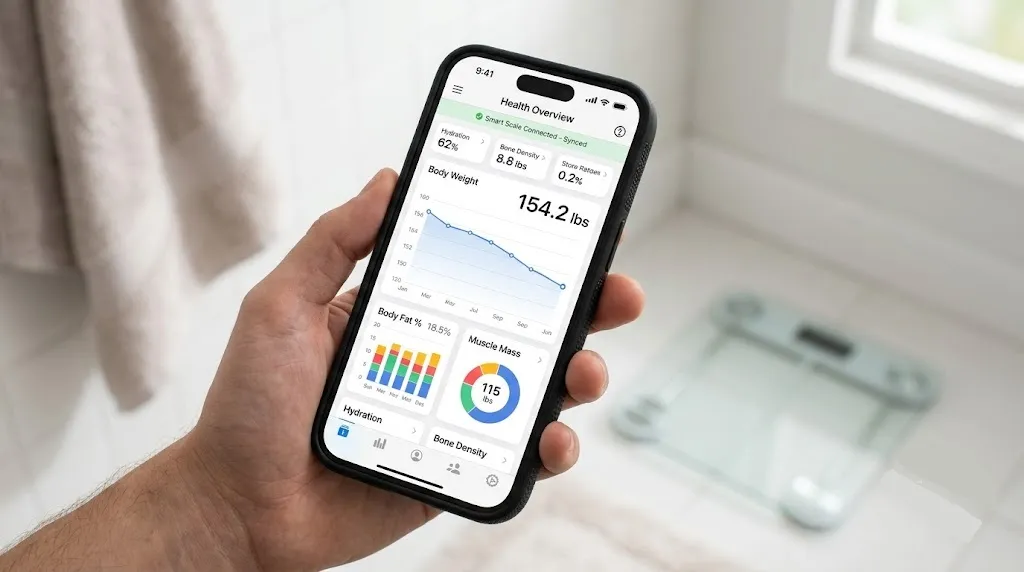
Most smart scales are designed to work with companion apps that organize measurements into charts and historical trends. Rather than focusing on individual weigh-ins, users can see how their body composition changes over weeks or months.

A well-designed app typically helps users:

  • Track long-term progress
  • Review historical measurements
  • Organize body composition data
  • Keep health information in one place

For many buyers, the quality of the software ecosystem can be just as important as the accuracy of the scale itself.

Health tracking app displaying smart scale measurements over time.
Companion apps help users monitor long-term health trends.

What the Official Documentation Confirms

The available manufacturer documentation consistently supports several core capabilities of modern smart scales.

Verified Capability

Status

Uses Bioelectrical Impedance Analysis

Confirmed

Sends a weak electrical current

Confirmed

Estimates body composition

Confirmed

Measures body weight

Confirmed

Estimates body fat percentage

Confirmed

Estimates muscle mass

Confirmed

No official product announcement, firmware update, software release, release notes, or version history related to this editorial topic was identified. Likewise, no official pricing updates or GitHub repositories were available.

Why This Matters for Consumers

Smart scales offer more information than traditional bathroom scales, but the additional numbers should be viewed in context.

Rather than treating every measurement as an exact health assessment, it’s more useful to focus on changes over time. Someone monitoring progress over several months is likely to gain more value from consistent trends than from day-to-day fluctuations.

Consistency is key. Taking measurements at roughly the same time of day and under similar conditions can make those trends easier to interpret.

What to Look for Before Buying

If you’re considering a smart scale, the list of measurements shouldn’t be the only deciding factor.

It’s worth asking:

  • Does the companion app present data clearly?
  • Is it easy to review historical trends?
  • Are body composition estimates useful for your personal goals?
  • Does the manufacturer explain how measurements are calculated?
  • Are the limitations of BIA clearly documented?

A scale that reports more metrics isn’t automatically a better choice if the information is difficult to understand or track over time.

Smart Scales Are Part of a Larger Health Technology Trend

Connected health devices increasingly work together rather than in isolation.

Smart scales now sit alongside products such as:

  • Fitness trackers
  • Smartwatches
  • Connected blood pressure monitors
  • Other home health monitoring devices

The broader trend is toward building a more complete picture of personal health by combining multiple data points instead of relying on a single measurement.

Conclusion

Smart scales have expanded the role of the traditional bathroom scale by estimating body composition through Bioelectrical Impedance Analysis. Documentation from manufacturers such as Wyze and RENPHO confirms that these devices use a weak electrical current to estimate measurements including body fat percentage and muscle mass, while also making clear that the results are estimates rather than clinical measurements.

For most users, the real value comes from consistent tracking over time rather than chasing individual readings. As connected health ecosystems continue to evolve, smart scales are becoming one component of a broader approach to personal health monitoring, where reliable trend data and a well-designed companion app matter just as much as the hardware itself.

Frequently Asked Questions

What is Bioelectrical Impedance Analysis (BIA)?

It is a method that estimates body composition by measuring how a weak electrical current travels through the body.

Do smart scales directly measure body fat?

No. They estimate body fat using Bioelectrical Impedance Analysis and manufacturer-developed algorithms.

Are body composition measurements medically exact?

No. Manufacturers describe these values as estimates that may differ from measurements obtained using professional medical equipment.

What measurements do smart scales commonly provide?

Many models estimate body fat percentage, muscle mass, and other body composition metrics in addition to measuring body weight.

Why do body composition readings change from day to day?

Hydration, recent exercise, food intake, and the time of day can all influence BIA estimates.

Why is the companion app important?

It stores historical measurements, displays trends, and helps users monitor changes over time.

Are all smart scales equally accurate?

No. Available features and the accuracy of estimated measurements vary between manufacturers and models.

Was this article based on a new product launch?

No. It is based on an editorial analysis supported by official manufacturer documentation rather than a product announcement.

Were any new software versions or firmware releases announced?

No official release notes, software versions, or firmware updates related to this topic were identified.

Is it better to focus on trends than individual readings?

Yes. Because BIA measurements are estimates, long-term trends are generally more useful than any single measurement.

0 Comments

Related Articles

Comments (0)

Share your thoughts

Your email address will not be published. Required fields are marked *