The Witcher 3: Wild Hunt Still Sets the Standard for Open-World RPGs After a Decade
The Witcher 3 Wild Hunt remains a landmark RPG with its version 4.0 next-gen update, improved visuals, modern features, and continued support from CD PROJEKT RED.
Contributor

Executive Summary
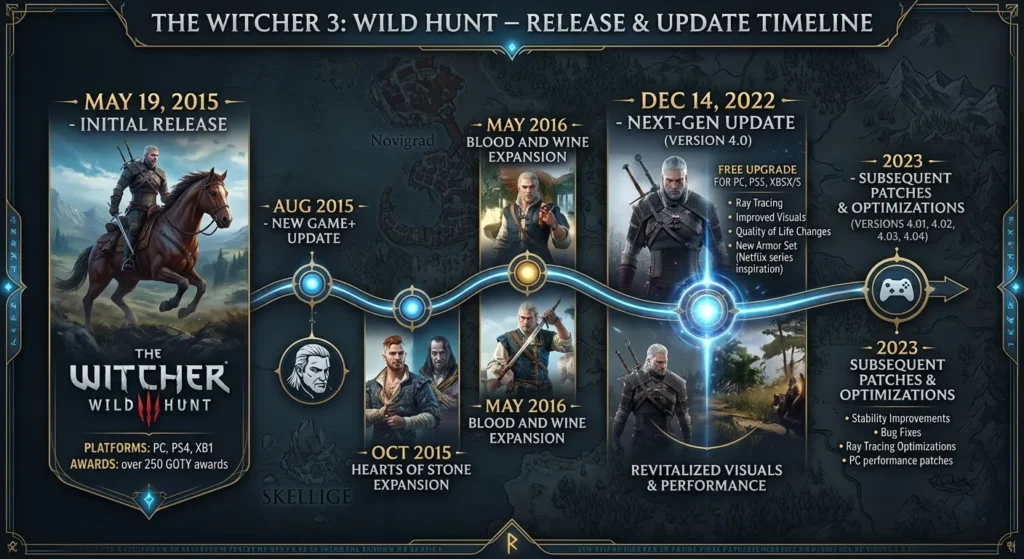
When CD PROJEKT RED released The Witcher 3: Wild Hunt on May 19, 2015, it arrived as a large-scale role-playing game built around exploration, storytelling, and player choice. Nearly a decade later, the game remains one of the most frequently referenced examples of modern open-world RPG design, supported by continued updates and the arrival of its free next-generation upgrade.
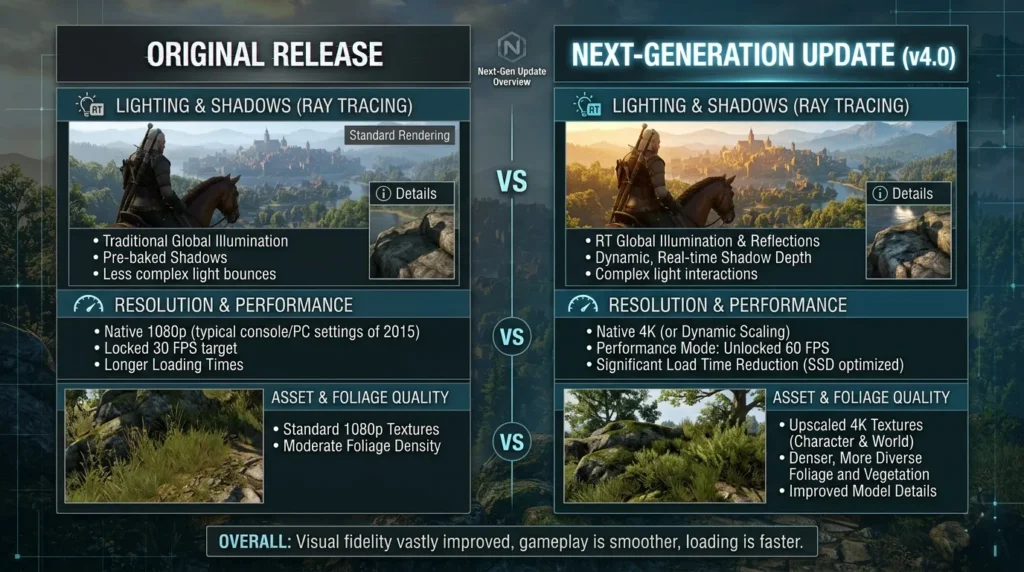
The game’s staying power comes from more than its original content. The version 4.0 next-gen update, released on December 14, 2022, introduced major technical improvements, including ray tracing, faster loading, improved visuals, cross-progression, Photo Mode, and additional content for newer hardware.
For returning players and newcomers alike, the updated version provides a more refined way to experience Geralt of Rivia’s journey across the Continent.
Why The Witcher 3 Remains Important in RPG History
What made The Witcher 3 different from other open-world games?
Building a large open world has always been a challenge for game developers. A bigger map does not automatically create a better experience; without meaningful content, exploration can quickly become repetitive.
The Witcher 3: Wild Hunt took a different approach by making its world revolve around storytelling, character relationships, and player decisions.
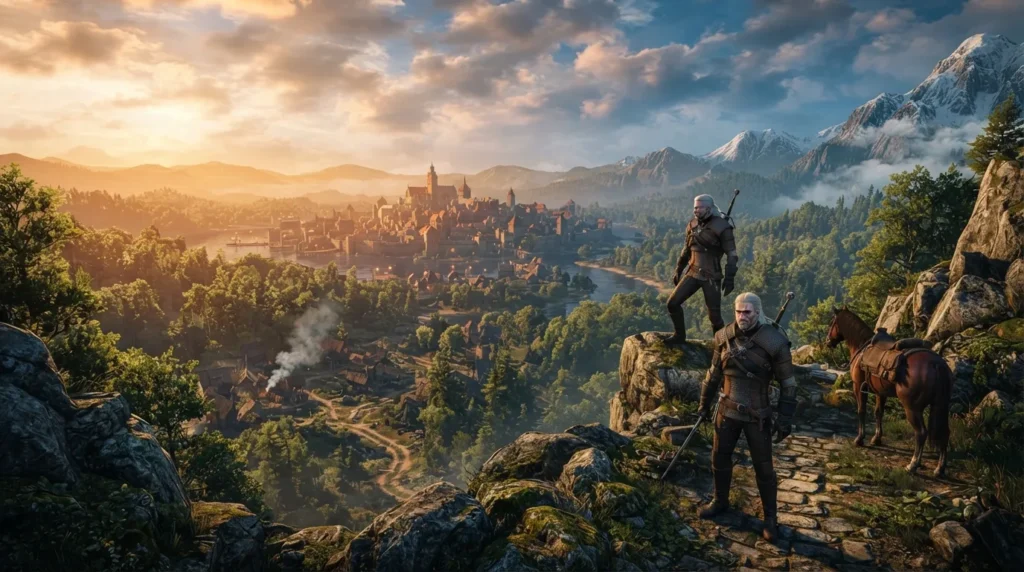
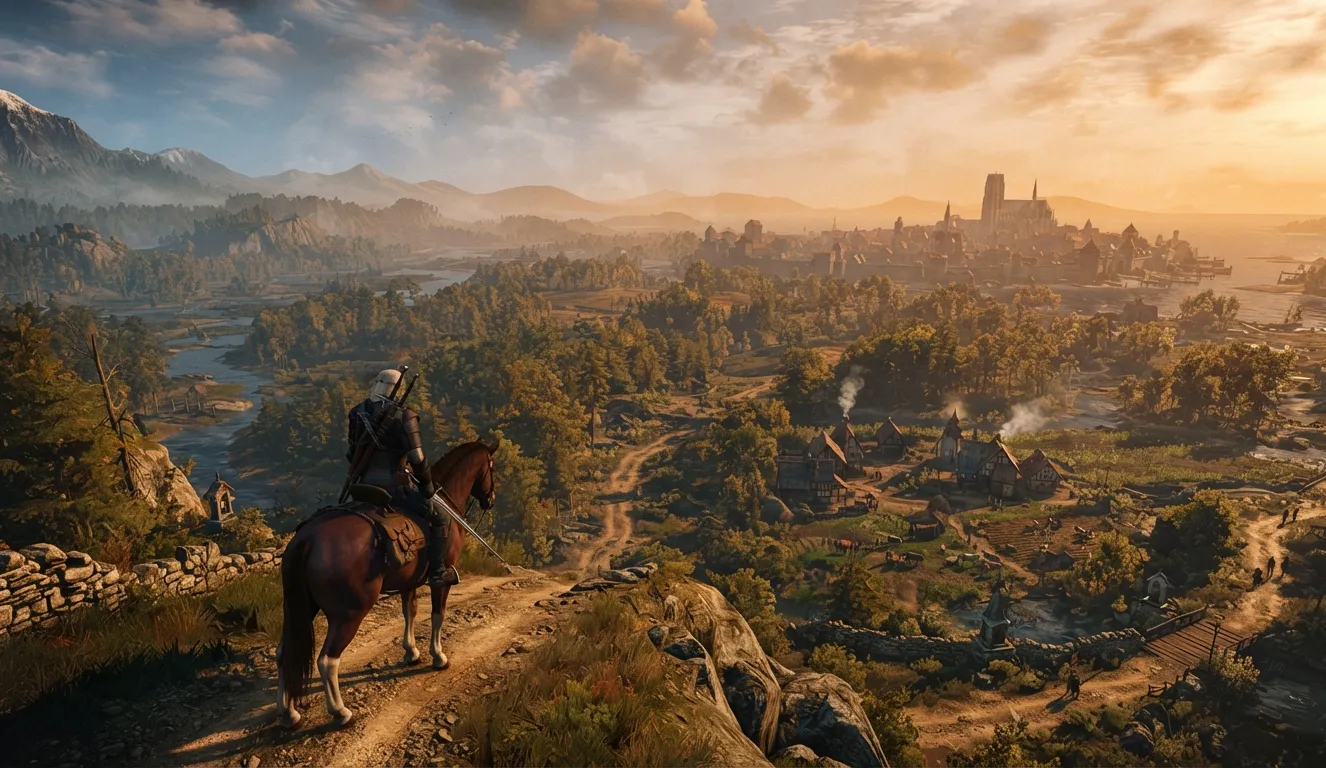
Players step into the role of Geralt of Rivia, a monster hunter searching for Ciri, the Child of Prophecy. The game’s setting, known as the Continent, combines fantasy landscapes with political conflicts, folklore, and personal stories that connect individual quests to the larger world.
Areas such as Velen and Novigrad are not simply locations to explore. They serve as settings for stories, conflicts, and choices that shape the player’s journey.
The statement that The Witcher 3 “redefined” the open-world RPG genre remains a matter of critical opinion, but the game’s influence can be seen in the way many later RPGs approached quest design, world-building, and narrative depth.

How did The Witcher 3’s next-gen update change the experience?
What improvements arrived with version 4.0?
CD PROJEKT RED released the free next-generation update for The Witcher 3: Wild Hunt on December 14, 2022, upgrading the game to version 4.0.
Rather than replacing the original release, the update focused on improving visuals, performance, and quality-of-life features across supported platforms.
The biggest additions included:
Feature | Description |
Ray tracing | Added ray-traced global illumination, ambient occlusion, reflections, and shadows on supported hardware |
Photo Mode | Allows players to capture images within the game world |
Cross-progression | Enables cloud-based save progression between supported platforms |
Integrated mods | Added community-created and mod-inspired content |
DLSS 3 support | Added NVIDIA DLSS 3 support for compatible PC hardware |
AMD FSR 2.1 | Added AMD FidelityFX Super Resolution 2.1 support |
Ray tracing changes how lighting is calculated inside a game. Instead of relying only on traditional lighting techniques, supported hardware can create more realistic reflections, shadows, and illumination.
For players with capable systems, these upgrades bring the decade-old RPG closer to the visual standards expected from newer releases while maintaining the original gameplay experience.

Where can players play The Witcher 3 today?
Which platforms support the game?
The Witcher 3: Wild Hunt remains available across several gaming platforms.
Platform | Availability |
PC | Supported |
PlayStation 4 | Supported |
PlayStation 5 | Supported |
Xbox One | Supported |
Xbox Series X | S |
Nintendo Switch | Supported |
The next-generation update focused its largest technical improvements on PC, PlayStation 5, and
Xbox Series X|S.
Players on newer consoles received performance options designed around different visual priorities:
- Performance mode targeting 60 FPS on PlayStation 5 and Xbox Series X
- Ray tracing mode targeting 30 FPS on PlayStation 5 and Xbox Series X
This gives players the choice between smoother performance and enhanced visual effects.
What are the PC requirements for The Witcher 3?
Can modern PCs run the game?
The original PC requirements for The Witcher 3 reflected the hardware available around its 2015 launch. Later updates, especially those adding advanced graphical features, introduced more demanding options for players using newer technology.
Official minimum requirements include:
Component | Minimum Requirement |
Processor | Intel Core i5-2500K 3.3GHz or AMD Phenom II X4 940 |
Graphics | Nvidia GeForce GTX 660 or AMD Radeon HD 7870 |
Memory | 6GB RAM |
Operating System | 64-bit Windows 7 or Windows 8 (8.1) |
Storage | 40GB |
Recommended specifications include:
Component | Recommended Requirement |
Processor | Intel Core i7 3770 3.4GHz or AMD FX-8350 4GHz |
Graphics | Nvidia GeForce GTX 770 or AMD Radeon R9 290 |
Memory | 8GB RAM |
Players who want to enable ray tracing should expect to need more modern hardware than these original specifications.
How has CD PROJEKT RED continued updating The Witcher 3?
What happened after the version 4.0 release?
The next-generation update was followed by additional patches aimed at improving stability, performance, and gameplay issues.
Date | Update |
December 14, 2022 | Version 4.0 next-gen update released |
February 2, 2023 | Patch 4.01 released |
March 13, 2023 | Patch 4.02 released |
May 11, 2023 | Patch 4.03 released |
These updates addressed issues such as:
- PC Screen Space Reflections settings problems
- Console save-related issues
- Gameplay and quest fixes
The continued patch support shows how major releases can remain technically relevant years after launch.
Why does The Witcher 3 still matter years after release?
What does long-term support mean for players?
The Witcher 3 provides an example of how a successful game can continue evolving without requiring players to start over with a completely separate release.
The next-generation update improved the original experience through technical upgrades and compatibility improvements.
For players, that means:
- Returning players can experience improved visuals without purchasing a separate next-generation edition.
- New players can access a more polished version of the original game.
- PC players can use modern rendering technologies where supported.
Beyond technical improvements, the game’s continued popularity highlights the lasting value of strong world-building and narrative-focused design.

Should you start playing The Witcher 3 today?
What should new players know before starting?
For players approaching The Witcher 3 for the first time, the game offers a large world with a significant amount of content.
A few things are worth knowing:
- The Complete Edition includes the base game along with the Hearts of Stone and Blood and Wine expansions.
- The next-generation update is available as a free update for supported versions.
- PC players should check their hardware before enabling demanding features such as ray tracing.
- Exploring side quests is an important part of the experience rather than focusing only on the main storyline.
The game’s scale can feel overwhelming initially, but its systems are built around exploration, discovery, and player choice.
Conclusion
The Witcher 3: Wild Hunt remains an important example of how a game can continue evolving long after its original release. The free version 4.0 next-generation update improved the technical experience while keeping the original role-playing adventure intact.
For returning players, the updates provide a stronger way to revisit Geralt’s journey. For new players, the current version offers the most complete version of the game available. The future of The Witcher 3 will depend on how CD PROJEKT RED continues supporting its wider ecosystem and related projects.
Frequently Asked Questions
Is The Witcher 3: Wild Hunt still worth playing?
Yes. The game remains available on multiple platforms and received a major free next-generation update that improved visuals, performance, and features.
When was The Witcher 3 released?
The Witcher 3: Wild Hunt was released on May 19, 2015.
Who developed The Witcher 3?
The Witcher 3: Wild Hunt was developed by CD PROJEKT RED.
What version is the Witcher 3 next-generation update?
The next-generation update upgraded the game to version 4.0.
Which platforms received the next-generation update?
The update was released for PC, PlayStation 5, and Xbox Series X|S.
Does The Witcher 3 support ray tracing?
Yes. The next-generation update added ray tracing features for supported hardware.
Does The Witcher 3 have cross-progression?
Yes. The next-generation update introduced cloud-based cross-progression between supported platforms.
What is The Witcher 3’s story about?
The game follows Geralt of Rivia as he searches for Ciri, the Child of Prophecy.
What comes with The Witcher 3 Complete Edition?
The Complete Edition includes the base game, Hearts of Stone, and Blood and Wine expansions.
Share this story
Related Articles

Call of Duty: Modern Warfare 4: Everything We Know About Infinity Ward’s Next Battlefield Shift
Call of Duty: Modern Warfare 4 introduces a Korean Peninsula campaign, Captain Price’s return, tactical multiplayer changes, expanded DMZ gameplay, and current-generation platform support.

Dell Brings Alienware 16X Aurora and Area-51 Gaming Laptops to India With RTX 50 Series GPUs
Dell launches Alienware 16X Aurora, Area-51 16 and Area-51 18 gaming laptops in India with RTX 50 Series GPUs, Intel Core Ultra HX processors and premium features.

Assassin’s Creed Black Flag Resynced: Everything Verified About Ubisoft’s Modern Remake
Assassin's Creed Black Flag Resynced rebuilds Ubisoft's pirate adventure with a modern engine, expanded story content, improved gameplay, and current-generation platform support.
Comments (0)