Breaking
OpenAI announces GPT-5 with breakthrough reasoning capabilities | OpenAI announces GPT-5 with breakthrough reasoning capabilities |

Home / Top Smart Gadgets in 2026: AI-Powered Devices Changing Everyday Life

Technology

Top Smart Gadgets in 2026: AI-Powered Devices Changing Everyday Life

swa | April 17, 2026 | 6 min read

Table of Contents

    In 2026, your home doesn’t just wait for your command; it anticipates your needs. Welcome to the world of smart gadgets 2026, where artificial intelligence has transitioned from a backend algorithm to a physical companion that lives in our pockets, on our wrists, and even in our kitchen appliances.

    Whether you are a tech enthusiast or a casual consumer, the sheer pace of innovation this year is staggering. We are no longer just looking at incremental upgrades. We are witnessing a total economic reset of personal technology. From AI-native wearables that replace the smartphone to robots that actually do your laundry, these devices are redefining the human-machine partnership.

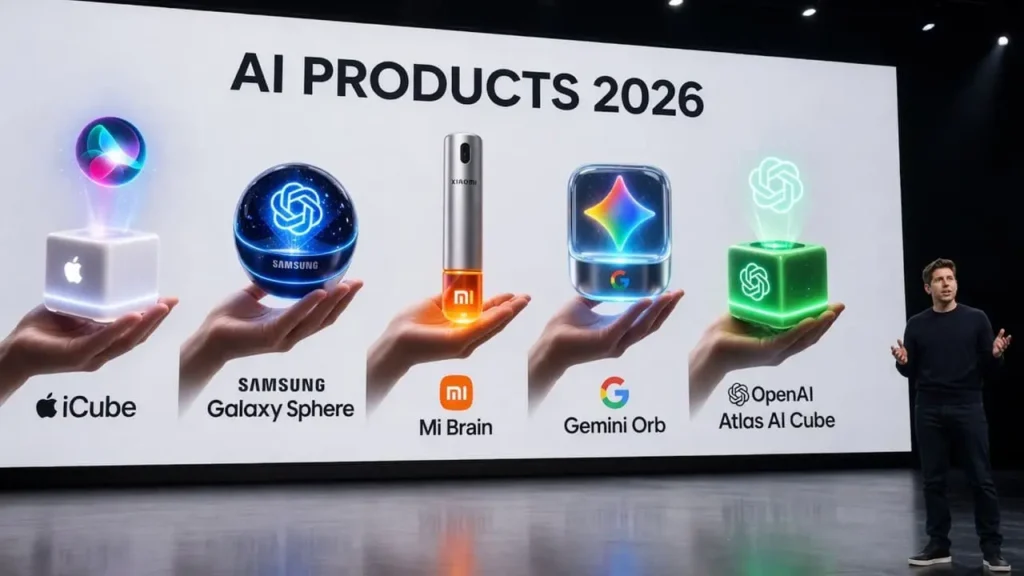
    Infographic showing top smart gadgets 2026 trends including AI wearables and smart home hubs.

    The Rise of AI Wearables

    For over a decade, the smartphone was the sun at the center of our digital solar system. In 2026, that sun is starting to dim. The biggest trend this year is wearable tech that aims to liberate us from the screen.

    The All-Knowing Assistants: OpenAI & Apple

    The industry is buzzing with the long-rumoured OpenAI physical device. Designed by legendary former Apple designer Jony Ive, this device is a physical embodiment of ChatGPT. It doesn’t have a screen; instead, it uses a minimal interface of voice and environment sensors to anticipate what you need before you ask. Not to be outdone, Apple has reportedly introduced the Apple Cube, an AI-centric core that transforms Siri into a next-generation AI capable of understanding the deep context of your life. These aren’t just gadgets; they are digital reflections of our personalities.

    Productivity at Your Fingertips: Plaud NotePin

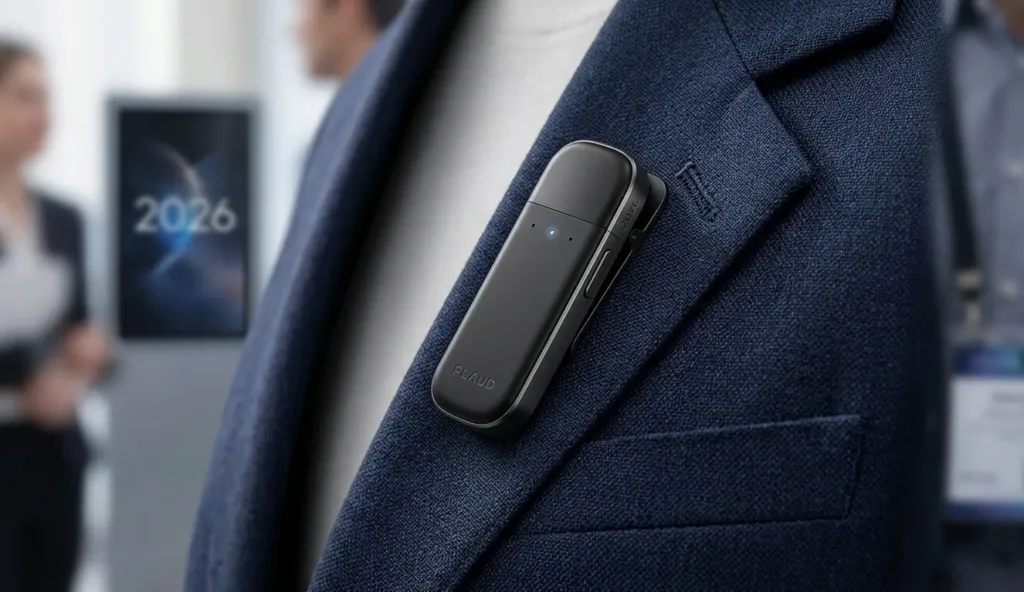
    One of the most practical AI gadgets hitting the mainstream is the Plaud NotePin. This tiny wearable voice recorder does more than just capture audio; it uses GPT models to transcribe and summarize your ramblings into structured to-do lists or mind maps with nearly perfect accuracy.

    Smart Home 2.0: From Automation to Ambient Intelligence

    If 2025 was about making devices talk to each other via the Matter protocol, 2026 is about the Ambient Agent.

    The Conversational Hub: Amazon Echo Show 15 & 21

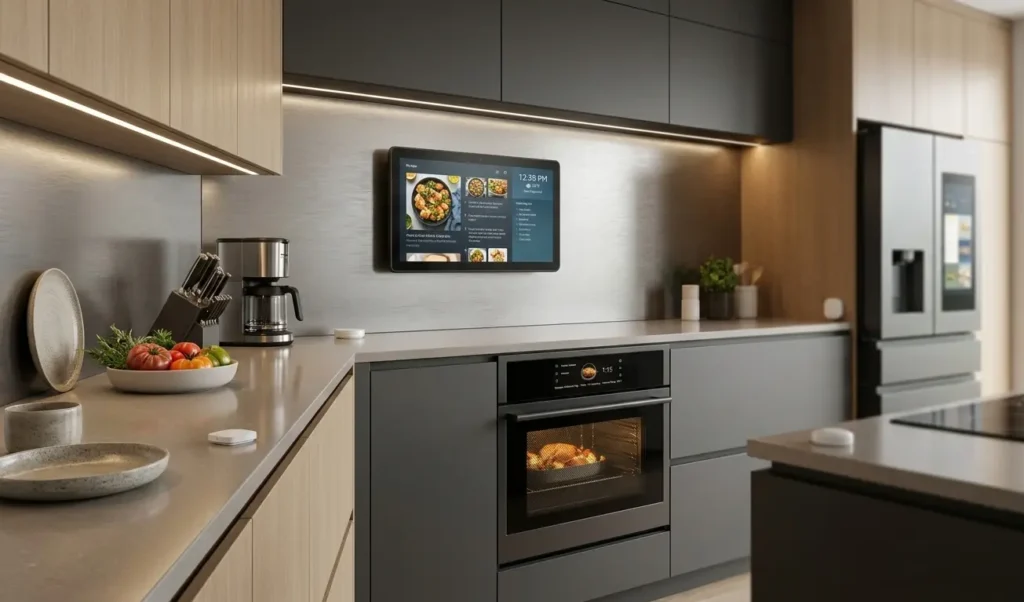
    The latest Amazon Echo Show 15 (2026 Edition) is a masterclass in this shift. No longer just a glorified kitchen timer, it features the Alexa+ Generative AI, making it truly conversational. It can remember that you made a specific recipe last Tuesday and suggest a higher-protein version today. With its Omni sense technology, it even knows your 2 PM meeting was cancelled and asks if it should start the robot vacuum early.

    Amazon Echo Show 11 and 21 smart gadgets 2026 in a modern smart kitchen.

    Local AI: Privacy First

    A major 2026 trend is Local AI. Devices like the Real Link AI box and Switchbot AI hub now process security footage locally. This means your data stays in your home, providing faster notifications and 100% privacy without sacrificing the ability to ask, Did the courier leave the package by the side door?

    Revolutionary Personal Care & Wellness

    Wellness in 2026 isn’t just about counting steps; it’s about predictive health insights.

    • Muse Ring One: This titanium smart ring packs medical-grade sensors for 24/7 heart rate and sleep stage analysis. It even includes NFC payments, allowing you to buy your post-run smoothie with a tap of your finger.
    • RingConn Gen 2 Air: One of the lightest wearables ever made, it offers a staggering 10-day battery life and advanced AI sleep coaching.
    • Allergen Alert: A pocket-sized mini lab that can detect gluten or dairy in food at a restaurant, a genuine lifesaver for those with severe allergies.

    Industry Impact: The Economic Reset

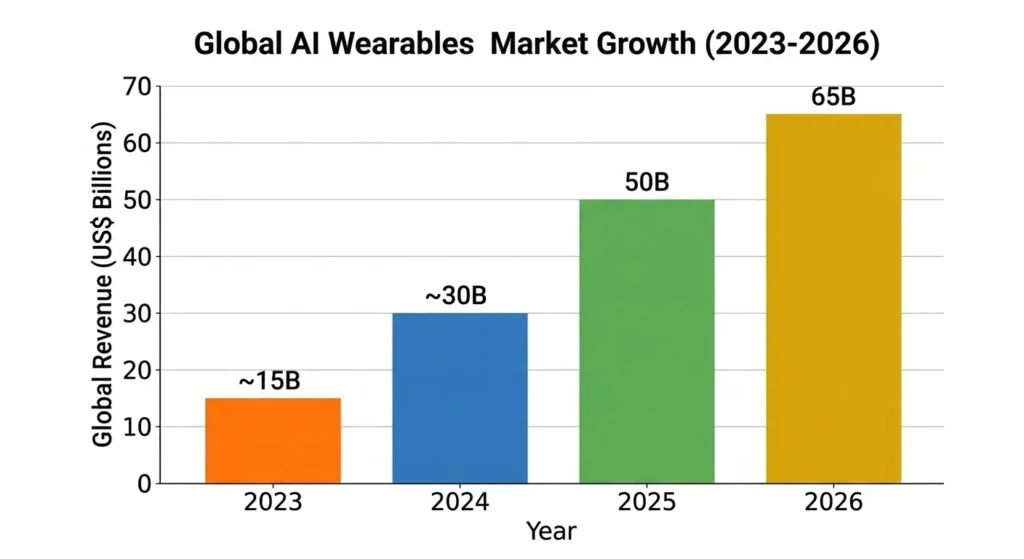
    The numbers behind smart gadgets 2026 are mind-blowing. The global market for wearable electronics is projected to reach $109 billion this year. According to Gartner, over 40% of leading enterprises will have adopted hybrid AI architectures into their workflows by 2028.

    For the average consumer, this means smart devices are becoming invisible. They are no longer clunky tech boxes; they are embedded into our clothing, our glasses, and even our furniture.

    Challenges and Controversies: The Privacy Tax

    It’s not all sunshine and convenient lattes. The rise of always-on listening devices like the Bee or Omi pendants has sparked fierce legal debates.

    • Consent: In many regions, recording someone without their knowledge is a legal minefield.
    • Subscriptions: Many affordable AI gadgets are now subscription traps. A $99 device might require a $15 monthly AI brain fee to function, leading experts to advise calculating the 3-year total cost before buying.
    • Security: As wearables collect sensitive biometric data, they have become prime targets for cybercriminals, necessitating robust encryption.

    Future Outlook: What’s Next?

    As we look beyond 2026, the next frontier is Agentic AI, autonomous virtual employees that don’t just answer questions but execute complex workflows. Imagine a wearable that doesn’t just tell you that you’re low on milk but automatically checks your local store’s prices and places the order for you.

    We are also seeing the emergence of AI Shoes, like the Moonwalkers, which use robotic wheels and AI to boost your walking speed to 11 km/h without any extra effort.

    Future trend visualization of AR smart glasses and AI gadgets in 2030.

    Conclusion

    The smart gadgets 2026 landscape is a thrilling, if slightly overwhelming, glimpse into a future where technology is no longer a tool we use, but a partner we live with. Whether you’re upgrading your kitchen with a Brisk It Neoma AI Oven or simplifying your workflow with a Plaud NotePin, the goal is the same: technology that serves the human, not the other way around.

    FAQs

    1. What are smart gadgets?

    Smart gadgets are electronic devices, usually portable or wearable, that use AI and internet connectivity to perform tasks, track data, and interact with other devices in an ecosystem.

    2. Which gadgets are trending in 2026?

    The top trends include AI wearables like smart rings (Muse, RingConn), conversational home hubs (Echo Show), and productivity tools like the Plaud NotePin.

    3. Are smart gadgets expensive?

    While premium devices like the Beatbot AquaSense X pool cleaner can cost thousands, budget-friendly AI tools like the Bee pendant start as low as $49.

    4. How do smart devices work?

    They use sensors (microphones, cameras, accelerometers) to gather data, which is then processed either on-device (Edge AI) or in the cloud using Large Language Models (LLMs) to provide intelligent responses.

    5. Are smart gadgets safe?

    Safety depends on the manufacturer. Look for devices with Local Processing and strong encryption to ensure your personal data and conversations aren’t stored on external servers.

    Related Posts

    Leave a Reply

    Your email address will not be published. Required fields are marked *