AMD’s Next-Generation EPYC “Venice” Explained: How Zen 6 and 256 Cores Push the Data Center Forward
AMD has unveiled the EPYC 9006 server platform based on Zen 6 with up to 256 cores, PCIe Gen 6 and TSMC's 2nm process. Here's what the official announcements reveal.
Contributor
Executive Summary
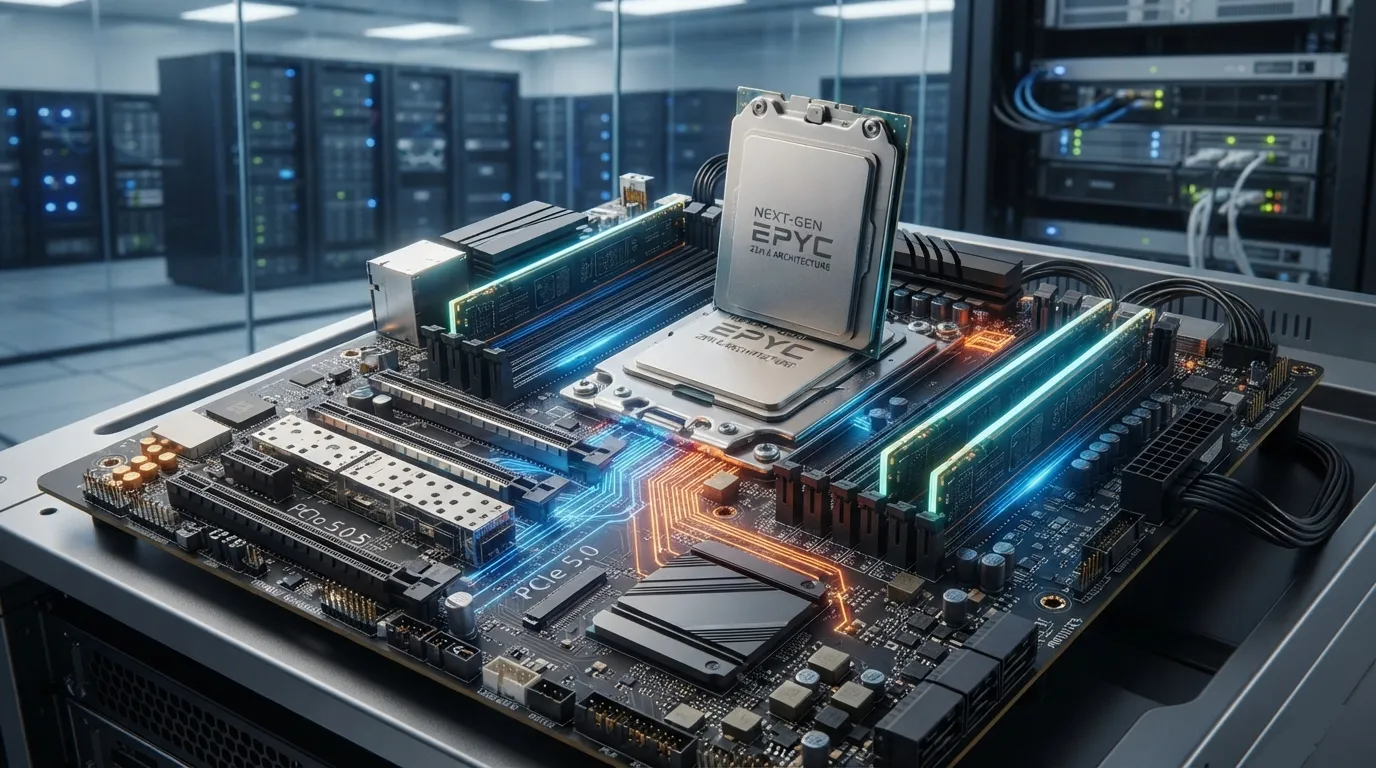
AMD has shared new details about its next-generation EPYC server processor family, formerly codenamed Venice, offering a clearer picture of where its data center roadmap is headed. Built on the Zen 6 CPU architecture and manufactured using TSMC’s 2nm process technology, the platform is designed for enterprise servers, cloud infrastructure, high-performance computing (HPC), and artificial intelligence (AI) workloads.
The sixth-generation EPYC family is expected to scale to 256 CPU cores and 512 threads per socket, alongside support for PCI Express (PCIe) Gen 6, 16-channel DDR5 memory, and JEDEC-standard MRDIMMs operating at up to 12,800 MT/s. AMD has also confirmed that a Venice-X variant with 3D V-Cache is planned for the second half of 2027.
While the company has outlined the platform’s core capabilities, it has yet to disclose commercial availability, pricing, or full specifications for individual processor models.
What Has AMD Announced?
AMD’s latest announcement marks the next step in the evolution of its EPYC server processors, succeeding the EPYC 9005 generation.
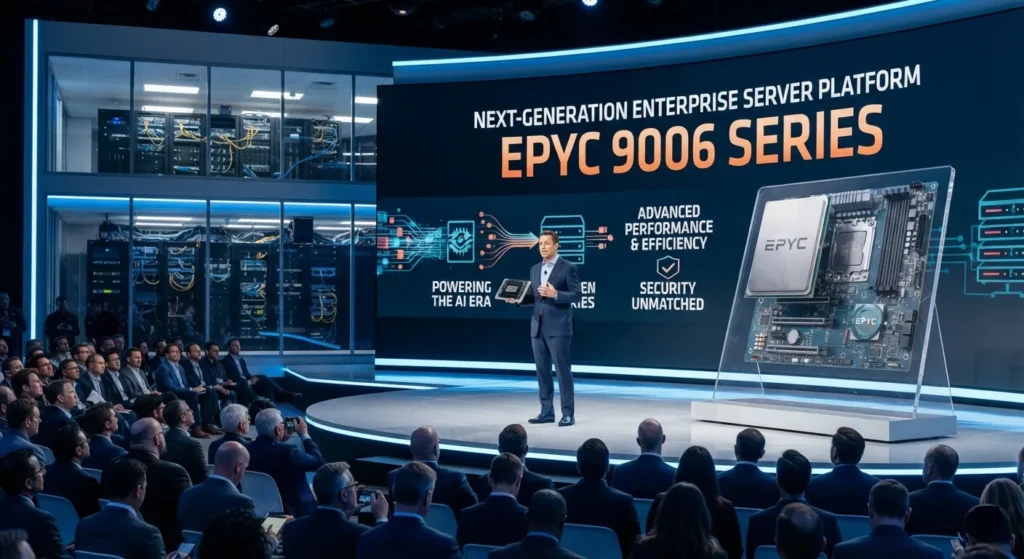
The company has confirmed that the 6th Generation AMD EPYC 9006 platform is built on the new Zen 6 CPU architecture. During development, the project carried the codename Venice, a name that has appeared in AMD’s roadmap over the past year.
The announcement also represents a manufacturing milestone. AMD says Venice has entered production using TSMC’s 2nm process technology, making it one of the first high-performance computing processors to reach that stage on the new manufacturing node.
Key Specifications
| Specification | Official Information |
|---|---|
| Architecture | Zen 6 |
| Product Family | AMD EPYC 9006 Series |
| Previous Codename | Venice |
| Manufacturing Process | TSMC 2nm (N2) |
| Maximum CPU Cores | 256 |
| Maximum Threads | 512 |
| Memory Support | 16-channel DDR5 |
| Advanced Memory | MRDIMM up to 12800 MT/s |
| Expansion Interface | PCIe Gen 6 |
AMD has not yet disclosed clock speeds, cache configurations, thermal design power (TDP), individual processor models, or other SKU-specific specifications.
What Do These Specifications Mean?
The specifications point to a platform built for large-scale computing rather than traditional enterprise servers. Higher core counts, faster memory, and improved I/O are increasingly important as AI models, cloud platforms, and enterprise applications continue to grow in size and complexity.
256 CPU Cores
As AI infrastructure grows, CPUs remain just as important as GPUs for many parts of the computing stack. While graphics processors handle much of the model training and inference work, CPUs coordinate storage, networking, virtualization, databases, and system management.
Packing more cores into a single processor allows more tasks to run simultaneously, which can improve efficiency for workloads such as:
- Large-scale virtual machine deployments
- Containerized cloud services
- Enterprise databases
- High-performance computing applications
- AI infrastructure management
The move to 256 cores reflects a broader shift across the server industry toward higher levels of parallel computing.
Important: More cores do not automatically guarantee better performance. Application design, software optimization, memory bandwidth, storage, and networking all play significant roles in determining overall system performance.
Venice-X Will Bring Back 3D V-Cache
AMD has also confirmed a Venice-X processor family, planned for the second half of 2027.
Its defining feature will be the inclusion of 3D V-Cache, AMD’s stacked cache technology.
A larger cache can reduce the time processors spend retrieving frequently used data from system memory. For workloads that repeatedly access large datasets, this may improve efficiency in areas including:
- Scientific computing
- Engineering simulations
- Technical analysis
- Selected AI workloads
- High-performance computing
AMD has not yet released detailed specifications for the Venice-X processors.
Memory and I/O Improvements
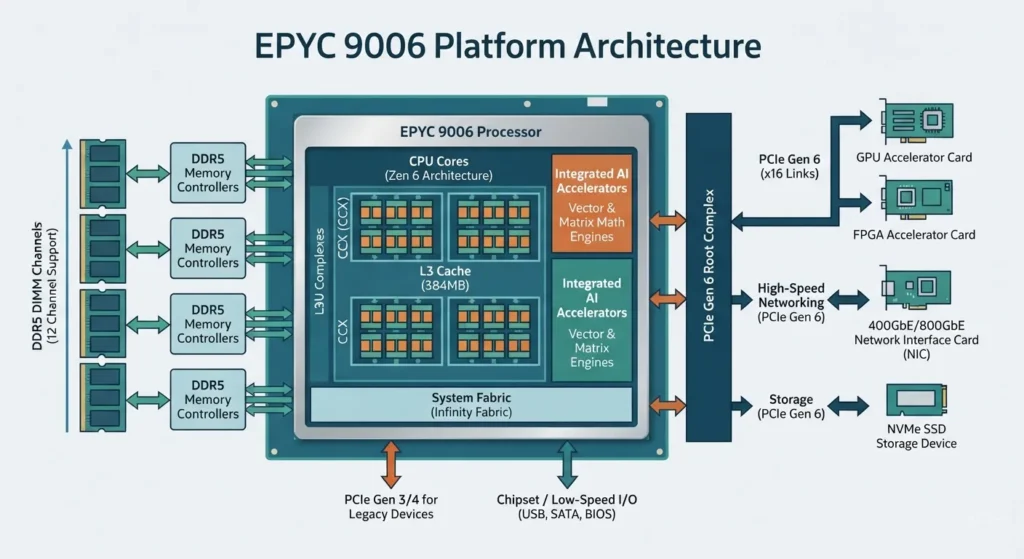
The increase in core count is accompanied by upgrades to the platform’s memory and connectivity.
Officially announced features include:
- 16-channel DDR5 memory
- Support for JEDEC-standard MRDIMMs
- Memory speeds of up to 12,800 MT/s
- PCIe Gen 6 connectivity
Together, these improvements are intended to provide greater memory bandwidth and faster communication with storage devices, networking hardware, and AI accelerators.
As AI models continue to grow in complexity, improvements in memory throughput are becoming increasingly important alongside raw processing power.
How Venice Fits Into AMD's Server Roadmap
The Venice platform is the next step in AMD’s broader EPYC roadmap.
The company currently positions:
- EPYC 9005 as the existing generation
- EPYC 9006 (formerly Venice) as the next-generation platform
- Venice-X as a future variant incorporating 3D V-Cache
AMD has also referenced Verano as a future EPYC processor, although technical details remain limited.
The roadmap indicates AMD’s intention to maintain a steady cadence of server processor updates while expanding support for AI and enterprise computing.
Important: AMD has not published independent benchmark results for EPYC 9006. Real-world performance comparisons will only become possible once commercial systems are available for testing.
Why This Matters for the Data Center Industry
Server processors are evolving to meet very different demands than they did just a few years ago.
Today’s data centers increasingly power AI services, cloud platforms, enterprise applications, scientific research, and large-scale databases. These workloads require more than just additional CPU cores—they also depend on higher memory bandwidth and faster connections between processors, storage, networking hardware, and accelerators.
The announcement carries implications that extend beyond higher core counts.
Better server consolidation
Processors with more cores can allow organizations to consolidate workloads onto fewer physical systems, depending on software licensing and deployment requirements.
Growing AI infrastructure
Even as GPUs receive much of the attention around AI, CPUs remain central to orchestrating workloads, managing storage, handling networking, and supporting virtualization.
Faster platform connectivity
Support for PCIe Gen 6 and faster memory prepares servers for future generations of storage devices and accelerator hardware.
Longer-term planning
Enterprise infrastructure is often planned years in advance. By sharing elements of its roadmap early, AMD gives customers more visibility into future platform capabilities.
What Hasn't Been Announced Yet?
While AMD has shared substantial architectural information, several key details remain unknown.
AMD has not yet disclosed:
- Commercial launch dates
- Product pricing
- Complete processor lineup
- Individual SKU specifications
- Clock speeds
- Cache capacities
- Power consumption (TDP)
- Socket compatibility
- Operating system certifications
- Independent performance benchmarks
- Regional availability
Until those details become available, it is too early to assess how individual EPYC 9006 processors will compare in real-world deployments.
Note: Performance comparisons should be reserved until independent benchmark results become available.
Industry Perspective
The announcement reflects a broader shift in the server market rather than an isolated product launch.
Cloud providers, enterprise customers, and AI developers are increasingly looking for processors capable of supporting larger memory footprints, faster I/O, and greater parallel processing capacity. These requirements are shaping the next generation of server hardware across the industry.
AMD has also outlined a longer-term roadmap beyond Venice, identifying Verano as a future successor. In parallel, the company’s expanded partnership announcements with Microsoft underline the growing role EPYC processors are expected to play in AI infrastructure.
Timeline
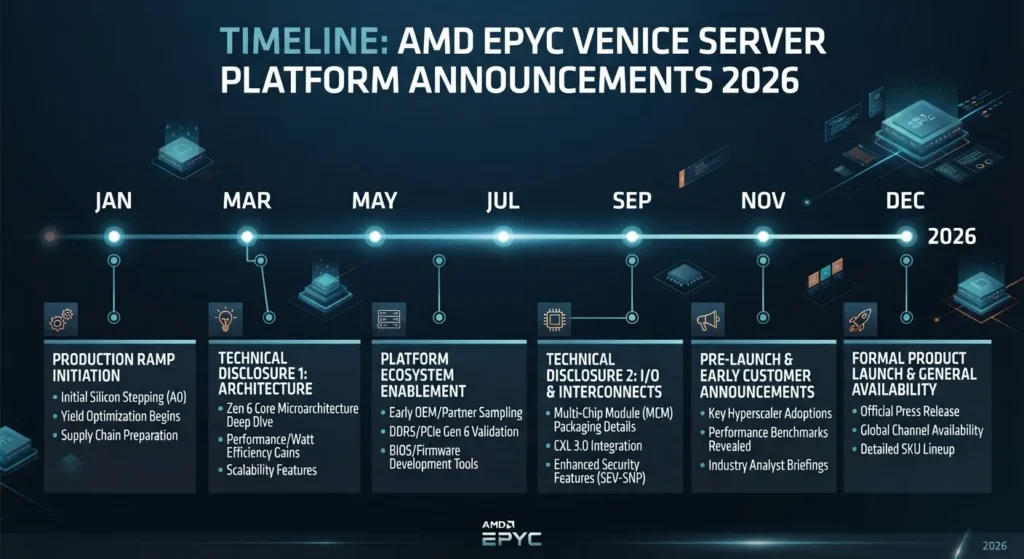
| Date | Event |
|---|---|
| May 2026 | AMD announced the production ramp of Venice using TSMC’s 2nm process. |
| July 2026 | AMD published additional technical details about the EPYC 9006 platform. |
| Second half of 2027 | Planned launch window for Venice-X with 3D V-Cache. |
Conclusion
AMD’s latest roadmap update offers a clearer view of the direction of its next-generation EPYC platform. With support for up to 256 cores, the Zen 6 architecture, TSMC’s 2nm manufacturing process, PCIe Gen 6, and faster memory, the company is preparing its server processors for increasingly demanding enterprise and AI workloads.
Many commercial details—including pricing, availability, benchmark data, and complete processor specifications—are still to come. Even so, the information released so far outlines AMD’s strategy for its next generation of data center CPUs and provides enterprise customers with an early look at the platform’s planned capabilities. As additional technical details emerge, they will offer a clearer picture of how the EPYC 9006 family fits into the evolving server processor landscape.
Frequently Asked Questions
1. What is AMD Venice?
Venice is the former codename for AMD’s sixth-generation EPYC server processor family, now known as the EPYC 9006 Series.
2. Which CPU architecture powers Venice?
The platform is built on AMD’s Zen 6 CPU architecture.
3. How many cores will the EPYC 9006 platform support?
AMD says the platform scales to a maximum of 256 CPU cores and 512 threads per socket.
4. Which manufacturing process is being used?
The processors are manufactured using TSMC’s 2nm process technology.
5. What memory technologies are supported?
The platform supports 16-channel DDR5 memory and JEDEC-standard MRDIMMs operating at speeds of up to 12,800 MT/s.
6. Does the platform include PCIe Gen 6?
Yes. PCIe Gen 6 support is part of the officially announced platform specifications.
7. Has AMD revealed pricing?
No. Pricing has not yet been announced.
8. When is Venice-X expected to arrive?
AMD has indicated a launch window in the second half of 2027.
9. Are complete processor specifications available?
No. Full SKU-level specifications, including clock speeds and cache sizes, have not yet been released.
10. Who is the EPYC 9006 platform intended for?
AMD positions the platform for enterprise data centers, cloud providers, AI infrastructure, and high-performance computing deployments.

Swathi is a contributor at GizStreet with a master’s degree in science and a strong background in technical writing and product review. She covers gadgets, software, and consumer tech, with a focus on breaking down complex products into clear, practical takeaways for readers.
Share this story
Related Articles
Lenovo Legion Y700 AI Officially Teased With 165Hz OLED Display Ahead of China Launch
Lenovo has revealed key specifications for the Legion Y700 AI, confirming an 8.4-inch 165Hz OLED display, Dolby Vision, 5G connectivity, and an August China launch.
The Amicool BT686 External DVD Drive Shows Why Optical Media Still Has a Place in the USB-C Era
The Amicool BT686 external DVD drive restores CD and DVD functionality to modern laptops with USB-C support, plug-and-play operation and broad operating system compatibility.

Sony Bravia 9 II and Bravia 7 II Arrive in India: Sony Pushes Premium LED TVs Forward With True RGB Technology
Sony has launched the Bravia 9 II and Bravia 7 II in India with True RGB LED technology, Google TV, Cognitive Processor XR and premium home theatre features.
Comments (0)