Friday, July 24, 2026
AI

Substack Adds AI Writing Detection Powered by Pangram to Help Readers Understand How Content Is Created

Substack has launched an AI detection feature powered by Pangram, allowing readers to estimate AI involvement in newsletters, posts, comments and replies.
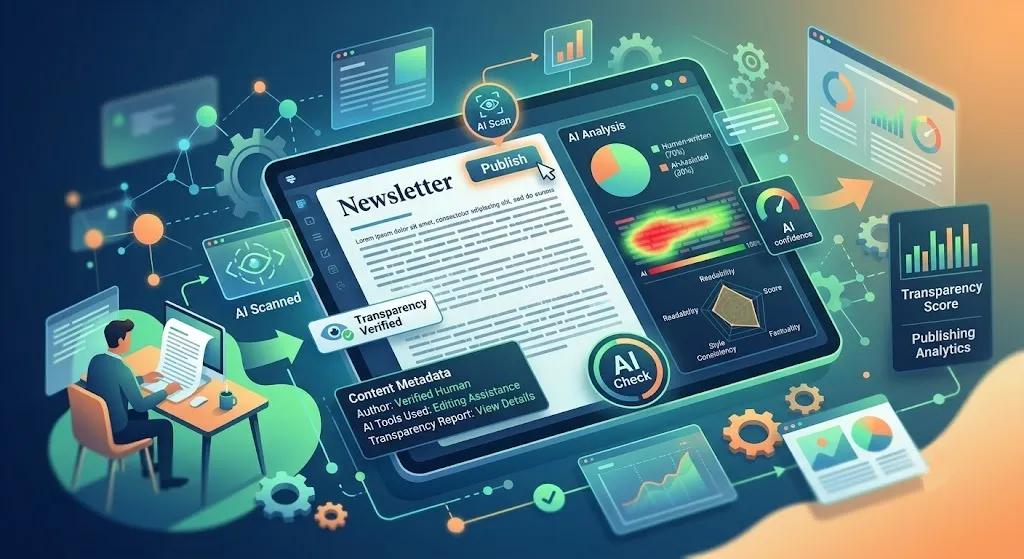
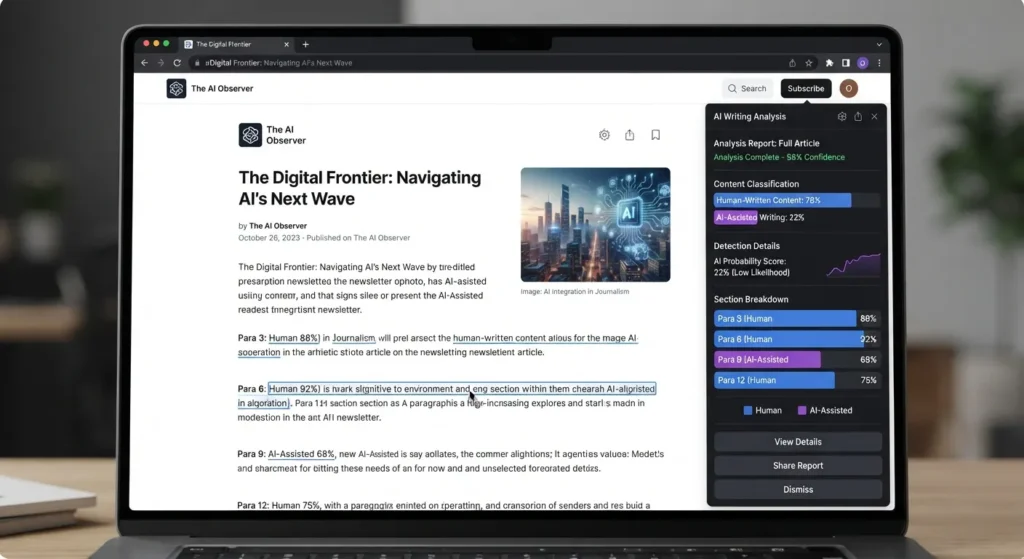
Illustration representing Substack AI detection powered by Pangram.

Executive Summary

Substack has introduced an AI writing detection feature that gives readers a way to estimate whether a piece of content was written by a person, created with AI assistance, or generated largely through artificial intelligence tools.

The Substack AI detection feature, built with Pangram, analyzes posts, notes, comments and replies to estimate how much of the text appears to come from human writing versus AI assistance. Substack is positioning the tool as a transparency feature rather than a restriction on AI-assisted writing.

The system is available for supported content longer than 100 words and applies to posts and notes published on or after July 21, 2026. It launched on the web and iOS, with Android support planned.

What Has Substack Changed?

Generative AI has changed how online writing is created. Writers now use AI tools for everything from editing and brainstorming to drafting complete pieces of content. At the same time, readers have found it increasingly difficult to understand how much human effort went into what they are reading.

Substack’s new feature addresses that uncertainty by adding an optional AI analysis tool directly into the platform.

Instead of automatically labeling newsletters or removing AI-assisted content, Substack lets readers request an analysis when they want more context. The goal is to provide information about how content may have been produced while leaving the final judgment to the reader.

Substack CEO Chris Best described the feature this way:

“We’re launching a feature with Pangram in the Substack app today. Going forward, you’ll be able to scan text to see how much of it was likely written by hand or with AI assistance.”

How Does Substack's AI Detection Tool Work?

The feature is powered by Pangram, an AI writing detection company.

When a reader requests an analysis, the system evaluates supported text and estimates the balance between human-written content and AI assistance. The result is not presented as a definitive decision about authorship.

Instead, it works as an indicator that helps readers better understand the likely writing process behind a piece of content.

The tool supports:

  • Posts
  • Notes
  • Comments
  • Replies

Only content longer than 100 words can be analyzed.

Important: The result is an estimate, not proof that content was or was not created using AI.

Conceptual screenshot of an AI writing analysis interface for newsletters.
AI detection tools provide readers with additional context about how digital content may have been created.

Key Details at a Glance

FeatureDetails
Detection technologyPangram
Main purposeEstimate human-written versus AI-assisted text
Supported contentPosts, Notes, Comments, Replies
Minimum content lengthMore than 100 words
Initial platformsWeb Reader and iOS
Android availabilityComing soon
Eligible contentPublished on or after July 21, 2026

Why Does AI Detection Matter for Readers?

The challenge facing online publishing is no longer simply whether AI can generate text. Modern AI systems can create articles, newsletters and commentary that often look similar to human writing.

For readers, the bigger question is context.

Was the content based on original reporting? Was AI used as an editing tool? Was the majority of the writing generated automatically?

Substack’s approach does not attempt to answer those questions permanently. Instead, it gives readers another piece of information they can consider when evaluating content.

This makes the feature different from a traditional moderation system. It does not automatically block, remove or penalize AI-assisted writing.

What Does This Mean for Newsletter Writers?

The feature does not prevent creators from using AI tools.

Many writers already use AI for tasks such as refining drafts, organizing ideas or improving clarity. Substack’s approach allows that workflow to continue while giving readers more visibility into how content may have been created.

For publishers focused on original reporting and analysis, the tool may provide another way to demonstrate the difference between original work and large-scale AI-generated material.

At the same time, AI detection remains an estimation process rather than a perfect method for identifying how every sentence was produced.

How Is Substack Handling AI Training and Privacy?

Alongside the detection feature, Substack has addressed concerns about publisher content being used to train AI models.

The company states that:

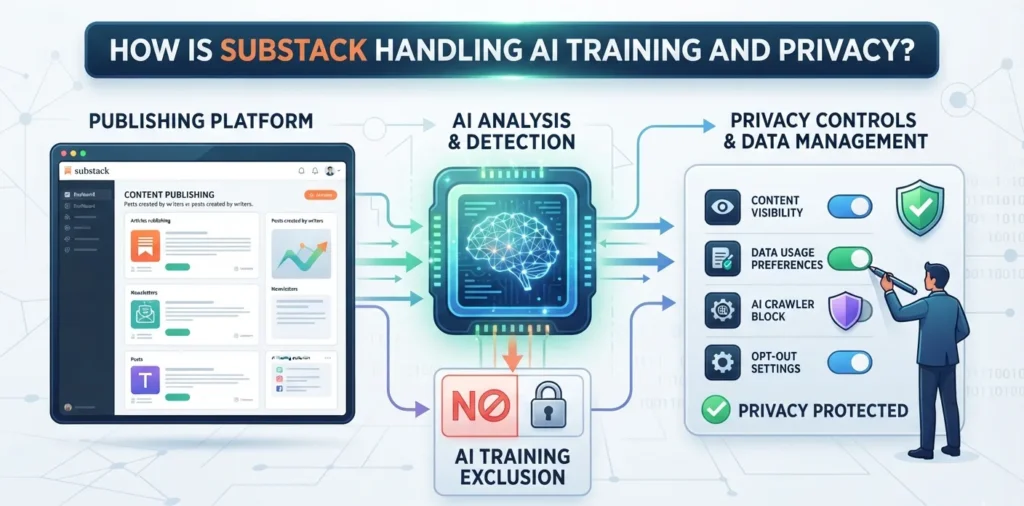
  • Publisher content is not used by Substack or Pangram to train generative AI models.
  • Publishers can enable Block AI training, a setting designed to signal external AI crawlers not to use their content for model training.

These controls give publishers more visibility into how their content interacts with AI systems.

Illustration showing AI content analysis and publisher privacy controls.
Substack combines AI detection features with controls related to AI training access.

Availability and Supported Platforms

The AI detection feature launched on:

  • Substack Web Reader
  • Substack iOS app

Android support is planned but was not available at launch.

The feature currently applies only to eligible content published on or after July 21, 2026.

Substack has not announced pricing for the feature and has not released separate version information or formal release notes.

How This Fits Into the Wider AI Publishing Debate

AI-generated content has become a major discussion point across publishing platforms, education and online communities.

Some platforms have focused on automated labeling or restrictions. Substack has chosen a different direction by making AI analysis available as a reader-controlled option.

That approach reflects a broader shift toward transparency tools: instead of trying to eliminate AI-assisted creation, platforms are exploring ways to give audiences more information about the content they consume.

Timeline

DateEvent
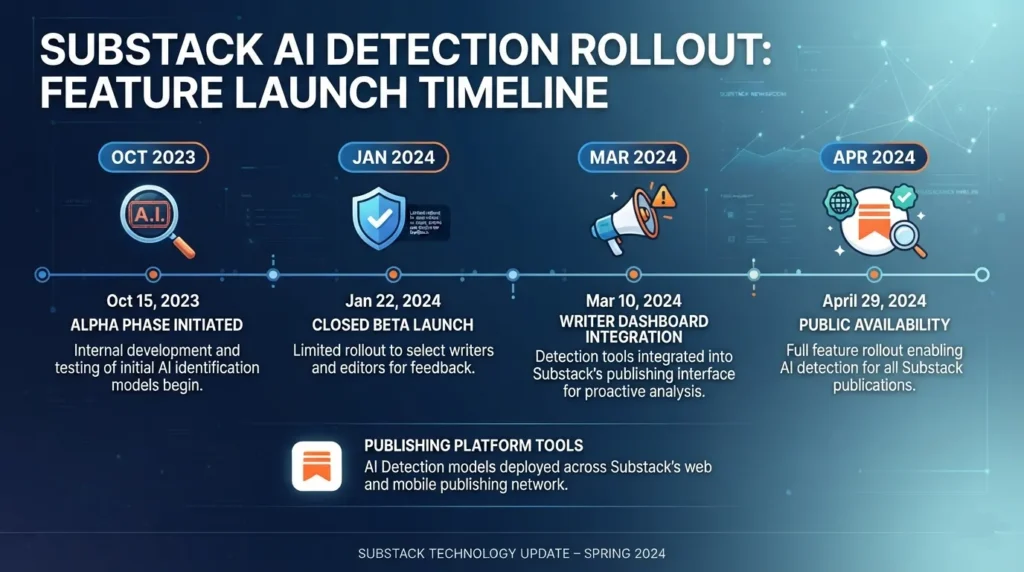
July 21, 2026Substack launched the AI detection feature for supported content.
July 23, 2026Substack published or updated official support documentation for the feature.
Timeline graphic showing Substack AI detection rollout milestones.
Key dates in the launch of Substack's AI detection feature.

What Happens Next?

The initial launch leaves several areas open for future updates.

Readers and publishers will likely be watching for:

  • Android availability
  • Possible expansion to additional content types
  • Future improvements to Pangram’s detection technology
  • Additional transparency tools from Substack

Substack has not announced pricing, a dedicated product page, release notes or version history for this feature.

Conclusion

Substack’s AI detection feature introduces a new way for readers to understand how newsletter content may have been created. By working with Pangram and offering analysis on demand, the platform is focusing on transparency rather than restricting AI-assisted writing.

For readers, the feature provides additional context when evaluating content. For writers, it creates a more visible relationship between AI tools and publishing workflows. The next stage of the rollout will depend on how widely the feature is adopted and how Substack expands its transparency tools across platforms.

Frequently Asked Questions

1. What is Substack’s AI detection feature?

It is a tool that estimates whether supported Substack content was written by a human or created with AI assistance using Pangram technology.

2. Who provides the AI detection technology?

The feature is powered by Pangram.

3. What types of content can be scanned?

Readers can analyze posts, notes, comments and replies.

4. How long does content need to be for analysis?

The content must be longer than 100 words.

5. Is the AI detection result always accurate?

No. The result is an estimate and should not be treated as definitive proof of AI authorship.

6. Which devices support the feature?

It is available through Substack Web Reader and the iOS app. Android support is planned.

7. Does Substack use publisher content to train AI models?

Substack states that publisher content is not used by Substack or Pangram to train generative AI models.

8. What is Block AI training?

It is a Substack setting that signals external AI crawlers not to use publisher content for AI model training.

9. Is there an additional fee for AI detection?

Substack has not announced pricing information for the feature.

10. Has Substack released technical version details?

No official version history or release notes have been published.

0 Comments

Related Articles

Comments (0)

Share your thoughts

Your email address will not be published. Required fields are marked *